



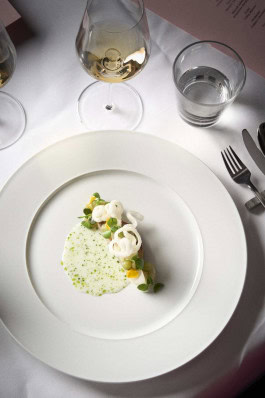
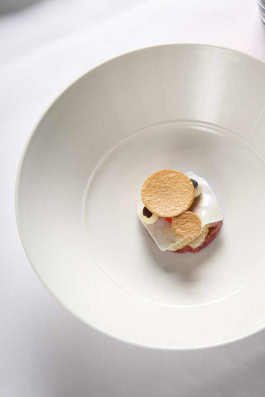
Ziegert leads with intention when it comes to crafting plates. With an emphasis on bold flavor, he pushes the limits of umami and sour to offer dynamic and surprising entrees. His plates are minimalist yet colorful, featuring playful accents that not only embellish but pull together seemingly discordant flavor profiles.
Ziegert’s collaborative approach to culinary design has proven him to be one of the trailblazers in Berlin’s culinary scene, particularly when it comes to vegetarian and vegan cuisine. I sat down with Ziegert to discuss his career trajectory, his most exciting dishes and the evolving food scene in Berlin at large.
— You're stepping into an existing kitchen with an existing reputation. What’s the first thing you changed, and what’s the first thing you deliberately kept the same?
— Taste is king. I really like to [push] spices and sour flavors [to the edge]. The plates taste different and also look different. We try to go as far as possible to surprise people.

ㅤ
— Have you changed the design of the way you're laying out the food?
— I [prefer it without too many] components, but also I like to have different colors on the plates to make it [visually pleasing]. We work with a lot of herbs and 2small leaves and put them on the plate when it makes sense, not just so it looks nice, [but also to] have a meaning to the flavor palette.
— Is there a specific dish on this menu that you're most curious or hesitant for people to try? Maybe an experimental dish that's more bold.
— Definitely the radish dish. We [serve] them freshly sliced, with just a bit of salt and olive oil, and pickled ones with rose water, a flavor not everybody knows. We made our own sauce, it's vegan with seven herbs inside, and [comes with] mustard ice cream. It’s a really colorful, playful dish. It's also taste-wise with a lot of flavors going on, but in the end they combine perfectly together.
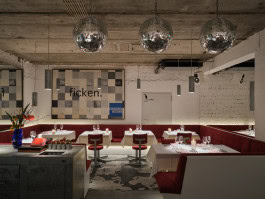
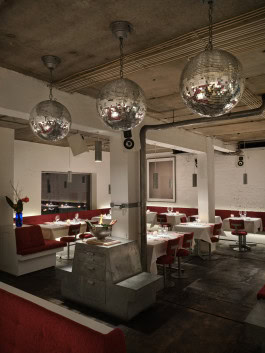
— Is there something that you'd dream of doing with this space that you haven't been able to yet because of budget?
— One of my biggest dreams was to work at Cookies Cream, to have the opportunity to work in a Michelin star restaurant. From every side, there's a lot of respect. At the moment, [there’s] not so much I wish for. [I’m] just really happy to be here to have the chance to work [on] a great team.
— What’s your idea of a successful restaurant?
— It starts in the kitchen. I need to have a safe environment where I feel happy to work, and also to bring this to [others]. If something is not working, we try to find a solution, and we can talk about everything.
It's always important to show people what it’s like in the back, because we are standing there in the service, people can see us, and we are like the stars, but there's a lot of going on in the background.
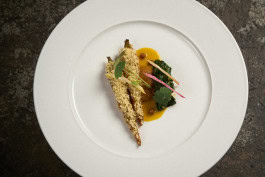
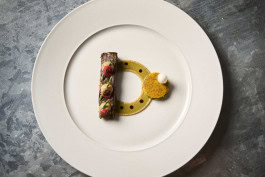
— A restaurant is like a theatrical production. It's as if you are actors with guests as an audience who come in to have this experience. How would you describe the flavor array of courses you serve from start to finish?
— All the courses [blend together to form] a symphony. We start with a fresh, light flavorful dish. There's some creamy and crispy components to surprise people and get [them] interested in the following menu. Then we come to the radish dish, which I described before, with the mustard ice, everything, so it's more like an explosion of flavors, [flavorfully] and also visually.
That’s what we're thinking about––ups and downs. You have this symphony. You start fresh, then have more calm dishes, and you get more fresh, and again calm, you have this choreography,
— Are you vegetarian or vegan in your personal life? I'm sure that you may have encountered some challenges accounting for how you would flavor things. Were you working with meat in your last job?
— Yes, I was. Everything you can do with meat or fish, you can also do with vegetables. You can salt them, you can brine them, you can pickle them, you can grill them, you can cook them. So I don't think it's an issue. It’s more [that] I have a lot of ideas.

— Why do you consider Cookies Cream to be an institution?
— It starts with the founder, Cookie, he's a legend in Berlin for his clubs he had before. He's also been vegetarian since he was eight. He was always dreaming about [having] this place––vegetarian food on a high level. [It’s] what makes this place so special. Really fine dining, nicely plated food.
— Would you say that there's more of an appreciation for food among younger generations of Germans?
— Young people are thinking a lot more about what they want to eat. [They get] back to the roots, to get the sources from where [their ingredients are] coming from. This is where there's development, what I really like, because it's always good to know where your food is coming from. For our guests, we give them the full experience, and show them you don't need meat, you don't need fish to have a great meal, and also Michelin star experience.
— I return here as a guest on Friday. What’s one entree I shouldn't skip?
— If it’s from the Cookies Cream’s history, then it's definitely the Onsen Egg Yolk, from Stefan Henschel. It's one of the classics. It’s a small egg yolk [that’s] layered and full of flavor. [Otherwise], Definitely the radish. It's one of my first dishes, and it's [one] I'm really proud of. I developed it with Victor, the head of development. It was a combination of both of our ideas.
— What's the appeal in terms of its flavor?
— It's a lot of flavors combined. We never thought that they would work together, but they actually do. You have something at room temperature, like the cream and the pickles, and then you have ice cold, creamy mustard ice cream. Not a lot of people have experienced mustard ice cream so far.
— Why is farm to table dining important to you?
— Because it allows us to work with the freshest seasonal ingredients while building strong relationships with local producers. As a vegetarian chef, great vegetables are the foundation of every dish, and knowing where they come from helps us create food that is both more flavorful and more sustainable.
— It seems like Berlin has, as of fairly recently, become more of a food city. What's something that you hope to see change within Berlin’s culinary landscape?
— Berlin already has a vibrant plant-based dining scene, but there is still room to place vegetables at the center of the culinary conversation. Especially in today’s challenging economic climate, I believe regional, seasonal, and creative approaches will play a key role in shaping the future of Berlin’s gastronomy.
Related Articles:

Ziegert leads with intention when it comes to crafting plates. With an emphasis on bold flavor, he pushes the limits of umami and sour to offer dynamic and surprising entrees. His plates are minimalist yet colorful, featuring playful accents that not only embellish but pull together seemingly discordant flavor profiles.
Ziegert’s collaborative approach to culinary design has proven him to be one of the trailblazers in Berlin’s culinary scene, particularly when it comes to vegetarian and vegan cuisine. I sat down with Ziegert to discuss his career trajectory, his most exciting dishes and the evolving food scene in Berlin at large.
— You're stepping into an existing kitchen with an existing reputation. What’s the first thing you changed, and what’s the first thing you deliberately kept the same?
— Taste is king. I really like to [push] spices and sour flavors [to the edge]. The plates taste different and also look different. We try to go as far as possible to surprise people.

ㅤ
— Have you changed the design of the way you're laying out the food?
— I [prefer it without too many] components, but also I like to have different colors on the plates to make it [visually pleasing]. We work with a lot of herbs and 2small leaves and put them on the plate when it makes sense, not just so it looks nice, [but also to] have a meaning to the flavor palette.
— Is there a specific dish on this menu that you're most curious or hesitant for people to try? Maybe an experimental dish that's more bold.
— Definitely the radish dish. We [serve] them freshly sliced, with just a bit of salt and olive oil, and pickled ones with rose water, a flavor not everybody knows. We made our own sauce, it's vegan with seven herbs inside, and [comes with] mustard ice cream. It’s a really colorful, playful dish. It's also taste-wise with a lot of flavors going on, but in the end they combine perfectly together.


— Is there something that you'd dream of doing with this space that you haven't been able to yet because of budget?
— One of my biggest dreams was to work at Cookies Cream, to have the opportunity to work in a Michelin star restaurant. From every side, there's a lot of respect. At the moment, [there’s] not so much I wish for. [I’m] just really happy to be here to have the chance to work [on] a great team.
— What’s your idea of a successful restaurant?
— It starts in the kitchen. I need to have a safe environment where I feel happy to work, and also to bring this to [others]. If something is not working, we try to find a solution, and we can talk about everything.
It's always important to show people what it’s like in the back, because we are standing there in the service, people can see us, and we are like the stars, but there's a lot of going on in the background.


— A restaurant is like a theatrical production. It's as if you are actors with guests as an audience who come in to have this experience. How would you describe the flavor array of courses you serve from start to finish?
— All the courses [blend together to form] a symphony. We start with a fresh, light flavorful dish. There's some creamy and crispy components to surprise people and get [them] interested in the following menu. Then we come to the radish dish, which I described before, with the mustard ice, everything, so it's more like an explosion of flavors, [flavorfully] and also visually.
That’s what we're thinking about––ups and downs. You have this symphony. You start fresh, then have more calm dishes, and you get more fresh, and again calm, you have this choreography,
— Are you vegetarian or vegan in your personal life? I'm sure that you may have encountered some challenges accounting for how you would flavor things. Were you working with meat in your last job?
— Yes, I was. Everything you can do with meat or fish, you can also do with vegetables. You can salt them, you can brine them, you can pickle them, you can grill them, you can cook them. So I don't think it's an issue. It’s more [that] I have a lot of ideas.

— Why do you consider Cookies Cream to be an institution?
— It starts with the founder, Cookie, he's a legend in Berlin for his clubs he had before. He's also been vegetarian since he was eight. He was always dreaming about [having] this place––vegetarian food on a high level. [It’s] what makes this place so special. Really fine dining, nicely plated food.
— Would you say that there's more of an appreciation for food among younger generations of Germans?
— Young people are thinking a lot more about what they want to eat. [They get] back to the roots, to get the sources from where [their ingredients are] coming from. This is where there's development, what I really like, because it's always good to know where your food is coming from. For our guests, we give them the full experience, and show them you don't need meat, you don't need fish to have a great meal, and also Michelin star experience.


— I return here as a guest on Friday. What’s one entree I shouldn't skip?
— If it’s from the Cookies Cream’s history, then it's definitely the Onsen Egg Yolk, from Stefan Henschel. It's one of the classics. It’s a small egg yolk [that’s] layered and full of flavor. [Otherwise], Definitely the radish. It's one of my first dishes, and it's [one] I'm really proud of. I developed it with Victor, the head of development. It was a combination of both of our ideas.
— What's the appeal in terms of its flavor?
— It's a lot of flavors combined. We never thought that they would work together, but they actually do. You have something at room temperature, like the cream and the pickles, and then you have ice cold, creamy mustard ice cream. Not a lot of people have experienced mustard ice cream so far.
— Why is farm to table dining important to you?
— Because it allows us to work with the freshest seasonal ingredients while building strong relationships with local producers. As a vegetarian chef, great vegetables are the foundation of every dish, and knowing where they come from helps us create food that is both more flavorful and more sustainable.
— It seems like Berlin has, as of fairly recently, become more of a food city. What's something that you hope to see change within Berlin’s culinary landscape?
— Berlin already has a vibrant plant-based dining scene, but there is still room to place vegetables at the center of the culinary conversation. Especially in today’s challenging economic climate, I believe regional, seasonal, and creative approaches will play a key role in shaping the future of Berlin’s gastronomy.
Related Articles:
You need to load content from reCAPTCHA to submit the form. Please note that doing so will share data with third-party providers.
More InformationYou need to load content from Turnstile to submit the form. Please note that doing so will share data with third-party providers.
More InformationYou are currently viewing a placeholder content from Facebook. To access the actual content, click the button below. Please note that doing so will share data with third-party providers.
More InformationYou are currently viewing a placeholder content from Instagram. To access the actual content, click the button below. Please note that doing so will share data with third-party providers.
More InformationYou need to load content from hCaptcha to submit the form. Please note that doing so will share data with third-party providers.
More InformationYou need to load content from reCAPTCHA to submit the form. Please note that doing so will share data with third-party providers.
More InformationYou are currently viewing a placeholder content from Turnstile. To access the actual content, click the button below. Please note that doing so will share data with third-party providers.
More InformationYou are currently viewing a placeholder content from X. To access the actual content, click the button below. Please note that doing so will share data with third-party providers.
More Information