

Today, Berlin in the 1990s is often remembered through the lens of club culture and a sense of freedom. "That image is true," photographer Gundula Schulze Eldowy says, "because people improvised constantly. They experimented. They finally did everything that had previously been impossible under state restrictions." But she quickly adds another memory that is often forgotten. "It was also a city of ruins."
Within this atmosphere, the new character of Berlin in the ‘90s was formed. But before it became known for the all-night parties that travelers from around the world now queue for, the city was raw, experimental, and reflected the budding identity of people rediscovering Berlin, and themselves.
The fall of the Berlin Wall was a pivotal moment that reunited two sides of the city. Yet it did not immediately provide answers. People didn't know what to do. They were filled with hope and curiosity, while uncertainty and the lingering weight of oppression still sat at the back of their minds.
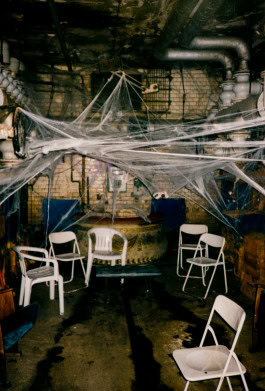
In places like Mitte and Kreuzberg, facades crumbled while empty apartments and warehouses stood abandoned. There was very little regulation governing what could happen inside the countless empty buildings scattered across the city.
"There was energy there. You could just do things. You didn't need money to do things," recalls Cookie, founder of the legendary Cookies club.

In those years, a vacant basement somewhere in Kreuzberg, an abandoned storefront in Mitte, or an empty apartment in Friedrichshain could become a bar, a gallery, a club, or simply a place to gather. The now-legendary Tacheles emerged from an abandoned department store, while curator Klaus Biesenbach transformed a derelict margarine factory into what would become Kunst-Werke, one of Berlin's most influential contemporary art institutions.
According to photographer Gundula Schulze Eldowy, people at that moment were driven by excitement for improvisation. After decades of rigidity in the former GDR, Berliners suddenly found themselves standing in front of a radically different reality, yet with wide open arms.
What surprised Gundula the most was how quickly people adapted. "People were able to rethink their lives very quickly when circumstances changed, when systems collapsed, and when something entirely new emerged," she says.
As word spread, young artists, musicians, designers, and creatives from around the world began arriving in the city. "Our neighbors were not people from Berlin," Cookie remembers. "The neighbors were from New Zealand, Australia, from everywhere." That’s when Berlin started shaping into the international meeting point for a generation searching for alternatives.
"There was something initiatory about that period," Gundula reflects, "a sense that things became possible that would not have been possible in more stable and secure times."
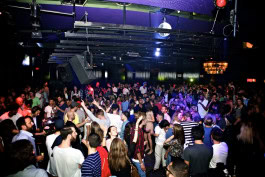
Among the many young people experimenting with Berlin's forgotten spaces was Heinz “Cookie” Gindullis.
He arrived in the city at the age of seventeen. Just four years later, following the same spirit of improvisation that seemed to define Berlin, he transformed the cellar of the building where he lived into a small Tuesday-night bar.
“I started in the house where I lived, and we didn't know who the owner was,” recalls Cookie. “I cleared out the cellar and opened up a small bar.” He initially called it Biscuits, but very soon the venue became known as Cookie, because of the owner’s name. “People were saying, let's go to Cookie’s, and that's how it became Cookies."
Like much of Berlin at the time, the club emerged organically. "I just went with the flow," Cookie says with a laugh. "Like today, I don't know what I'm going to do in ten years."
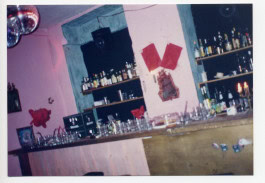
Unlike many of Berlin's early clubs, which embraced stark industrial aesthetics and offered little more than concrete floors and plastic cups, Cookies sought to create something different. "It was always the guest living room," Cookie says. Even though the club was rough around the edges, they had a little bit of extra.
"Even if I was only going to be in a specific venue for three or four months, I was invested in creating a cozy atmosphere, so it felt like a living room for you."
Back then, uncertainty hung over almost every new entrepreneur in Berlin. “There was always a risk,” Cookie recalls. "You never knew how long it would last. There was no guarantee that you'd still be there in two years. It could be a week, three months, six months, or five years."
As he was going with the flow, Cookie didn’t expect to leave a legacy. Today, Cookies Cream continues to exist, now evolved with time into a Michelin-starred vegetarian restaurant. “We moved seven times, and we’re still there, at the last venue,” says Cookie.
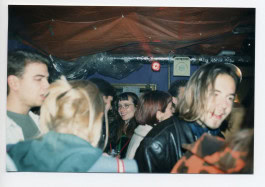
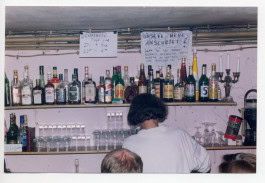
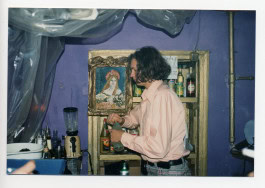
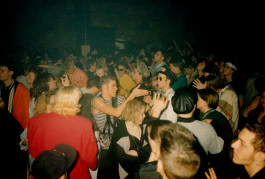
Berlin's clubs in the 1990s were not places where people went to be seen. Rather, people retreated into these abandoned sanctuaries to disappear into the moment. It was all about experiencing the music, the movement, and the collective presence.
There were no Instagram stories documenting the night in real time and no group chats announcing last-minute venue changes.
"No one had a mobile phone," recalls Cookie. "You said you were going to meet there, and then you were there and you met there."
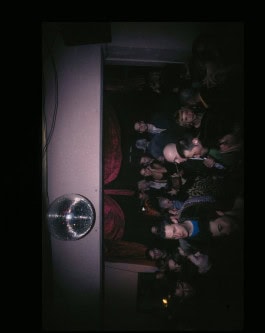
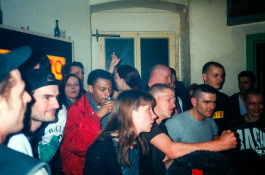
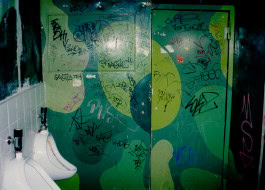
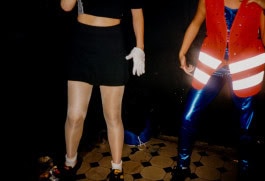
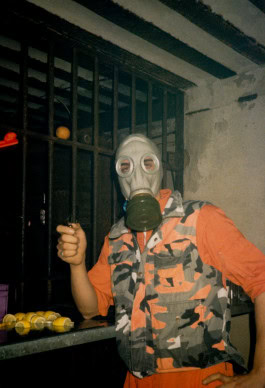
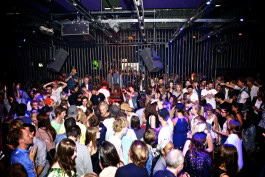
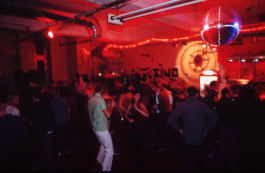
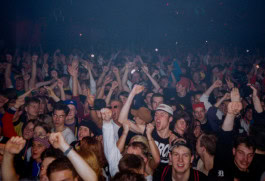
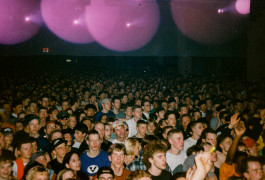
Photographer Tilman Brembs spent years documenting Berlin's club culture through his project Zeitmaschine – Analog Rave. Yet he insists that he was never interested in documenting parties themselves.
"I was drawn to the people rather than the scene itself," he says. "I wasn't documenting events, but states - moments where someone is completely present."
Looking at Brembs' photographs today, this presence is completely perceptible. His images capture sweat, movement, exhaustion, joy, and intimacy. Faces blur, bodies merge into the crowd, and time itself appears suspended.
"It wasn't about being seen," Brembs recalls. "The energy was physical and direct. People weren't observing themselves; they were part of the moment."
This sense of immediacy was inseparable from the city itself. Berlin in the 1990s was still defined by transition. "The transition was visible everywhere," Brembs says. "Empty spaces and in-between states made these places possible. That sense of incompleteness is present in the images."
Living in the moment, disconnected from technology, shaped Berlin's nightlife in profound ways. Clubs became stable points of connection within an otherwise rapidly changing city.
At Cookies, Tuesday nights gradually evolved into a cultural meeting point for Berlin's creative scene. DJs returning from international tours, musicians, artists, designers, and cultural workers gathered there, drawn by the music and the people.
"It was a lot of regular guests," Cookie remembers. "At a certain point, when someone came in there that we didn't know, we asked ourselves: 'Who is this?'"
What united these communities was a genuine desire for connection. "It was very open-minded and there was no interest in what people were doing during the day," Cookie says. "You were not interested if someone was wealthy or poor, or what they did for work."
While techno undeniably shaped Berlin's international reputation, the reality of the city's nightlife was far more nuanced. Artists, musicians, international visitors, local creatives, and devoted regulars shared the same dance floor. And perhaps this is why so many people continue to speak about Berlin's 1990s club culture with such affection. They are remembering a way of being together.
At Cookies, scenes that might seem distinct today existed side by side. "In the 90s, you had the techno scene, but you also had the funk-soul scene, you had the disco scene," recalls Cookie. "These would all somehow mix in Cookies."
Can the Berlin of the 1990s ever be recreated? All three voices we spoke with suggest that the answer is no.
For photographer Tilman Brembs, one of the defining differences between then and now lies in the atmosphere itself. Today's nightlife, he says, feels "more structured and more self-aware.” “Back then, there was more risk and immediacy,” he claims.
Cookie agrees that nostalgia alone cannot bring the decade back. "You can never go back into the past," he reflects. Just as Berliners in the 1990s were not trying to recreate the 1950s or 1960s, today's generation is creating its own culture under entirely different circumstances. Every era, he suggests, has its own uniqueness.
Yet despite the city's transformation, something of that period endures. Photographer Gundula Schulze Eldowy speaks of Berlin's Urgeist - its original spirit of improvisation, experimentation, and resilience. Although increasingly obscured by regulation, development, and commercialization, she believes it has never fully disappeared.
Perhaps this is why the decade continues to fascinate. It was a brief historical moment when a generation seized the freedom to imagine new ways of living together.
Today, some of that spirit still lingers. Many clubs have disappeared, while others have survived and evolved. Buildings have been renovated, neighborhoods transformed, and the city itself has become almost unrecognizable in places. Yet the search for freedom and experimentation remains. The Urgeist is still alive.
Related Articles:

Today, Berlin in the 1990s is often remembered through the lens of club culture and a sense of freedom. "That image is true," photographer Gundula Schulze Eldowy says, "because people improvised constantly. They experimented. They finally did everything that had previously been impossible under state restrictions." But she quickly adds another memory that is often forgotten. "It was also a city of ruins."
Within this atmosphere, the new character of Berlin in the ‘90s was formed. But before it became known for the all-night parties that travelers from around the world now queue for, the city was raw, experimental, and reflected the budding identity of people rediscovering Berlin, and themselves.
The fall of the Berlin Wall was a pivotal moment that reunited two sides of the city. Yet it did not immediately provide answers. People didn't know what to do. They were filled with hope and curiosity, while uncertainty and the lingering weight of oppression still sat at the back of their minds.
In places like Mitte and Kreuzberg, facades crumbled while empty apartments and warehouses stood abandoned. There was very little regulation governing what could happen inside the countless empty buildings scattered across the city.
"There was energy there. You could just do things. You didn't need money to do things," recalls Cookie, founder of the legendary Cookies club.
In those years, a vacant basement somewhere in Kreuzberg, an abandoned storefront in Mitte, or an empty apartment in Friedrichshain could become a bar, a gallery, a club, or simply a place to gather. The now-legendary Tacheles emerged from an abandoned department store, while curator Klaus Biesenbach transformed a derelict margarine factory into what would become Kunst-Werke, one of Berlin's most influential contemporary art institutions.
According to photographer Gundula Schulze Eldowy, people at that moment were driven by excitement for improvisation. After decades of rigidity in the former GDR, Berliners suddenly found themselves standing in front of a radically different reality, yet with wide open arms.
What surprised Gundula the most was how quickly people adapted. "People were able to rethink their lives very quickly when circumstances changed, when systems collapsed, and when something entirely new emerged," she says.
As word spread, young artists, musicians, designers, and creatives from around the world began arriving in the city. "Our neighbors were not people from Berlin," Cookie remembers. "The neighbors were from New Zealand, Australia, from everywhere." That’s when Berlin started shaping into the international meeting point for a generation searching for alternatives.
"There was something initiatory about that period," Gundula reflects, "a sense that things became possible that would not have been possible in more stable and secure times."

Among the many young people experimenting with Berlin's forgotten spaces was Heinz “Cookie” Gindullis.
He arrived in the city at the age of seventeen. Just four years later, following the same spirit of improvisation that seemed to define Berlin, he transformed the cellar of the building where he lived into a small Tuesday-night bar.
“I started in the house where I lived, and we didn't know who the owner was,” recalls Cookie. “I cleared out the cellar and opened up a small bar.” He initially called it Biscuits, but very soon the venue became known as Cookie, because of the owner’s name. “People were saying, let's go to Cookie’s, and that's how it became Cookies."
Like much of Berlin at the time, the club emerged organically. "I just went with the flow," Cookie says with a laugh. "Like today, I don't know what I'm going to do in ten years."
Unlike many of Berlin's early clubs, which embraced stark industrial aesthetics and offered little more than concrete floors and plastic cups, Cookies sought to create something different. "It was always the guest living room," Cookie says. Even though the club was rough around the edges, they had a little bit of extra.
"Even if I was only going to be in a specific venue for three or four months, I was invested in creating a cozy atmosphere, so it felt like a living room for you."
Back then, uncertainty hung over almost every new entrepreneur in Berlin. “There was always a risk,” Cookie recalls. "You never knew how long it would last. There was no guarantee that you'd still be there in two years. It could be a week, three months, six months, or five years."
As he was going with the flow, Cookie didn’t expect to leave a legacy. Today, Cookies Cream continues to exist, now evolved with time into a Michelin-starred vegetarian restaurant. “We moved seven times, and we’re still there, at the last venue,” says Cookie.


Berlin's clubs in the 1990s were not places where people went to be seen. Rather, people retreated into these abandoned sanctuaries to disappear into the moment. It was all about experiencing the music, the movement, and the collective presence.
There were no Instagram stories documenting the night in real time and no group chats announcing last-minute venue changes.
"No one had a mobile phone," recalls Cookie. "You said you were going to meet there, and then you were there and you met there."
Photographer Tilman Brembs spent years documenting Berlin's club culture through his project Zeitmaschine – Analog Rave. Yet he insists that he was never interested in documenting parties themselves.
"I was drawn to the people rather than the scene itself," he says. "I wasn't documenting events, but states - moments where someone is completely present."
Looking at Brembs' photographs today, this presence is completely perceptible. His images capture sweat, movement, exhaustion, joy, and intimacy. Faces blur, bodies merge into the crowd, and time itself appears suspended.
"It wasn't about being seen," Brembs recalls. "The energy was physical and direct. People weren't observing themselves; they were part of the moment."
This sense of immediacy was inseparable from the city itself. Berlin in the 1990s was still defined by transition. "The transition was visible everywhere," Brembs says. "Empty spaces and in-between states made these places possible. That sense of incompleteness is present in the images."


Living in the moment, disconnected from technology, shaped Berlin's nightlife in profound ways. Clubs became stable points of connection within an otherwise rapidly changing city.
At Cookies, Tuesday nights gradually evolved into a cultural meeting point for Berlin's creative scene. DJs returning from international tours, musicians, artists, designers, and cultural workers gathered there, drawn by the music and the people.
"It was a lot of regular guests," Cookie remembers. "At a certain point, when someone came in there that we didn't know, we asked ourselves: 'Who is this?'"
What united these communities was a genuine desire for connection. "It was very open-minded and there was no interest in what people were doing during the day," Cookie says. "You were not interested if someone was wealthy or poor, or what they did for work."
While techno undeniably shaped Berlin's international reputation, the reality of the city's nightlife was far more nuanced. Artists, musicians, international visitors, local creatives, and devoted regulars shared the same dance floor. And perhaps this is why so many people continue to speak about Berlin's 1990s club culture with such affection. They are remembering a way of being together.
At Cookies, scenes that might seem distinct today existed side by side. "In the 90s, you had the techno scene, but you also had the funk-soul scene, you had the disco scene," recalls Cookie. "These would all somehow mix in Cookies."


Can the Berlin of the 1990s ever be recreated? All three voices we spoke with suggest that the answer is no.
For photographer Tilman Brembs, one of the defining differences between then and now lies in the atmosphere itself. Today's nightlife, he says, feels "more structured and more self-aware.” “Back then, there was more risk and immediacy,” he claims.
Cookie agrees that nostalgia alone cannot bring the decade back. "You can never go back into the past," he reflects. Just as Berliners in the 1990s were not trying to recreate the 1950s or 1960s, today's generation is creating its own culture under entirely different circumstances. Every era, he suggests, has its own uniqueness.
Yet despite the city's transformation, something of that period endures. Photographer Gundula Schulze Eldowy speaks of Berlin's Urgeist - its original spirit of improvisation, experimentation, and resilience. Although increasingly obscured by regulation, development, and commercialization, she believes it has never fully disappeared.
Perhaps this is why the decade continues to fascinate. It was a brief historical moment when a generation seized the freedom to imagine new ways of living together.
Today, some of that spirit still lingers. Many clubs have disappeared, while others have survived and evolved. Buildings have been renovated, neighborhoods transformed, and the city itself has become almost unrecognizable in places. Yet the search for freedom and experimentation remains. The Urgeist is still alive.


Related Articles:
You need to load content from reCAPTCHA to submit the form. Please note that doing so will share data with third-party providers.
More InformationYou need to load content from Turnstile to submit the form. Please note that doing so will share data with third-party providers.
More InformationYou are currently viewing a placeholder content from Facebook. To access the actual content, click the button below. Please note that doing so will share data with third-party providers.
More InformationYou are currently viewing a placeholder content from Instagram. To access the actual content, click the button below. Please note that doing so will share data with third-party providers.
More InformationYou need to load content from hCaptcha to submit the form. Please note that doing so will share data with third-party providers.
More InformationYou need to load content from reCAPTCHA to submit the form. Please note that doing so will share data with third-party providers.
More InformationYou are currently viewing a placeholder content from Turnstile. To access the actual content, click the button below. Please note that doing so will share data with third-party providers.
More InformationYou are currently viewing a placeholder content from X. To access the actual content, click the button below. Please note that doing so will share data with third-party providers.
More Information