
Berlin is already gearing up for an intense cultural season, new exhibitions, openings, and one of the busiest Februaries of the year ahead. And yet, somewhere between meetings and plans, there is still a desire to disappear for a moment. To ground yourself. To leave the noise behind.
For this edition of Take Off with The Columbist, we suggest an unexpected yet deeply rewarding route, Koblenz, a city many know by name, but few truly explore.
Because it is beautiful, and because it is calm. Koblenz sits at the meeting point of two great rivers, the Rhine and the Moselle, a setting that instantly slows the rhythm. It is also an ideal base for exploring the Upper Middle Rhine Valley, a UNESCO-listed landscape of vineyards, castles, and winding river roads.
From Berlin, the journey takes around four to five hours, depending on the route, long enough to truly disconnect, yet still perfect for a long weekend escape. The distance creates a mental pause, far enough to feel away, close enough to remain effortless.

ㅤ
Start at Deutsches Eck, where the Moselle flows into the Rhine, the city’s most iconic image and a perfect opening scene. From here, take the cable car across the river up to Ehrenbreitstein Fortress, where panoramic views reveal just how dramatically this landscape unfolds.
Down below, the old town and river promenades invite long walks, coffee stops, and unhurried afternoons. In warmer months, Koblenz feels green, light, and open, terraces filled with locals, sailboats drifting past, cyclists following the water. In winter, the beauty remains, but the focus shifts inward.
And that is exactly when this destination becomes most interesting.
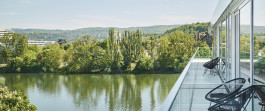
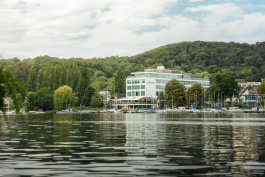
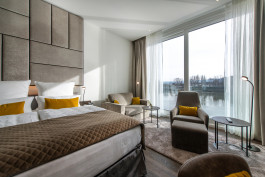
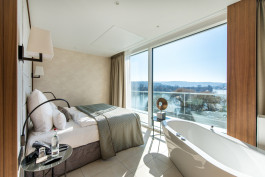
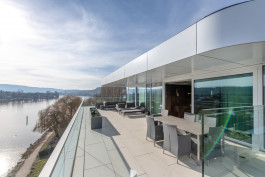
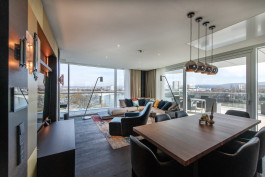
Set directly on the Moselle, FÄHRHAUS Koblenz is a modern 4.5-star hotel conceived as a destination rather than a classic overnight stay. The house offers 37 rooms plus 10 suites, many with floor-to-ceiling windows and uninterrupted river views.
The architecture is calm, open, and transparent, a recurring theme throughout the hotel. Guests are encouraged to feel at home, nothing is rigid, nothing overly formal. This sense of ease carries through every space, from the lobby to the spa, from breakfast to late-night conversations.
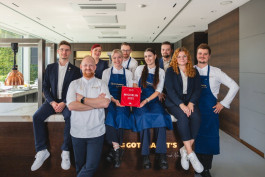
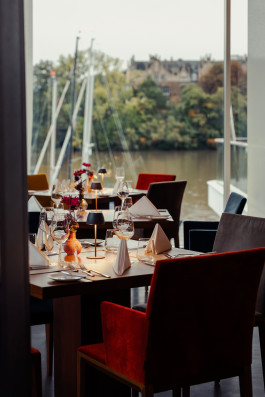
At the heart of the hotel lies its culinary ambition. FÄHRHAUS Koblenz is home to two restaurants and a bar that naturally connects them, each with its own rhythm and personality.
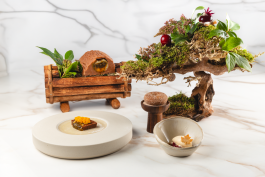
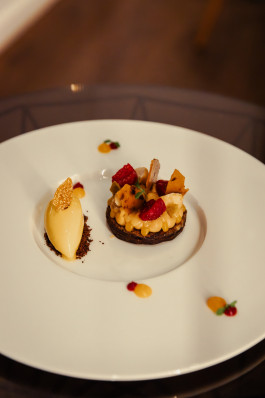
The gastronomic soul of the house is GOTTHARDT’S by Yannick Noack, the two-Michelin-star restaurant led by Yannick Noack, one of Germany’s youngest chefs to hold two stars.
What defines the experience here is not only technique, but attitude. There is no rigid tasting menu imposed on the guest. Instead, diners compose their own journey from a selection of dishes, whether that means two plates or the full sequence. Freedom is part of the concept.
Quality always comes before origin. Regional sourcing matters, but never at the expense of excellence. Sustainability is practiced through precision, products are used in their entirety, menus evolve gradually to avoid waste, and leftovers are intelligently integrated into other services. “Respect for the product,” as Noack explains, “is real sustainability.”
Vegetarian menus are treated as a creative playground rather than a compromise, equal in depth, work, and value to the classic menu. Vegan cuisine, however, is consciously excluded, as it does not align with the restaurant’s culinary philosophy.
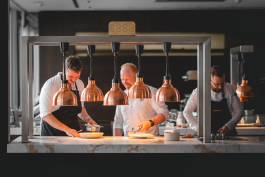
A defining moment of the evening is the chef’s table, where guests can witness the process up close, the choreography of the kitchen, the dialogue between service and cuisine, and the calm intensity behind each plate. Interaction is encouraged, but never overwhelming. Questions are welcome after the dish, not before. Curiosity is meant to unfold naturally.
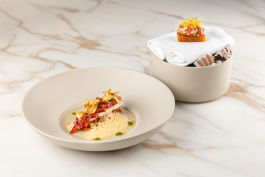
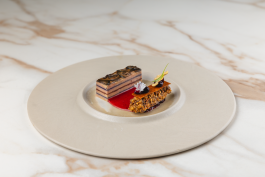
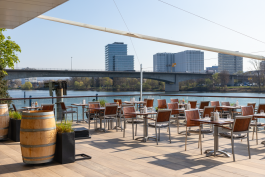
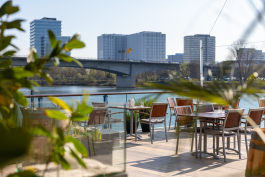
Restaurant LANDGANG, the second restaurant, offers a more relaxed, Mediterranean-inspired menu and is open throughout the day. It is a place for long lunches, informal dinners, and spontaneous evenings, welcoming both hotel guests and locals.
Between the two restaurants sits the bar, an essential social anchor of the house. Aperitifs begin here, conversations linger here, and many evenings naturally end here, often with a final glass of Riesling or a thoughtfully crafted alcohol-free pairing.
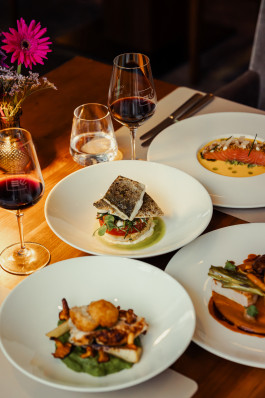
Wine at FÄHRHAUS Koblenz is not treated as an accessory to the menu, but as an experience in its own right, one that mirrors the philosophy of the kitchen. Curated by sommelier Tobias Gläser, the wine concept is built around openness, curiosity, and education without pressure. The focus lies naturally on the Moselle and Riesling, yet the selection moves far beyond regional borders, opening up conversations between terroirs, styles, and drinking cultures.
Alongside a deep Moselle selection, the wine list includes international discoveries and exclusive collaborations, among them the FÄHRHAUS Edition sparkling wine, developed together with Weingut Wegeler. A particular highlight is a rare partnership that allows Louis Roederer Cristal Rosé to be served by the glass, a statement that quietly underlines the hotel’s culinary ambition.
Equally remarkable is the approach to alcohol-free pairings. Rather than treating them as a compromise, they are curated with the same precision and seriousness as classic wine accompaniments, offering structure, acidity, depth, and narrative. Tastings are offered throughout the year, and private wine sessions can be arranged, turning a stay into a deeper exploration of the Moselle’s wine culture, and beyond.
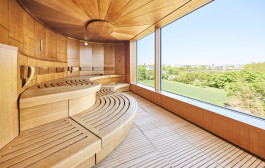
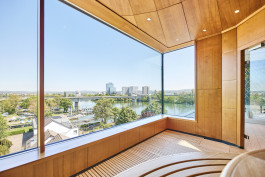
Winter is the perfect season to turn inward, and the FÄHRHAUS SPA is designed exactly for that. With panoramic views over the Moselle, the spa features saunas, a pool, and a carefully curated treatment menu.
One standout ritual is the Sound Quartz Bed Massage, a deeply relaxing experience combining sound vibrations and warmth, designed to release tension and reset both body and mind.
From the hotel, guests can also arrange private boat tours along the Moselle through local partners, a quiet, almost meditative way to experience the landscape from the water.
Koblenz is well connected to several major German and European cities, making it a flexible destination for a long weekend escape. From Berlin, the journey takes around four to five hours by train, most commonly via Frankfurt am Main, where frequent high-speed connections continue directly to Koblenz.
Frankfurt Airport serves as the most convenient international gateway, with a smooth train connection straight to the city.
Beyond Frankfurt, Koblenz is easily reachable from Cologne, Düsseldorf, Bonn, Mainz, Wiesbaden, Mannheim, and Luxembourg, positioning it as a natural meeting point in western Germany.
Traveling by train is often the most relaxed option, while arriving by car opens up additional possibilities, especially for those wishing to explore the Moselle and Rhine valleys at their own pace, stopping at vineyards, small towns, and castles along the way.
Whichever route you choose, the journey itself already begins to slow the rhythm.
A winter weekend in Koblenz offers space, silence, and substance, rivers flowing steadily, a young Michelin-starred team cooking with conviction, wine that tells stories, and a hotel that understands the luxury of ease.
Slow down. Stay curious. Discover Germany’s quieter corners. And let a long weekend become a reset, four to five hours away from Berlin, but worlds apart.
Related Articles:

Berlin is already gearing up for an intense cultural season, new exhibitions, openings, and one of the busiest Februaries of the year ahead. And yet, somewhere between meetings and plans, there is still a desire to disappear for a moment. To ground yourself. To leave the noise behind.
For this edition of Take Off with The Columbist, we suggest an unexpected yet deeply rewarding route, Koblenz, a city many know by name, but few truly explore.
Because it is beautiful, and because it is calm. Koblenz sits at the meeting point of two great rivers, the Rhine and the Moselle, a setting that instantly slows the rhythm. It is also an ideal base for exploring the Upper Middle Rhine Valley, a UNESCO-listed landscape of vineyards, castles, and winding river roads.
From Berlin, the journey takes around four to five hours, depending on the route, long enough to truly disconnect, yet still perfect for a long weekend escape. The distance creates a mental pause, far enough to feel away, close enough to remain effortless.

ㅤ
Start at Deutsches Eck, where the Moselle flows into the Rhine, the city’s most iconic image and a perfect opening scene. From here, take the cable car across the river up to Ehrenbreitstein Fortress, where panoramic views reveal just how dramatically this landscape unfolds.
Down below, the old town and river promenades invite long walks, coffee stops, and unhurried afternoons. In warmer months, Koblenz feels green, light, and open, terraces filled with locals, sailboats drifting past, cyclists following the water. In winter, the beauty remains, but the focus shifts inward.
And that is exactly when this destination becomes most interesting.
Set directly on the Moselle, FÄHRHAUS Koblenz is a modern 4.5-star hotel conceived as a destination rather than a classic overnight stay. The house offers 37 rooms plus 10 suites, many with floor-to-ceiling windows and uninterrupted river views.
The architecture is calm, open, and transparent, a recurring theme throughout the hotel. Guests are encouraged to feel at home, nothing is rigid, nothing overly formal. This sense of ease carries through every space, from the lobby to the spa, from breakfast to late-night conversations.


At the heart of the hotel lies its culinary ambition. FÄHRHAUS Koblenz is home to two restaurants and a bar that naturally connects them, each with its own rhythm and personality.
The gastronomic soul of the house is GOTTHARDT’S by Yannick Noack, the two-Michelin-star restaurant led by Yannick Noack, one of Germany’s youngest chefs to hold two stars.
What defines the experience here is not only technique, but attitude. There is no rigid tasting menu imposed on the guest. Instead, diners compose their own journey from a selection of dishes, whether that means two plates or the full sequence. Freedom is part of the concept.
Quality always comes before origin. Regional sourcing matters, but never at the expense of excellence. Sustainability is practiced through precision, products are used in their entirety, menus evolve gradually to avoid waste, and leftovers are intelligently integrated into other services. “Respect for the product,” as Noack explains, “is real sustainability.”
Vegetarian menus are treated as a creative playground rather than a compromise, equal in depth, work, and value to the classic menu. Vegan cuisine, however, is consciously excluded, as it does not align with the restaurant’s culinary philosophy.
A defining moment of the evening is the chef’s table, where guests can witness the process up close, the choreography of the kitchen, the dialogue between service and cuisine, and the calm intensity behind each plate. Interaction is encouraged, but never overwhelming. Questions are welcome after the dish, not before. Curiosity is meant to unfold naturally.


Restaurant LANDGANG, the second restaurant, offers a more relaxed, Mediterranean-inspired menu and is open throughout the day. It is a place for long lunches, informal dinners, and spontaneous evenings, welcoming both hotel guests and locals.
Between the two restaurants sits the bar, an essential social anchor of the house. Aperitifs begin here, conversations linger here, and many evenings naturally end here, often with a final glass of Riesling or a thoughtfully crafted alcohol-free pairing.


Wine at FÄHRHAUS Koblenz is not treated as an accessory to the menu, but as an experience in its own right, one that mirrors the philosophy of the kitchen. Curated by sommelier Tobias Gläser, the wine concept is built around openness, curiosity, and education without pressure. The focus lies naturally on the Moselle and Riesling, yet the selection moves far beyond regional borders, opening up conversations between terroirs, styles, and drinking cultures.
Alongside a deep Moselle selection, the wine list includes international discoveries and exclusive collaborations, among them the FÄHRHAUS Edition sparkling wine, developed together with Weingut Wegeler. A particular highlight is a rare partnership that allows Louis Roederer Cristal Rosé to be served by the glass, a statement that quietly underlines the hotel’s culinary ambition.
Equally remarkable is the approach to alcohol-free pairings. Rather than treating them as a compromise, they are curated with the same precision and seriousness as classic wine accompaniments, offering structure, acidity, depth, and narrative. Tastings are offered throughout the year, and private wine sessions can be arranged, turning a stay into a deeper exploration of the Moselle’s wine culture, and beyond.
Winter is the perfect season to turn inward, and the FÄHRHAUS SPA is designed exactly for that. With panoramic views over the Moselle, the spa features saunas, a pool, and a carefully curated treatment menu.
One standout ritual is the Sound Quartz Bed Massage, a deeply relaxing experience combining sound vibrations and warmth, designed to release tension and reset both body and mind.
From the hotel, guests can also arrange private boat tours along the Moselle through local partners, a quiet, almost meditative way to experience the landscape from the water.


Koblenz is well connected to several major German and European cities, making it a flexible destination for a long weekend escape. From Berlin, the journey takes around four to five hours by train, most commonly via Frankfurt am Main, where frequent high-speed connections continue directly to Koblenz.
Frankfurt Airport serves as the most convenient international gateway, with a smooth train connection straight to the city.
Beyond Frankfurt, Koblenz is easily reachable from Cologne, Düsseldorf, Bonn, Mainz, Wiesbaden, Mannheim, and Luxembourg, positioning it as a natural meeting point in western Germany.
Traveling by train is often the most relaxed option, while arriving by car opens up additional possibilities, especially for those wishing to explore the Moselle and Rhine valleys at their own pace, stopping at vineyards, small towns, and castles along the way.
Whichever route you choose, the journey itself already begins to slow the rhythm.
A winter weekend in Koblenz offers space, silence, and substance, rivers flowing steadily, a young Michelin-starred team cooking with conviction, wine that tells stories, and a hotel that understands the luxury of ease.
Slow down. Stay curious. Discover Germany’s quieter corners. And let a long weekend become a reset, four to five hours away from Berlin, but worlds apart.
Related Articles:
You need to load content from reCAPTCHA to submit the form. Please note that doing so will share data with third-party providers.
More InformationYou need to load content from Turnstile to submit the form. Please note that doing so will share data with third-party providers.
More InformationYou are currently viewing a placeholder content from Facebook. To access the actual content, click the button below. Please note that doing so will share data with third-party providers.
More InformationYou are currently viewing a placeholder content from Instagram. To access the actual content, click the button below. Please note that doing so will share data with third-party providers.
More InformationYou need to load content from hCaptcha to submit the form. Please note that doing so will share data with third-party providers.
More InformationYou need to load content from reCAPTCHA to submit the form. Please note that doing so will share data with third-party providers.
More InformationYou are currently viewing a placeholder content from Turnstile. To access the actual content, click the button below. Please note that doing so will share data with third-party providers.
More InformationYou are currently viewing a placeholder content from X. To access the actual content, click the button below. Please note that doing so will share data with third-party providers.
More Information