

The modern feminist literature includes Sophie von La Roche’s Almanach für Frauen in 1784. This was followed by Louise Otto-Peters’ Frauen Zeitung in 1849 and Hedwig Dohm’s Die Antifeministen; ein Buch der Verteidigung (1902) and Werde, die du bist: Wie Frauen werden (1984).
Ula Stöckl’s debut film, Neun Leben hat die Katze, released in 1968, is said to be the first feminist film in Germany. Since then, women’s rights have evolved, been tested, and have evolved again. Here is our list of five books and five movies that have shaped feminism in Germany as we know it today.
English: The Story of Miss von Sternheim
About the author:
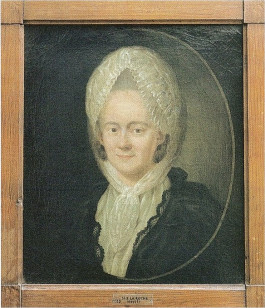
Being one of the most well-known earliest female writers in the 18th century, Marie Sophie von La Roche was Germany’s first financially-independent female professional writer. Her writings represent the Age of Enlightenment and the Sentimental Movement (Empfindsamkeit) in German literature. She debuted with Geschichte des Fräuleins von Sternheim in the literary world, establishing the ‘women’s novel’ as a proper genre.

About the novel:
The epistolary feminist books centres on Sophie von Sternheim, who descended from English nobility and was raised as a devout Christian. Narrated through her letters to her friend, Emilia, Sophie retains her feminine autonomy and values in the German aristocracy despite social challenges.
She is not allowed to pursue an education after her parents’ deaths, and her life remains focused on marriage. The novel was targeted towards educated middle-class female readership, with themes of Christian suffering, patriarchy, and female independence.
As women in Germany could not publish literature without male support in the 18th century, Christoph Martin Wieland made sure that it was published anonymously through his Leipzig-based publisher, Reich. After her success, she went on to write around twenty-three novels, each set in a different setting.
She was rediscovered in the 1970s, and modern research now focuses on her themes of female socialization in 18th-century society. You can buy women's books on Amazon, eBay, World of Books, and Thalia.
Eng: The Artificial Silk-Girl
About the author:
Irmgard Keun was popular for writing about the life of women, and belongs to the late Weimar period and the New Objectivity movement. She uses her novels’ characters to critique the social and gender problems in the early 1930s, such as consumerism, and feminine identities through their relationships with men.
About the novel:
Das kunstseidene Mädchen takes the reader through the Rhineland in 1931 and then in Berlin in 1932, centering on 18-year-old Doris writing in her diary, resembling the silent films of her time. Coming from a modest background, she wants to live life as a celebrity, living the high life. She continues to make questionable sexual decisions, after which she escapes to Berlin. Though she finds some comfort with Ernst, she leaves him at the end of the novel and moves in with Karl.
The feminist book was inspired by Anita Loos’s Gentlemen Prefer Blondes to describe 1920s Berlin and cinema from the perspective of a newly-adult woman. It was highly appreciated for its themes of female survival, contemporary materialism, and a life lived with humor. It was translated into English, Russian, Hungarian, Danish, Polish, Spanish, and Hebrew. It remained a bestseller in Weimar Berlin until the Nazis banned it in 1933. It is available on Amazon, the Boston Public Library, the Archive, and the Open Library.
Eng: The Life and Adventures of Trobadora Beatrice as Chronicled by Her Minstrel Laura
About the author:
Irmtraud Morgner was a notable German writer bringing magic realism into the themes of gender roles in East Germany. Her writing themes also included the effect of censorship in literature in East German society, as she was required to submit her works to heavy editing, constant surveillance, and rejection, despite winning literary awards in East Germany.
About the novel:
Leben und Abenteuer der Trobadora Beatriz nach Zeugnissen ihrer Spielfrau Laura is an epistolary feminist book weaving Morse code and love poetry into its narrative. It centers on Provençal love singer Beatriz waking up in the year 1968 after making a pact with Persephone, and she wishes to live life as a liberated woman who is treated as a human being.
She details her experiences in Germany, but repeatedly fails as ‘becoming human as a woman’. She later becomes a traditional housewife, but falls out of a window and dies in 1968. The tale also includes vivid descriptions of everyday and fantastical life and places, and the story further continues in Amanda (1983).
The reader will find references to contemporary events of the time, such as the GDR’s reporting on abortion legislation and the French national elections in 1973, with themes of humanity, feminism, society, and politics in it. Today, you can find the book on Amazon, AbeBooks, and Verlag.
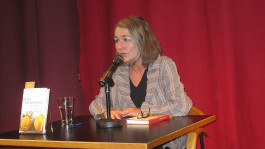
Eng: The Mussel Feast
About the author:
Birgit Vanderbeke was born in East Germany, but moved with her family to West Germany in 1961. As she grew older, she was more aware of the ideological differences between East and West Germany, and she and her husband relocated to France to raise their child there. She was an important contemporary German writer, and she had received the Ingeborg Bachmann prize and the Solothurn prize during her lifetime.
About the novel:
The novel opens with the unnamed first-person narrator and her family preparing a meal to celebrate their father, who is returning from an official trip. Father, who is not named, is a dictatorial man who is feared and respected, but not really loved. As the family awaits the patriarch's coming home, their moods change from impatience to frustration. In the end, they accept that Father will not return, and they are now relieved. Father represents an autocratic and tyrannical figure, where people around him are expected to worship him, while he simply tolerates them.
You will find glimmering elements of family, dictatorship, and feminism, but also stronger socio-political themes of oppression and the end of communism in Eastern Europe in 1989. The feminist book is available on Amazon, AbeBooks, World of Books, and Medimops

End: Djinns
About the author:
Fatma Aydemir hails from a Kurdish-Turkish heritage and was raised in Karlsruhe, Germany. Dschinns is her second novel, but she has co-edited essays about ethnic minorities in Germany with Hengameh Yaghoobifarah.
About the novel:
Dschinns is a feminist book focusing on women and the LGBTQ+ community through a Turkish-Kurdish migrant family living in Karlsruhe and Zeytinburnu, 1999. The Yılmaz family’s unresolved traumas are spoken of as djinns that attack their lives, but remain hidden from public conversation. They have completely abandoned their Kurdish culture to fit in with the mainstream Turkish society in Germany, but remain discriminated against in both Turkish and Kurdish communities for being the ‘other group’.
Though the children, raised in Germany, want to be happy, their parents want them to remain ‘normal’, which requires silence over happiness, even if that causes suffocation in private. Themes of immigration, queerness, prejudice, domestic violence, and heritage are integrated into the story.
There are further references to feminism and Simone de Beauvoir in the woman book, a feminist icon in literature, which Peri unsuccessfully tries to explain to her mother, showing us a generation gap. If you wish to read more, you’ll find the book on Amazon, AbeBooks, eBay, and New Books in German.
Eng: The Cat Has Nine Lives
Cast: Liane Hielscher, Marie Philippine (Kristine Deloup), Jürgen Arndt, Antje Ellermann, Alexander Kaempfe, Elke Kummer, Hartmut Kirste, Wolfgang von Ungern-Sternberg, Heidi Stroh
About the filmmaker:
Ula Stöckl was raised during the wartime bombing of Ulm, witnessing death, damage, and destruction. She graduated from the Institut für Filmgestaltung (Hochschule für Gestaltung Ulm) in 1968, making her the first female student to graduate from the course.
Her first film was Antigone, a feminist play in itself, using a silent 35-mm Arri camera, shot in Techniscope, and printed using the Technicolor dye-transfer process. Her graduation project, Neun Leben hat die Katze (1968), is said to be “West Germany’s first feminist film” by Christa Maerkar.
About the film:
The essay films women is based on three women – a journalist Katharina and her French female friend Anne, and a pop singer as they discuss careers, sex, personal fantasies, and dreams, in a male-dominated society. Five different types of women become the protagonists, all of whom are ‘social taboos’ – an unmarried professional woman, a career woman, a confused divorcee, a ‘dream woman’, and a betrayed wife.
With the protagonists across different socio-cultural classes, one finds themes of feminism, female autonomy, and the classic debate of domestic versus career women. Regarding the film for women, Stöckl says, “Women have never had so many chances to organise their lives the way they want. But first they have to learn that they can want something”.
Neun Leben hat die Katze was screened in the Berlinale Classics section of the 65th Berlin International Film Festival, 2015. A Technicolor is stored in the Munich Film Museum and was used as a color reference for the digital restoration. You can watch the movie on Prime Video and MUBI.
Eng: The Journey to Lyon
About the filmmaker:
Claudia von Alemann graduated from the Institut für Filmgestaltung in 1968 and subsequently moved to Paris. Her first documentary film was Ce n’est qu’un debut – continuons le combat (1969), which was themed on the role of film in political struggles. She combined fairytale and surreal motifs, slapstick, and pantomime in her early short films. She came back to Germany after the unrest started in Paris in 1968, where she became involved with the autonomous women’s movement and focused more on feminist cinema. She organized the 1st International Women's Film Festival at the Arsenal cinema in West Berlin with Helke Sander. In 1974, von Alemann co-founded the feminist film magazine Women and Film.
About the film:
Die Reise nach Lyon is about a young historian, Elisabeth, who wants to conduct research on the nineteenth-century feminist, Flora Tristan, in Lyon. She speaks to different people in the French city, only carrying a cassette recorder and her notebook.
Elisabeth also refers to Tristan’s quotes and writing while visiting historical sites throughout the film. There are themes of separation, a budding attraction, and female autonomy. The woman film's ending is left open, as we don’t know whether Elisabeth finds the love she wants. It received the German Film Critics' Prize in 1982. The film is available on DVD, Amazon Prime Video, and at feminist events.
Eng: Daughters of Two Worlds
About the filmmaker:
Serap Berrakkarasu came to Germany from Istanbul and used to work in a women’s shelter in her home country. Her films focus on working-class migrant women and their lives, hardships, and perseverance. Berrakkarasu’s chosen themes are nostalgia, cultural identity, and mixed feelings about being lost in a foreign land.
About the film:
This Turkish-German film for women is about the generation gap between a mother and daughter living in Germany. The mother, Seriban, had immigrated to Germany from Turkey, while her daughter, Meral, was raised there and survived a painful arranged marriage. It portrays the difference in culture, life experiences, and perspectives between the two women.
Themes of the generation gap, feminism, immigration, and mother-daughter bonding. The movie switches between Turkish and German as the women now speak different languages, with a hidden dialogue between the two women in a parallel sequence.
The movie was screened as part of the Retrospective & Berlinale Classics 2019 at the 69th Berlin International Film Festival. Serap Berrakkarasu met the inspiration for the protagonists when she worked at a women’s shelter in Lübeck, and says, “the young Turkish women here were pretty isolated. I wanted to show the girls and women that they weren’t all alone with their problems. The parents are not monsters. You can understand them; they were shaped by their own upbringing.” It is available on MUBI.
Eng: Against The Wall
Cast: Birol Ünel, Sibel Kekilli, Catrin Striebeck, Meltem Cumbul
About the filmmaker:
Fatih Akın was born to Turkish parents in Hamburg and graduated from the University of Fine Arts with a degree in visual communications. Though he is not defined as a feminist filmmaker, most of his work is based on gender and feminism. He focuses on women’s struggle against patriarchal traditions in his films, most of whom come from Turkish families in Germany.
About the film:
Though not a typical feminist film, Gegen die Wand is a hard look at female autonomy, marriage of convenience, and the impact of abuse on young women. The films women is centered on a single Turkish-German man, Cahit, who is approached by a young Turkish woman, Sibel Güner, who is suicidal. She enters into a marriage of convenience to escape her restrictive family, but the couple eventually falls in love despite their fake marriage. Sibel is an example of the antiheroine in this film, and struggles with sexual assault, infidelity, and freedom in the film.
It won several awards in Germany: The Golden Bear for Best Film at 54th Berlin International Film Festival in 2004; The Golden Prize for Best Actress at the Deutscher Filmpreis in 2004, The Quadriga Prize in 2004; The Golden Bambi for the best shooting star at the 56th Bambi-Verleihung in Hamburg; and The Golden Glide Prize for the best German film of 2003-2004 at the Leipzig Film Fair.
Cast: Shira Haas, Amit Rahav, and Jeff Wilbusch
About the filmmaker:
Maria Schrader’s work is based on gender roles, female autonomy, and women’s liberation. She depicts women as complex figures with agency and individuality instead of making them victims. Schrader works against the conventional ‘male gaze’ and has publicly advocated for gender quotas in the movie industry. She has openly spoken about facing ‘gender-based mistrust’ when she moved to directing movies, and believes that this step would ensure professional equality.
About the mini-series:
A German four-part miniseries, Unorthodox, is inspired by Deborah Feldman’s autobiography, Unorthodox: The Scandalous Rejection of My Hasidic Roots (2012), making it the first Yiddish Netflix series. It also includes English and German dialogue, and required a Jewish specialist on set to assist with the cultural details.
The feminist film is about nineteen-year-old Esty Shapiro, a young Jewish woman in an unhappy arranged marriage in an ultra-Orthodox Jewish community in New York City. She escapes to Berlin to her mother and slowly builds a secular life outside of her beliefs and community. Her husband and cousin come to find her, as ordered by their rabbi.
It is a universally commercially and critically acclaimed miniseries, and has been nominated for eight Primetime Emmy Award nominations - Outstanding Limited Series, Outstanding Lead Actress in a Limited Series, Outstanding Writing for a Limited Series, and won the Outstanding Directing for a Limited Series – the first time ever so for a German production.
Netflix later released a 20-minute documentary, Making Unorthodox, showing the audience the behind-the-scenes filmmaking and creative process of the miniseries, also discussing the creative differences between the show and the original book. For, it is available only on Netflix.
What would be your favourite movie to watch?
Related Articles:

The modern feminist literature includes Sophie von La Roche’s Almanach für Frauen in 1784. This was followed by Louise Otto-Peters’ Frauen Zeitung in 1849 and Hedwig Dohm’s Die Antifeministen; ein Buch der Verteidigung (1902) and Werde, die du bist: Wie Frauen werden (1984).
Ula Stöckl’s debut film, Neun Leben hat die Katze, released in 1968, is said to be the first feminist film in Germany. Since then, women’s rights have evolved, been tested, and have evolved again. Here is our list of five books and five movies that have shaped feminism in Germany as we know it today.
English: The Story of Miss von Sternheim
About the author:
Being one of the most well-known earliest female writers in the 18th century, Marie Sophie von La Roche was Germany’s first financially-independent female professional writer. Her writings represent the Age of Enlightenment and the Sentimental Movement (Empfindsamkeit) in German literature. She debuted with Geschichte des Fräuleins von Sternheim in the literary world, establishing the ‘women’s novel’ as a proper genre.

About the novel:
The epistolary feminist books centres on Sophie von Sternheim, who descended from English nobility and was raised as a devout Christian. Narrated through her letters to her friend, Emilia, Sophie retains her feminine autonomy and values in the German aristocracy despite social challenges.
She is not allowed to pursue an education after her parents’ deaths, and her life remains focused on marriage. The novel was targeted towards educated middle-class female readership, with themes of Christian suffering, patriarchy, and female independence.
As women in Germany could not publish literature without male support in the 18th century, Christoph Martin Wieland made sure that it was published anonymously through his Leipzig-based publisher, Reich. After her success, she went on to write around twenty-three novels, each set in a different setting.
She was rediscovered in the 1970s, and modern research now focuses on her themes of female socialization in 18th-century society. You can buy women's books on Amazon, eBay, World of Books, and Thalia.

Eng: The Artificial Silk-Girl
About the author:
Irmgard Keun was popular for writing about the life of women, and belongs to the late Weimar period and the New Objectivity movement. She uses her novels’ characters to critique the social and gender problems in the early 1930s, such as consumerism, and feminine identities through their relationships with men.
About the novel:
Das kunstseidene Mädchen takes the reader through the Rhineland in 1931 and then in Berlin in 1932, centering on 18-year-old Doris writing in her diary, resembling the silent films of her time. Coming from a modest background, she wants to live life as a celebrity, living the high life. She continues to make questionable sexual decisions, after which she escapes to Berlin. Though she finds some comfort with Ernst, she leaves him at the end of the novel and moves in with Karl.
The feminist book was inspired by Anita Loos’s Gentlemen Prefer Blondes to describe 1920s Berlin and cinema from the perspective of a newly-adult woman. It was highly appreciated for its themes of female survival, contemporary materialism, and a life lived with humor. It was translated into English, Russian, Hungarian, Danish, Polish, Spanish, and Hebrew. It remained a bestseller in Weimar Berlin until the Nazis banned it in 1933. It is available on Amazon, the Boston Public Library, the Archive, and the Open Library.
Eng: The Life and Adventures of Trobadora Beatrice as Chronicled by Her Minstrel Laura
About the author:
Irmtraud Morgner was a notable German writer bringing magic realism into the themes of gender roles in East Germany. Her writing themes also included the effect of censorship in literature in East German society, as she was required to submit her works to heavy editing, constant surveillance, and rejection, despite winning literary awards in East Germany.
About the novel:
Leben und Abenteuer der Trobadora Beatriz nach Zeugnissen ihrer Spielfrau Laura is an epistolary feminist book weaving Morse code and love poetry into its narrative. It centers on Provençal love singer Beatriz waking up in the year 1968 after making a pact with Persephone, and she wishes to live life as a liberated woman who is treated as a human being.
She details her experiences in Germany, but repeatedly fails as ‘becoming human as a woman’. She later becomes a traditional housewife, but falls out of a window and dies in 1968. The tale also includes vivid descriptions of everyday and fantastical life and places, and the story further continues in Amanda (1983).
The reader will find references to contemporary events of the time, such as the GDR’s reporting on abortion legislation and the French national elections in 1973, with themes of humanity, feminism, society, and politics in it. Today, you can find the book on Amazon, AbeBooks, and Verlag.

Eng: The Mussel Feast
About the author:
Birgit Vanderbeke was born in East Germany, but moved with her family to West Germany in 1961. As she grew older, she was more aware of the ideological differences between East and West Germany, and she and her husband relocated to France to raise their child there. She was an important contemporary German writer, and she had received the Ingeborg Bachmann prize and the Solothurn prize during her lifetime.
About the novel:
The novel opens with the unnamed first-person narrator and her family preparing a meal to celebrate their father, who is returning from an official trip. Father, who is not named, is a dictatorial man who is feared and respected, but not really loved. As the family awaits the patriarch's coming home, their moods change from impatience to frustration. In the end, they accept that Father will not return, and they are now relieved. Father represents an autocratic and tyrannical figure, where people around him are expected to worship him, while he simply tolerates them.
You will find glimmering elements of family, dictatorship, and feminism, but also stronger socio-political themes of oppression and the end of communism in Eastern Europe in 1989. The feminist book is available on Amazon, AbeBooks, World of Books, and Medimops

End: Djinns
About the author:
Fatma Aydemir hails from a Kurdish-Turkish heritage and was raised in Karlsruhe, Germany. Dschinns is her second novel, but she has co-edited essays about ethnic minorities in Germany with Hengameh Yaghoobifarah.
About the novel:
Dschinns is a feminist book focusing on women and the LGBTQ+ community through a Turkish-Kurdish migrant family living in Karlsruhe and Zeytinburnu, 1999. The Yılmaz family’s unresolved traumas are spoken of as djinns that attack their lives, but remain hidden from public conversation. They have completely abandoned their Kurdish culture to fit in with the mainstream Turkish society in Germany, but remain discriminated against in both Turkish and Kurdish communities for being the ‘other group’.
Though the children, raised in Germany, want to be happy, their parents want them to remain ‘normal’, which requires silence over happiness, even if that causes suffocation in private. Themes of immigration, queerness, prejudice, domestic violence, and heritage are integrated into the story.
There are further references to feminism and Simone de Beauvoir in the woman book, a feminist icon in literature, which Peri unsuccessfully tries to explain to her mother, showing us a generation gap. If you wish to read more, you’ll find the book on Amazon, AbeBooks, eBay, and New Books in German.
Eng: The Cat Has Nine Lives
Cast: Liane Hielscher, Marie Philippine (Kristine Deloup), Jürgen Arndt, Antje Ellermann, Alexander Kaempfe, Elke Kummer, Hartmut Kirste, Wolfgang von Ungern-Sternberg, Heidi Stroh
About the filmmaker:
Ula Stöckl was raised during the wartime bombing of Ulm, witnessing death, damage, and destruction. She graduated from the Institut für Filmgestaltung (Hochschule für Gestaltung Ulm) in 1968, making her the first female student to graduate from the course.
Her first film was Antigone, a feminist play in itself, using a silent 35-mm Arri camera, shot in Techniscope, and printed using the Technicolor dye-transfer process. Her graduation project, Neun Leben hat die Katze (1968), is said to be “West Germany’s first feminist film” by Christa Maerkar.
About the film:
The essay films women is based on three women – a journalist Katharina and her French female friend Anne, and a pop singer as they discuss careers, sex, personal fantasies, and dreams, in a male-dominated society. Five different types of women become the protagonists, all of whom are ‘social taboos’ – an unmarried professional woman, a career woman, a confused divorcee, a ‘dream woman’, and a betrayed wife.
With the protagonists across different socio-cultural classes, one finds themes of feminism, female autonomy, and the classic debate of domestic versus career women. Regarding the film for women, Stöckl says, “Women have never had so many chances to organise their lives the way they want. But first they have to learn that they can want something”.
Neun Leben hat die Katze was screened in the Berlinale Classics section of the 65th Berlin International Film Festival, 2015. A Technicolor is stored in the Munich Film Museum and was used as a color reference for the digital restoration. You can watch the movie on Prime Video and MUBI.

Eng: The Journey to Lyon
About the filmmaker:
Claudia von Alemann graduated from the Institut für Filmgestaltung in 1968 and subsequently moved to Paris. Her first documentary film was Ce n’est qu’un debut – continuons le combat (1969), which was themed on the role of film in political struggles. She combined fairytale and surreal motifs, slapstick, and pantomime in her early short films. She came back to Germany after the unrest started in Paris in 1968, where she became involved with the autonomous women’s movement and focused more on feminist cinema. She organized the 1st International Women's Film Festival at the Arsenal cinema in West Berlin with Helke Sander. In 1974, von Alemann co-founded the feminist film magazine Women and Film.
About the film:
Die Reise nach Lyon is about a young historian, Elisabeth, who wants to conduct research on the nineteenth-century feminist, Flora Tristan, in Lyon. She speaks to different people in the French city, only carrying a cassette recorder and her notebook.
Elisabeth also refers to Tristan’s quotes and writing while visiting historical sites throughout the film. There are themes of separation, a budding attraction, and female autonomy. The woman film's ending is left open, as we don’t know whether Elisabeth finds the love she wants. It received the German Film Critics' Prize in 1982. The film is available on DVD, Amazon Prime Video, and at feminist events.
Eng: Daughters of Two Worlds
About the filmmaker:
Serap Berrakkarasu came to Germany from Istanbul and used to work in a women’s shelter in her home country. Her films focus on working-class migrant women and their lives, hardships, and perseverance. Berrakkarasu’s chosen themes are nostalgia, cultural identity, and mixed feelings about being lost in a foreign land.
About the film:
This Turkish-German film for women is about the generation gap between a mother and daughter living in Germany. The mother, Seriban, had immigrated to Germany from Turkey, while her daughter, Meral, was raised there and survived a painful arranged marriage. It portrays the difference in culture, life experiences, and perspectives between the two women.
Themes of the generation gap, feminism, immigration, and mother-daughter bonding. The movie switches between Turkish and German as the women now speak different languages, with a hidden dialogue between the two women in a parallel sequence.
The movie was screened as part of the Retrospective & Berlinale Classics 2019 at the 69th Berlin International Film Festival. Serap Berrakkarasu met the inspiration for the protagonists when she worked at a women’s shelter in Lübeck, and says, “the young Turkish women here were pretty isolated. I wanted to show the girls and women that they weren’t all alone with their problems. The parents are not monsters. You can understand them; they were shaped by their own upbringing.” It is available on MUBI.

Eng: Against The Wall
Cast: Birol Ünel, Sibel Kekilli, Catrin Striebeck, Meltem Cumbul
About the filmmaker:
Fatih Akın was born to Turkish parents in Hamburg and graduated from the University of Fine Arts with a degree in visual communications. Though he is not defined as a feminist filmmaker, most of his work is based on gender and feminism. He focuses on women’s struggle against patriarchal traditions in his films, most of whom come from Turkish families in Germany.
About the film:
Though not a typical feminist film, Gegen die Wand is a hard look at female autonomy, marriage of convenience, and the impact of abuse on young women. The films women is centered on a single Turkish-German man, Cahit, who is approached by a young Turkish woman, Sibel Güner, who is suicidal. She enters into a marriage of convenience to escape her restrictive family, but the couple eventually falls in love despite their fake marriage. Sibel is an example of the antiheroine in this film, and struggles with sexual assault, infidelity, and freedom in the film.
It won several awards in Germany: The Golden Bear for Best Film at 54th Berlin International Film Festival in 2004; The Golden Prize for Best Actress at the Deutscher Filmpreis in 2004, The Quadriga Prize in 2004; The Golden Bambi for the best shooting star at the 56th Bambi-Verleihung in Hamburg; and The Golden Glide Prize for the best German film of 2003-2004 at the Leipzig Film Fair.
Cast: Shira Haas, Amit Rahav, and Jeff Wilbusch
About the filmmaker:
Maria Schrader’s work is based on gender roles, female autonomy, and women’s liberation. She depicts women as complex figures with agency and individuality instead of making them victims. Schrader works against the conventional ‘male gaze’ and has publicly advocated for gender quotas in the movie industry. She has openly spoken about facing ‘gender-based mistrust’ when she moved to directing movies, and believes that this step would ensure professional equality.
About the mini-series:
A German four-part miniseries, Unorthodox, is inspired by Deborah Feldman’s autobiography, Unorthodox: The Scandalous Rejection of My Hasidic Roots (2012), making it the first Yiddish Netflix series. It also includes English and German dialogue, and required a Jewish specialist on set to assist with the cultural details.
The feminist film is about nineteen-year-old Esty Shapiro, a young Jewish woman in an unhappy arranged marriage in an ultra-Orthodox Jewish community in New York City. She escapes to Berlin to her mother and slowly builds a secular life outside of her beliefs and community. Her husband and cousin come to find her, as ordered by their rabbi.
It is a universally commercially and critically acclaimed miniseries, and has been nominated for eight Primetime Emmy Award nominations - Outstanding Limited Series, Outstanding Lead Actress in a Limited Series, Outstanding Writing for a Limited Series, and won the Outstanding Directing for a Limited Series – the first time ever so for a German production.
Netflix later released a 20-minute documentary, Making Unorthodox, showing the audience the behind-the-scenes filmmaking and creative process of the miniseries, also discussing the creative differences between the show and the original book. For, it is available only on Netflix.
What would be your favourite movie to watch?
Related Articles:
You need to load content from reCAPTCHA to submit the form. Please note that doing so will share data with third-party providers.
More InformationYou need to load content from Turnstile to submit the form. Please note that doing so will share data with third-party providers.
More InformationYou are currently viewing a placeholder content from Facebook. To access the actual content, click the button below. Please note that doing so will share data with third-party providers.
More InformationYou are currently viewing a placeholder content from Instagram. To access the actual content, click the button below. Please note that doing so will share data with third-party providers.
More InformationYou need to load content from hCaptcha to submit the form. Please note that doing so will share data with third-party providers.
More InformationYou need to load content from reCAPTCHA to submit the form. Please note that doing so will share data with third-party providers.
More InformationYou are currently viewing a placeholder content from Turnstile. To access the actual content, click the button below. Please note that doing so will share data with third-party providers.
More InformationYou are currently viewing a placeholder content from X. To access the actual content, click the button below. Please note that doing so will share data with third-party providers.
More Information