
For years, luxury in hospitality was defined by visible things: bigger suites, fine dining, infinity pools, exclusive addresses. But slowly, quietly, the meaning of luxury has started to shift. Today, the most desired thing is no longer excess, but energy. Deep sleep. Mental clarity. Time away from constant stimulation. The ability to feel well physically and emotionally for longer.
And perhaps nowhere is this shift more visible than in the growing world of longevity-focused hospitality.
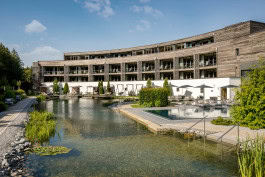
In the middle of the Bavarian Forest, surrounded by silence, forests and fresh mountain air, Reischlhof, a family-run wellness resort with Germany’s largest WaldSpa, has become part of this new movement. Reaching the hotel already feels like part of the experience itself. After arriving in Passau, often called the “City of Three Rivers,” the drive slowly leaves urban structures behind and moves deeper into the green landscapes of the Bayerischer Wald. The roads become quieter, the air cooler and fresher, and the pace noticeably slower. For Berliners especially, the contrast feels almost physical.
What once may have been considered simply a spa hotel increasingly feels like something else entirely: a place where wellness, preventive health, recovery and modern lifestyle culture begin to merge.

For a city like Berlin, where overstimulation has become part of everyday life, the contrast feels almost immediate. The constant movement, noise, social schedules and digital overload create a background tension many people no longer even notice. And yet, only a few hours away, the rhythm changes completely.
At Reischlhof, longevity is not presented as a strict medical concept or an extreme biohacking retreat. Instead, it is integrated naturally into the experience of the hotel itself: recovery through nature, movement, regeneration, sleep, nutrition and a deeper understanding of one’s own body. The philosophy is built around sustainable vitality, modern analysis methods, mental balance and conscious relaxation.
The interesting part is that guests can approach the topic in very different ways. Some simply come for wellness and relaxation, while others book specific longevity-focused programs and analyses. The hotel combines both worlds unusually well: a classic luxury spa experience with a more modern health-oriented approach.
Understanding the Body
During my stay, the experience began not with a treatment, but with analysis. A 4D body scan and metabolic assessment designed to measure posture, body composition, recovery, metabolism and overall physical condition. The scan visualizes details that most people rarely think about in everyday life: muscle balance, stress patterns, fitness levels and physical asymmetries. The metabolic analysis goes even further, helping to understand how the body processes energy and which nutrition or training strategies may actually fit an individual body instead of following generic wellness trends.
As Aleksandra Buszylo, part of the Reischlhof family and responsible for developing the hotel’s longeviy concept, explains, the process always begins with a very simple question: what does the guest actually want to improve? For some, it is stress management. For others, better sleep, weight loss, muscle building, recovery or simply understanding why certain routines have not worked before. The analyses are therefore less about perfection and more about creating awareness and individual recommendations rather than offering one universal wellness formula.
What made the experience particularly interesting was not only the technology itself, but the way it refamed health. In cities, wellness often becomes fragmented: a workout here, a supplement there, an occasional sauna, a meditation app downloaded between meetings. Here, the approach felt more holistic and grounded in everyday sustainability rather than performance alone.
One surprising moment came when discussing stress levels during the analysis. Living in Berlin, balaning constant movement, deadlines and city intensity, I expected the results to reflect permanent overload. Instead, the stress markers appeared significantly lower than anticipated. It was an unexpected reminder that the body often adapts better than we assume, but also that conscious recovery and routines matter more than we realize.
Beyond the analyses, Reischlhof increasingly focuses on treatments connected to regeneration and cellular recovery. One of the most discussed applications is the cryotherapy chamber, where guests spend several minutes in temperatures reaching -85°C. The experience feels somewhere between shock and adrenaline rush. Before entering, guests are equipped with gloves, hats and protective gear, while music plays inside the chamber. The cold stimulates circulation, activates endorphins and is believed to support regeneration, inflammation reduction and energy levels. Aleksandra describes it almost humorously as waking up the “Neanderthal survival mode” still hidden inside the body, the feeling of suddenly realizing you survived something extreme, leaving the chamber energized and mentally alert.
Another central part of the longevity concept is IHHT therapy, Intervall-Hypoxie-Hyperoxie-Therapie, a breathing-based regeneration treatment focused on mitochondrial health. During the session, the body alternates between phases of lower and higher oxygen concentration while lying completely relaxed. The idea behind the treatment is to train the cells more efficiently, support energy production and improve recovery processes. Unlike more extreme biohacking trends, the therapy itself feels surprisingly calm and meditative: you simply lie back and breathe while the body quietly works in the background.
Surprisingly, after the IHHT session, I felt incredibly energized and mentally clear. Instead of feeling tired or slowed down, I returned to Berlin with a noticeable sense of physical energy and focus. It was one of the treatments that stayed with me most afterwards, and one I could genuinely imagine integrating into a more regular city routine alongside things like contrast showers, better recovery and more conscious stress management.
Interestingly, the hotel’s longevity approach does not stop after the stay itself. Together with nutrition and health partners, Reischlhof also offers detox and cleansing programs that guests can continue at home after returning from their trip. Aleksandra explained that many guests become much more conscious about eating habits after completing the programs. Food tastes more intense, cravings change and routines slowly begin to shift naturally instead of through strict discipline.
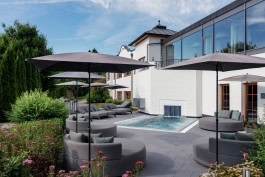
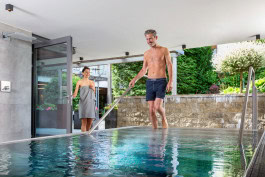
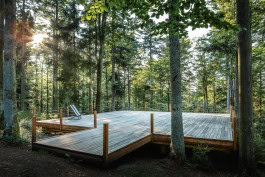
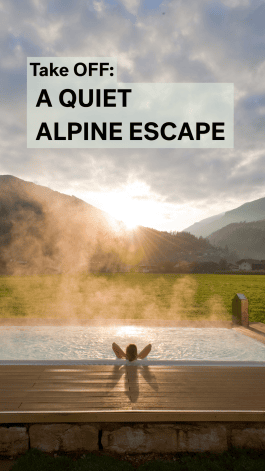
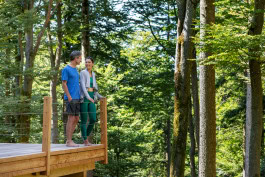
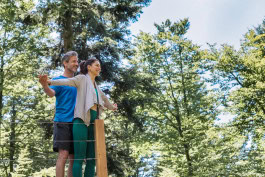
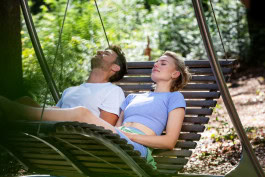
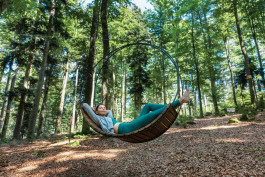
Alongside these more technology-driven treatments, there is also a strong emotional and sensory side to the hotel experience. Reischlhof’s spa culture is deeply connected to the surrounding forest landscape. The 40,000-square-meter WaldSpa includes outdoor relaxation areas, meditation paths, tree swings, natural ponds and quiet spaces surrounded entirely by nature.
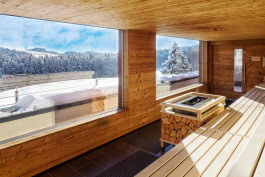
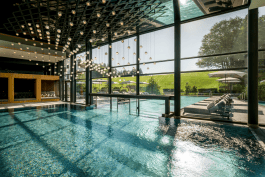
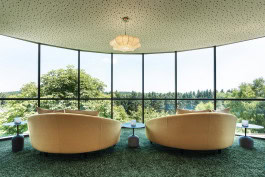
Inside, guests move between panoramic saunas, relaxation rooms, pools and the dramatic fire sauna, where ritual sauna infusions create a much more atmospheric experience than the standard hotel sauna concept. There are large windows overlooking the forest, quiet rooms designed for complete stillness and outdoor areas where the only sound is wind moving through the trees.
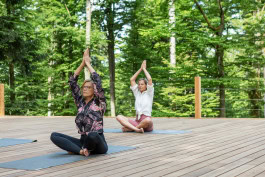
The hotel also offers daily movement and wellness programs ranging from yoga and sound-bath rituals to guided forest activities and meditation sessions. In warmer months, many of these activities move outdoors into the forest itself. Guests can join bike tours, sunrise walks, outdoor yoga sessions and guided activities through the surrounding nature. There is also something charmingly personal about the hotel atmosphere, including the family’s own alpacas, which have become part of the experience and reflect the softer, more playful side of the retreat.
According to Aleksandra, the family sees nature not simply as scenery, but as an active part of the regeneration process. What used to feel “too remote” for luxury travelers has now become precisely the reason many guests come here. Especially in summer, when the forest becomes fully green and the outdoor wellness spaces open into nature, the region feels less like a traditional spa destination and more like a complete reset for the nervous system.
This changing relationship to luxury also appears in the guest structure itself. Reischlhof increasingly attracts younger visitors, not only traditional wellness travelers, but also people in their 30s and 40s interested in preventive health, fitness, stress management and long-term vitality. Many come from cities like Berlin, Munich or Zurich searching not only for rest, but for a way to better understand their own physical balance.
And perhaps this is exactly why places like the Bavarian Forest are becoming increasingly attractive again. For years, remoteness was considered a disadvantage in luxury travel. Today, it has become part of the appeal. Silence itself has become aspirational. Nature is no longer simply scenery, but part of the experience of recovery.
“We don’t see longevity as a trend,” Aleksandra Buszylo from Reischlhof explains during our conversation. “It’s an integration into everyday life.” That distinction feels important. Because unlike many wellness trends driven by aesthetics or social media language, the longevity movement reflects a deeper cultural shift already happening across hospitality, fitness and lifestyle industries.
Guests are becoming younger. Recovery is becoming proactive rather than reactive. Health is no longer separated from travel, but increasingly becomes the reason for traveling in the first place.
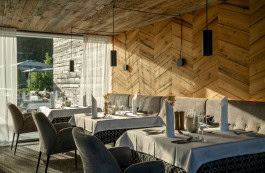
At the same time, Reischlhof avoids turning longevity into an overly clinical experience. There is still warmth, pleasure and softness. A five-course dinner remains part of the stay. Wine is not treated as forbidden. Long breakfasts, deep conversations, signature massages, sauna rituals and slow evenings are just as important as metabolic analysis or cold therapy. As Aleksandra describes it, longevity here is not about restriction, but about understanding what allows you to feel good for longer.
That balance may ultimately define the future of luxury itself.
Not more stimulation. Not more consumption. But spaces that help people reconnect with their energy, attention and physical well-being.
And in a time where exhaustion has quietly become normalized in many cities, that may be the most valuable luxury of all.
Related Articles:

For years, luxury in hospitality was defined by visible things: bigger suites, fine dining, infinity pools, exclusive addresses. But slowly, quietly, the meaning of luxury has started to shift. Today, the most desired thing is no longer excess, but energy. Deep sleep. Mental clarity. Time away from constant stimulation. The ability to feel well physically and emotionally for longer.
And perhaps nowhere is this shift more visible than in the growing world of longevity-focused hospitality.
In the middle of the Bavarian Forest, surrounded by silence, forests and fresh mountain air, Reischlhof, a family-run wellness resort with Germany’s largest WaldSpa, has become part of this new movement. Reaching the hotel already feels like part of the experience itself. After arriving in Passau, often called the “City of Three Rivers,” the drive slowly leaves urban structures behind and moves deeper into the green landscapes of the Bayerischer Wald. The roads become quieter, the air cooler and fresher, and the pace noticeably slower. For Berliners especially, the contrast feels almost physical.
What once may have been considered simply a spa hotel increasingly feels like something else entirely: a place where wellness, preventive health, recovery and modern lifestyle culture begin to merge.

For a city like Berlin, where overstimulation has become part of everyday life, the contrast feels almost immediate. The constant movement, noise, social schedules and digital overload create a background tension many people no longer even notice. And yet, only a few hours away, the rhythm changes completely.
At Reischlhof, longevity is not presented as a strict medical concept or an extreme biohacking retreat. Instead, it is integrated naturally into the experience of the hotel itself: recovery through nature, movement, regeneration, sleep, nutrition and a deeper understanding of one’s own body. The philosophy is built around sustainable vitality, modern analysis methods, mental balance and conscious relaxation.
The interesting part is that guests can approach the topic in very different ways. Some simply come for wellness and relaxation, while others book specific longevity-focused programs and analyses. The hotel combines both worlds unusually well: a classic luxury spa experience with a more modern health-oriented approach.


Understanding the Body
During my stay, the experience began not with a treatment, but with analysis. A 4D body scan and metabolic assessment designed to measure posture, body composition, recovery, metabolism and overall physical condition. The scan visualizes details that most people rarely think about in everyday life: muscle balance, stress patterns, fitness levels and physical asymmetries. The metabolic analysis goes even further, helping to understand how the body processes energy and which nutrition or training strategies may actually fit an individual body instead of following generic wellness trends.
As Aleksandra Buszylo, part of the Reischlhof family and responsible for developing the hotel’s longeviy concept, explains, the process always begins with a very simple question: what does the guest actually want to improve? For some, it is stress management. For others, better sleep, weight loss, muscle building, recovery or simply understanding why certain routines have not worked before. The analyses are therefore less about perfection and more about creating awareness and individual recommendations rather than offering one universal wellness formula.
What made the experience particularly interesting was not only the technology itself, but the way it refamed health. In cities, wellness often becomes fragmented: a workout here, a supplement there, an occasional sauna, a meditation app downloaded between meetings. Here, the approach felt more holistic and grounded in everyday sustainability rather than performance alone.
One surprising moment came when discussing stress levels during the analysis. Living in Berlin, balaning constant movement, deadlines and city intensity, I expected the results to reflect permanent overload. Instead, the stress markers appeared significantly lower than anticipated. It was an unexpected reminder that the body often adapts better than we assume, but also that conscious recovery and routines matter more than we realize.


Beyond the analyses, Reischlhof increasingly focuses on treatments connected to regeneration and cellular recovery. One of the most discussed applications is the cryotherapy chamber, where guests spend several minutes in temperatures reaching -85°C. The experience feels somewhere between shock and adrenaline rush. Before entering, guests are equipped with gloves, hats and protective gear, while music plays inside the chamber. The cold stimulates circulation, activates endorphins and is believed to support regeneration, inflammation reduction and energy levels. Aleksandra describes it almost humorously as waking up the “Neanderthal survival mode” still hidden inside the body, the feeling of suddenly realizing you survived something extreme, leaving the chamber energized and mentally alert.
Another central part of the longevity concept is IHHT therapy, Intervall-Hypoxie-Hyperoxie-Therapie, a breathing-based regeneration treatment focused on mitochondrial health. During the session, the body alternates between phases of lower and higher oxygen concentration while lying completely relaxed. The idea behind the treatment is to train the cells more efficiently, support energy production and improve recovery processes. Unlike more extreme biohacking trends, the therapy itself feels surprisingly calm and meditative: you simply lie back and breathe while the body quietly works in the background.
Surprisingly, after the IHHT session, I felt incredibly energized and mentally clear. Instead of feeling tired or slowed down, I returned to Berlin with a noticeable sense of physical energy and focus. It was one of the treatments that stayed with me most afterwards, and one I could genuinely imagine integrating into a more regular city routine alongside things like contrast showers, better recovery and more conscious stress management.
Interestingly, the hotel’s longevity approach does not stop after the stay itself. Together with nutrition and health partners, Reischlhof also offers detox and cleansing programs that guests can continue at home after returning from their trip. Aleksandra explained that many guests become much more conscious about eating habits after completing the programs. Food tastes more intense, cravings change and routines slowly begin to shift naturally instead of through strict discipline.


Alongside these more technology-driven treatments, there is also a strong emotional and sensory side to the hotel experience. Reischlhof’s spa culture is deeply connected to the surrounding forest landscape. The 40,000-square-meter WaldSpa includes outdoor relaxation areas, meditation paths, tree swings, natural ponds and quiet spaces surrounded entirely by nature.
Inside, guests move between panoramic saunas, relaxation rooms, pools and the dramatic fire sauna, where ritual sauna infusions create a much more atmospheric experience than the standard hotel sauna concept. There are large windows overlooking the forest, quiet rooms designed for complete stillness and outdoor areas where the only sound is wind moving through the trees.
The hotel also offers daily movement and wellness programs ranging from yoga and sound-bath rituals to guided forest activities and meditation sessions. In warmer months, many of these activities move outdoors into the forest itself. Guests can join bike tours, sunrise walks, outdoor yoga sessions and guided activities through the surrounding nature. There is also something charmingly personal about the hotel atmosphere, including the family’s own alpacas, which have become part of the experience and reflect the softer, more playful side of the retreat.
According to Aleksandra, the family sees nature not simply as scenery, but as an active part of the regeneration process. What used to feel “too remote” for luxury travelers has now become precisely the reason many guests come here. Especially in summer, when the forest becomes fully green and the outdoor wellness spaces open into nature, the region feels less like a traditional spa destination and more like a complete reset for the nervous system.


This changing relationship to luxury also appears in the guest structure itself. Reischlhof increasingly attracts younger visitors, not only traditional wellness travelers, but also people in their 30s and 40s interested in preventive health, fitness, stress management and long-term vitality. Many come from cities like Berlin, Munich or Zurich searching not only for rest, but for a way to better understand their own physical balance.
And perhaps this is exactly why places like the Bavarian Forest are becoming increasingly attractive again. For years, remoteness was considered a disadvantage in luxury travel. Today, it has become part of the appeal. Silence itself has become aspirational. Nature is no longer simply scenery, but part of the experience of recovery.
“We don’t see longevity as a trend,” Aleksandra Buszylo from Reischlhof explains during our conversation. “It’s an integration into everyday life.” That distinction feels important. Because unlike many wellness trends driven by aesthetics or social media language, the longevity movement reflects a deeper cultural shift already happening across hospitality, fitness and lifestyle industries.
Guests are becoming younger. Recovery is becoming proactive rather than reactive. Health is no longer separated from travel, but increasingly becomes the reason for traveling in the first place.

At the same time, Reischlhof avoids turning longevity into an overly clinical experience. There is still warmth, pleasure and softness. A five-course dinner remains part of the stay. Wine is not treated as forbidden. Long breakfasts, deep conversations, signature massages, sauna rituals and slow evenings are just as important as metabolic analysis or cold therapy. As Aleksandra describes it, longevity here is not about restriction, but about understanding what allows you to feel good for longer.
That balance may ultimately define the future of luxury itself.
Not more stimulation. Not more consumption. But spaces that help people reconnect with their energy, attention and physical well-being.
And in a time where exhaustion has quietly become normalized in many cities, that may be the most valuable luxury of all.

Related Articles:
You need to load content from reCAPTCHA to submit the form. Please note that doing so will share data with third-party providers.
More InformationYou need to load content from Turnstile to submit the form. Please note that doing so will share data with third-party providers.
More InformationYou are currently viewing a placeholder content from Facebook. To access the actual content, click the button below. Please note that doing so will share data with third-party providers.
More InformationYou are currently viewing a placeholder content from Instagram. To access the actual content, click the button below. Please note that doing so will share data with third-party providers.
More InformationYou need to load content from hCaptcha to submit the form. Please note that doing so will share data with third-party providers.
More InformationYou need to load content from reCAPTCHA to submit the form. Please note that doing so will share data with third-party providers.
More InformationYou are currently viewing a placeholder content from Turnstile. To access the actual content, click the button below. Please note that doing so will share data with third-party providers.
More InformationYou are currently viewing a placeholder content from X. To access the actual content, click the button below. Please note that doing so will share data with third-party providers.
More Information