
Sign up here to subscribe to The Columbist newsletter.
Berlin can be defined through many different facets; after all, the city we live in has spent years at the heart of the world’s various transformations. Art, culture, literature, music… And of course, fashion. If you ask global fashion authorities these days, Berlin isn't just trailing Copenhagen to become a new fashion capital. Indeed, it is stepping into the Danish capital's shoes to become one of the so-called Big 5 fashion cities.
On the surface, designers play a huge role in this: we are living in a time where Berlin fashion, reflecting the socio-cultural dynamics that define the city into fabrics and accessories, doesn't just create a social narrative, but actively draws new creative talent to the city. Yet, globally speaking, the creative sectors are going through tough times nowadays. With shifting consumer behavior, changing industry dynamics, and evolving funding mechanisms, carving out a future for emerging talent is no longer as easy as it used to be. So, what steps in right at this moment? It’s exactly the time to meet the FASHION BLOCK.
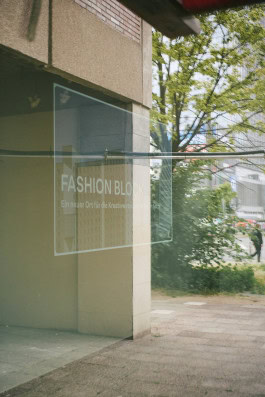
Presented by the Berlin Senate Department for Economics, Energy and Public Enterprises and the Mitte District Office, together with PLATTE Berlin; FASHION BLOCK is a fashion initiative operating at both the state and local levels: a platform engineered to anchor Berlin's creative energy securely and long-term for creative actors. For Berlin-Mitte Mayor Stefanie Remlinger, one of the key figures behind the project, this is indispensable for creating a sustainable ecosystem for creative entrepreneurs.
FASHION BLOCK is structured not as an oversight mechanism that dictates everything for creatives, but rather as a space that grants creative actors reliable space and decision-making autonomy. Developed with a focus on keeping Berlin’s quintessential asset, creativity, alive; according to Remlinger, this project is much more than mere sector support. The Mayor's envisioned city center must evolve in a direction that is commercially viable yet distinctive, creative, and empowered by Berlin’s roots. Hosted at the Memhardstraße axis via PLATTE Berlin, FASHION BLOCK is the physical manifestation of precisely this vision.

At a time when Berliners wake up every day with questions like "Are we as creative as we used to be?" or "How will the creative sectors survive these challenging times?", FASHION BLOCK serves as an oasis. Yet, getting to know the system more closely and understanding its objectives is essential to grasping the sheer richness of the initiative. The Columbist sat down with Berlin-Mitte Mayor Stefanie Remlinger to discuss all of this: creating a compelling, all-encompassing narrative that begins with FASHION BLOCK and moves toward sustaining Berlin’s creative identity, one that concerns all of us.
— Our strategy is not simply to bring another fashion project to Alexanderplatz. We want to contribute to a broader transformation of this historic and highly visible part of Berlin. Alexanderplatz has always been a place of commerce, mobility, tourism and social change. But we believe it can become much more strongly associated with the creative energy for which Berlin is known internationally. That means creating long-term, reliable spaces for creative actors in the centre of the city and combining cultural visibility with real economic perspectives.
PLATTE Berlin has already established an important public-facing platform here. Through its strong community and B2C formats, it connects Berlin fashion directly with audiences and customers. FASHION BLOCK complements this with development, production, professionalization and B2B structures. Together, they can help create a place where people do not only come to shop or pass through, but to discover what is being created in Berlin, meet the people behind it and become part of that environment. For us, that is also part of the image change we want to encourage at Alexanderplatz: from a predominantly transit and consumption-oriented location towards a place associated with creativity, participation and contemporary Berlin.
— The crucial point is to close the gaps that independent designers often have to bridge on their own. Berlin does not lack creative talent. The challenge often begins when a strong idea has to become a sustainable business: finding production partners, understanding materials and costs, developing products, scaling responsibly, building B2B relationships and entering new markets.
FASHION BLOCK is designed around exactly these needs. It provides space for production and innovation formats, qualification, business development, cooperation and professional networking. And this is where the relationship with PLATTE Berlin is particularly important. PLATTE primarily works on the B2C side. Its strong community creates visibility, direct market feedback and contact with customers. FASHION BLOCK strengthens the development and business side behind that visibility. Together, they can support a designer through very different stages: from being discovered and testing a product to building production structures, partnerships and a viable company. For me, sustainability therefore means more than ecological responsibility. It also means creating conditions in which independent creative businesses can survive, grow and remain in Berlin over the long term.
— It is a model based on shared responsibility and on combining different kinds of expertise. The district understands the location, the local economy and the needs we see on theground. PLATTE Berlin brings direct access to the fashion community, practical experience and an established network. Public partners can help make space available. And the Senate Department for Economics, Energy and Public Enterprises connects these local structures with Berlin's broader economic strategy and funding instruments.
That cooperation has been essential. The Senate Department has been a very reliable partner throughout this development. Michael Biel and his team have understood that the creative industries are not a side issue, but an important part of Berlin's economy and international profile.
For me, this is also a model for the future of economic development in Berlin. The government should not try to invent creative ecosystems from an office. Its role is to create the conditions in which strong existing communities can develop: access to space, continuity, funding and connections. When public institutions and creative communities work together in that way, public support becomes much more than funding. It becomes an investment in lasting structures.
— Because creativity is one of Berlin's strongest unique selling points. Berlin has built an international identity around freedom, experimentation, independence and the possibility to develop ideas outside conventional structures. This is not simply an image created for tourism. It is a living ecosystem that attracts designers, artists, founders and creative entrepreneurs from all over the world and gives many of them a reason to stay. That is an enormous asset for the city. But it cannot be taken for granted. If creative people can no longer find spaces to work, if they cannot professionalize their businesses or see an economic future here, Berlin risks losing exactly the people who create this identity.
Supporting emerging talent therefore means more than offering visibility or a stage. It means creating the conditions for people to build a professional future here. FASHION BLOCK translates that political ambition into concrete infrastructure: space, knowledge, production opportunities, networks and business development. If Berlin wants to preserve what makes it different from other fashion capitals, we have to make sure that creative freedom is matched by real opportunities to stay and grow.
— I see it as an investment in economic infrastructure. Creative industries generate jobs, innovation and value creation, but they are often made up of small and medium-sized companies that cannot build all the structures they need individually. Public investment can create shared infrastructure that benefits many actors at once: spaces, qualification, access to networks, production knowledge, innovation and market opportunities. That is very different from permanently subsidizing individual labels. The aim is to improve the conditionsunder which companies can become economically independent, grow and create employment.
There is another aspect that is particularly relevant for Berlin: the creative economy is part of the city's international attractiveness. It brings talent, businesses and visitors here and supports many other parts of the local economy. So investing in creative industries is both sector policy and location policy. It strengthens an industry, but it also strengthens the qualities that make Berlin competitive and distinctive as a city.
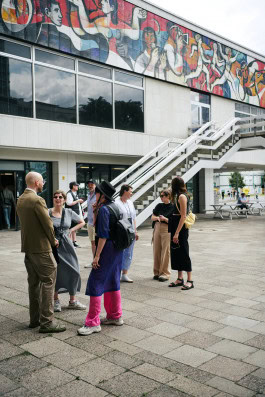
— This is where I see one of the greatest opportunities for Alexanderplatz. Consumer behaviour has changed. People increasingly expect more from city centres than simply a place to make a transaction. They want experiences, authenticity, exchange and the feeling of being part of something. And purchasing decisions are increasingly connected to questions of identity, origin, sustainability and values. For retail, this is not necessarily a threat. It can be a major opportunity.
If we combine retail with creative production, workshops, events, community, designers and spaces where people can discover how products are developed, shopping becomes part of a larger experience. That is particularly powerful at Alexanderplatz. This historic location is known around the world, but its image is still strongly shaped by traffic, large-scale retail and transit. We want to add another identity to it: a place where the creative Berlin that people travel here for can actually be experienced.
Visitors should be able to encounter Berlin fashion not only as a product on a rack, but through the people, stories, processes and values behind it. That creates a stronger emotional connection to the place and to the products. And ultimately, that can also strengthen retail itself and contribute to a more resilient local economy. For me, this is exactly the kind of city centre we should be working towards: commercially viable, but at the same time distinctive, creative and rooted in the identity of Berlin.
— The next ambition is to turn what we are building here into a lasting creative ecosystem. With PLATTE Berlin, FASHION BLOCK and the additional spaces in the immediate surroundings, we are bringing together different parts of the fashion value chain in one central location: visibility, community, market access, development, production, professionalization and cooperation.
The next step is to secure these structures over the long term and connect them more strongly with international markets, networks, and partners.Berlin already has international attention. The challenge is to convert that attention into sustainable opportunities for the people who create here. And I believe Mitte can play a special role in that. We have the visibility, the accessibility and one of the most internationally recognized urban locations in Berlin. If we succeed in combining that with permanent creative spaces and strong economic structures, we can also contribute to a new image of Alexanderplatz itself.
The ambition is not to make Berlin another Paris, Milan or London. Berlin's strength lies precisely in being different. Our task is to protect and develop that difference and to make sure that the people who create the Berlin brand can also build their future here.
Sign up here to subscribe to The Columbist newsletter.
Related Articles:

Sign up here to subscribe to The Columbist newsletter.
Berlin can be defined through many different facets; after all, the city we live in has spent years at the heart of the world’s various transformations. Art, culture, literature, music… And of course, fashion. If you ask global fashion authorities these days, Berlin isn't just trailing Copenhagen to become a new fashion capital. Indeed, it is stepping into the Danish capital's shoes to become one of the so-called Big 5 fashion cities.
On the surface, designers play a huge role in this: we are living in a time where Berlin fashion, reflecting the socio-cultural dynamics that define the city into fabrics and accessories, doesn't just create a social narrative, but actively draws new creative talent to the city. Yet, globally speaking, the creative sectors are going through tough times nowadays. With shifting consumer behavior, changing industry dynamics, and evolving funding mechanisms, carving out a future for emerging talent is no longer as easy as it used to be. So, what steps in right at this moment? It’s exactly the time to meet the FASHION BLOCK.
Presented by the Berlin Senate Department for Economics, Energy and Public Enterprises and the Mitte District Office, together with PLATTE Berlin; FASHION BLOCK is a fashion initiative operating at both the state and local levels: a platform engineered to anchor Berlin's creative energy securely and long-term for creative actors. For Berlin-Mitte Mayor Stefanie Remlinger, one of the key figures behind the project, this is indispensable for creating a sustainable ecosystem for creative entrepreneurs.
FASHION BLOCK is structured not as an oversight mechanism that dictates everything for creatives, but rather as a space that grants creative actors reliable space and decision-making autonomy. Developed with a focus on keeping Berlin’s quintessential asset, creativity, alive; according to Remlinger, this project is much more than mere sector support. The Mayor's envisioned city center must evolve in a direction that is commercially viable yet distinctive, creative, and empowered by Berlin’s roots. Hosted at the Memhardstraße axis via PLATTE Berlin, FASHION BLOCK is the physical manifestation of precisely this vision.

At a time when Berliners wake up every day with questions like "Are we as creative as we used to be?" or "How will the creative sectors survive these challenging times?", FASHION BLOCK serves as an oasis. Yet, getting to know the system more closely and understanding its objectives is essential to grasping the sheer richness of the initiative. The Columbist sat down with Berlin-Mitte Mayor Stefanie Remlinger to discuss all of this: creating a compelling, all-encompassing narrative that begins with FASHION BLOCK and moves toward sustaining Berlin’s creative identity, one that concerns all of us.
— Our strategy is not simply to bring another fashion project to Alexanderplatz. We want to contribute to a broader transformation of this historic and highly visible part of Berlin. Alexanderplatz has always been a place of commerce, mobility, tourism and social change. But we believe it can become much more strongly associated with the creative energy for which Berlin is known internationally. That means creating long-term, reliable spaces for creative actors in the centre of the city and combining cultural visibility with real economic perspectives.
PLATTE Berlin has already established an important public-facing platform here. Through its strong community and B2C formats, it connects Berlin fashion directly with audiences and customers. FASHION BLOCK complements this with development, production, professionalization and B2B structures. Together, they can help create a place where people do not only come to shop or pass through, but to discover what is being created in Berlin, meet the people behind it and become part of that environment. For us, that is also part of the image change we want to encourage at Alexanderplatz: from a predominantly transit and consumption-oriented location towards a place associated with creativity, participation and contemporary Berlin.
— The crucial point is to close the gaps that independent designers often have to bridge on their own. Berlin does not lack creative talent. The challenge often begins when a strong idea has to become a sustainable business: finding production partners, understanding materials and costs, developing products, scaling responsibly, building B2B relationships and entering new markets.
FASHION BLOCK is designed around exactly these needs. It provides space for production and innovation formats, qualification, business development, cooperation and professional networking. And this is where the relationship with PLATTE Berlin is particularly important. PLATTE primarily works on the B2C side. Its strong community creates visibility, direct market feedback and contact with customers. FASHION BLOCK strengthens the development and business side behind that visibility. Together, they can support a designer through very different stages: from being discovered and testing a product to building production structures, partnerships and a viable company. For me, sustainability therefore means more than ecological responsibility. It also means creating conditions in which independent creative businesses can survive, grow and remain in Berlin over the long term.

— It is a model based on shared responsibility and on combining different kinds of expertise. The district understands the location, the local economy and the needs we see on theground. PLATTE Berlin brings direct access to the fashion community, practical experience and an established network. Public partners can help make space available. And the Senate Department for Economics, Energy and Public Enterprises connects these local structures with Berlin's broader economic strategy and funding instruments.
That cooperation has been essential. The Senate Department has been a very reliable partner throughout this development. Michael Biel and his team have understood that the creative industries are not a side issue, but an important part of Berlin's economy and international profile.
For me, this is also a model for the future of economic development in Berlin. The government should not try to invent creative ecosystems from an office. Its role is to create the conditions in which strong existing communities can develop: access to space, continuity, funding and connections. When public institutions and creative communities work together in that way, public support becomes much more than funding. It becomes an investment in lasting structures.
— Because creativity is one of Berlin's strongest unique selling points. Berlin has built an international identity around freedom, experimentation, independence and the possibility to develop ideas outside conventional structures. This is not simply an image created for tourism. It is a living ecosystem that attracts designers, artists, founders and creative entrepreneurs from all over the world and gives many of them a reason to stay. That is an enormous asset for the city. But it cannot be taken for granted. If creative people can no longer find spaces to work, if they cannot professionalize their businesses or see an economic future here, Berlin risks losing exactly the people who create this identity.
Supporting emerging talent therefore means more than offering visibility or a stage. It means creating the conditions for people to build a professional future here. FASHION BLOCK translates that political ambition into concrete infrastructure: space, knowledge, production opportunities, networks and business development. If Berlin wants to preserve what makes it different from other fashion capitals, we have to make sure that creative freedom is matched by real opportunities to stay and grow.
— I see it as an investment in economic infrastructure. Creative industries generate jobs, innovation and value creation, but they are often made up of small and medium-sized companies that cannot build all the structures they need individually. Public investment can create shared infrastructure that benefits many actors at once: spaces, qualification, access to networks, production knowledge, innovation and market opportunities. That is very different from permanently subsidizing individual labels. The aim is to improve the conditionsunder which companies can become economically independent, grow and create employment.
There is another aspect that is particularly relevant for Berlin: the creative economy is part of the city's international attractiveness. It brings talent, businesses and visitors here and supports many other parts of the local economy. So investing in creative industries is both sector policy and location policy. It strengthens an industry, but it also strengthens the qualities that make Berlin competitive and distinctive as a city.

— This is where I see one of the greatest opportunities for Alexanderplatz. Consumer behaviour has changed. People increasingly expect more from city centres than simply a place to make a transaction. They want experiences, authenticity, exchange and the feeling of being part of something. And purchasing decisions are increasingly connected to questions of identity, origin, sustainability and values. For retail, this is not necessarily a threat. It can be a major opportunity.
If we combine retail with creative production, workshops, events, community, designers and spaces where people can discover how products are developed, shopping becomes part of a larger experience. That is particularly powerful at Alexanderplatz. This historic location is known around the world, but its image is still strongly shaped by traffic, large-scale retail and transit. We want to add another identity to it: a place where the creative Berlin that people travel here for can actually be experienced.
Visitors should be able to encounter Berlin fashion not only as a product on a rack, but through the people, stories, processes and values behind it. That creates a stronger emotional connection to the place and to the products. And ultimately, that can also strengthen retail itself and contribute to a more resilient local economy. For me, this is exactly the kind of city centre we should be working towards: commercially viable, but at the same time distinctive, creative and rooted in the identity of Berlin.
— The next ambition is to turn what we are building here into a lasting creative ecosystem. With PLATTE Berlin, FASHION BLOCK and the additional spaces in the immediate surroundings, we are bringing together different parts of the fashion value chain in one central location: visibility, community, market access, development, production, professionalization and cooperation.
The next step is to secure these structures over the long term and connect them more strongly with international markets, networks, and partners.Berlin already has international attention. The challenge is to convert that attention into sustainable opportunities for the people who create here. And I believe Mitte can play a special role in that. We have the visibility, the accessibility and one of the most internationally recognized urban locations in Berlin. If we succeed in combining that with permanent creative spaces and strong economic structures, we can also contribute to a new image of Alexanderplatz itself.
The ambition is not to make Berlin another Paris, Milan or London. Berlin's strength lies precisely in being different. Our task is to protect and develop that difference and to make sure that the people who create the Berlin brand can also build their future here.
Sign up here to subscribe to The Columbist newsletter.
Related Articles:
You need to load content from reCAPTCHA to submit the form. Please note that doing so will share data with third-party providers.
More InformationYou need to load content from Turnstile to submit the form. Please note that doing so will share data with third-party providers.
More InformationYou are currently viewing a placeholder content from Facebook. To access the actual content, click the button below. Please note that doing so will share data with third-party providers.
More InformationYou are currently viewing a placeholder content from Instagram. To access the actual content, click the button below. Please note that doing so will share data with third-party providers.
More InformationYou need to load content from hCaptcha to submit the form. Please note that doing so will share data with third-party providers.
More InformationYou need to load content from reCAPTCHA to submit the form. Please note that doing so will share data with third-party providers.
More InformationYou are currently viewing a placeholder content from Turnstile. To access the actual content, click the button below. Please note that doing so will share data with third-party providers.
More InformationYou are currently viewing a placeholder content from X. To access the actual content, click the button below. Please note that doing so will share data with third-party providers.
More Information