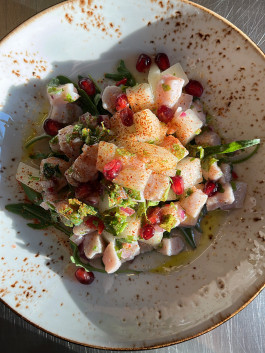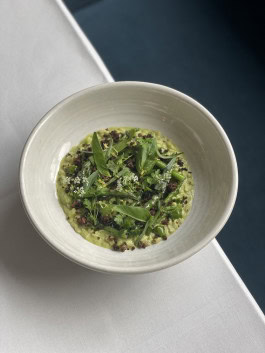

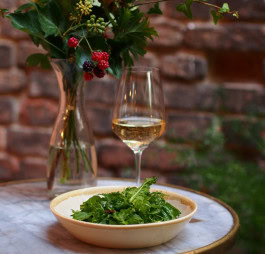
First of all, what defines slow dining in Berlin? The loud nightclubs are now joined by quieter and intentionally designed restaurants characterized by candlelight dinners, longer conversations, classical music, and, if you’re lucky, a wedding proposal. Slow dining counters food overproduction, industrial agriculture, high sugar consumption, and the demand for exotic ingredients that harm our health and the environment.
Hyper-local and seasonal ingredients are now central to Berlin’s slow dining culture, with chefs working with regional farmers to reduce their carbon footprint and maintain biodiversity. We find more organic supermarkets opening in Berlin these days, which are undoubtedly more expensive. If that doesn’t suit your budget, welcome back to the local farmer’s market. No matter where the ingredients are from, both chefs and diners now prioritize healthy, wholesome, and sustainably sourced food.
Berlin is also a melting pot of cultures, which is why we see an increasing foreign influence on European food. The döner kebab itself evolved from Turkish immigrant communities, but we have alternatives from Arabic, Mediterranean, and Asian cuisines. These cuisines use citrus, olive oil, and mixed herbs. While the butter and lard used in traditional German cooking keep us warm and cozy during the winter months, these summer ingredients keep our hearts light and minds active in the hot season.

It is suddenly too warm outside to think about Kaffee und Kuchen, and light, refreshing teas now sound more doable. Asia and Britain are known for their specialty tea rituals and afternoon teas, respectively. Berlin, too, has now embraced black teas, herbal teas, and fruit teas in its slow-living philosophy. The tea culture in Berlin is developing so fast that the city now hosts its own Berlin Tea Festival, based on mindful cultivation, sustainability, and slow living.
Speaking of tea, matcha plays the perfect role in Berlin’s up-and-coming slow-living policy. Unlike the caffeine crash and sleep-depriving anxiety that coffee gives, matcha is all about the calm, focused, and emotional well-being vibe. Its artisanal beauty, high antioxidant content, and alignment with the longevity culture have made it a Millennial and Gen Z favorite. More than that, it can be enjoyed with plant-based milk and flavored syrups, and made into cheesecakes and lava cakes.
Slow dining in Berlin isn’t simply about the food; it’s about intention. Food and sustainability experts discuss the impact of food on the environment, leading to an increased awareness about food education, food waste, and food-sharing communities. Berlin restaurants now build strong relationships with fruit and vegetable farmers, bakers, and dairy producers to support ethical food choices, creating a win-win situation for everyone. If you’re looking forward to slow dining alone or with your loved ones, here are our choices for slow-dining restaurants in Berlin:
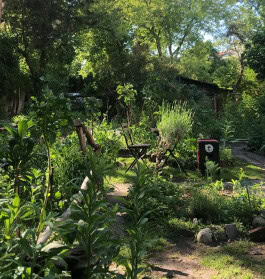
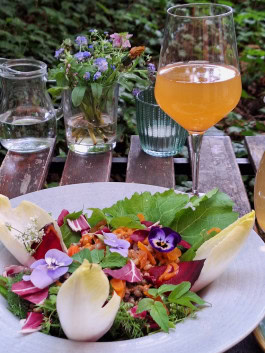
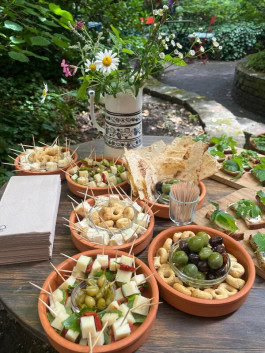
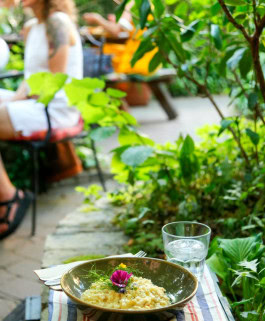
Described as a ‘1000 sq. m.’ space in Richardstraße, Café Botanico is an Italian-inspired farm-to-table restaurant with a permaculture garden in the backyard. Once inside, it feels like one of the greenest cafes in the city, complete with rust-colored walls, wooden outdoor furniture, and an open-air environment. Guests enjoy Italian appetizers, lunches, and dinners in the garden or on the terrace. The dishes – pasta, risotto, and desserts – are garnished with fresh herbs from their garden.
There are vegan and non-vegetarian food options, along with long drinks, wine, beer, and alcohol-free beverages. Tea is an important part of the café’s ‘winter drinks’ list, offering choices across lemon balm, chamomile, ginger, orange, and herbs. Due to its unique location and plant-themed interiors, Café Botanico is popular for parties, celebrations, team gatherings, and even business events.
Café Botanico, Richardstraße 100, 12043 Berlin
Contact: +49 30 89622000
WhatsApp/Call after 4 pm: +49 151 1225 1320 (Martin Höfft, Management)
E-Mail: info@cafe-botanico.de.
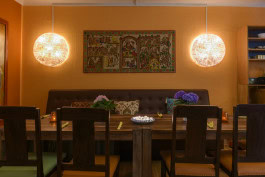
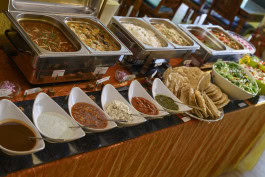


Indian cuisine is known for its time-intensive food preparation, multi-course meals, vegetarian and vegan options, and, of course, eating with one’s hands. Satyam, meaning ‘truth’ in Sanskrit, follows the same philosophy through its food. It has a warm color palette, framed mandalas, and wooden furniture. Diners enjoy vegan and vegetarian Ayurvedic South Indian cuisine here, with fermentation, steaming, and tempering as part of the slow-cooking process.
Appetizers and Indian specialities are on offer here using soybean, jackfruit, and paneer. Apart from offering vegan options and Sunday buffets that change regularly, Satyam holds cooking classes for those interested in Indian cuisine. Guided by an Ayurvedic doctor, Berliners learn how to cook an entire menu using spices. Also, a masala box is available for gifting.
Satyam, Goethestraße 5, 10623 Berlin
Contact: +49 30 318 061 11
E-Mail: info@mysatyam.de
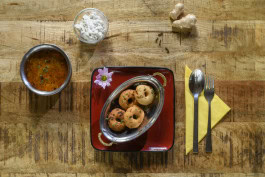
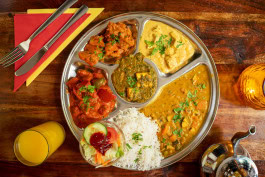
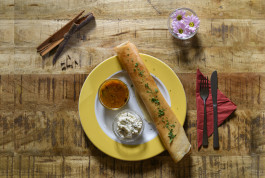
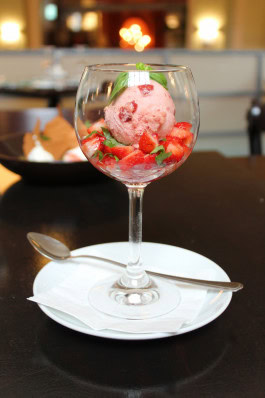
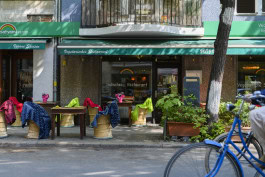
Located in Kastanienallee, W Der Imbiss makes sustainability its guiding principle. Its interiors are cozy and comfortable, with interesting rustic and water features as décor. The options combine Indian and European cuisine: salads, wraps, rolls, pizza, and naan. You can get vegan, vegetarian, and non-vegetarian options, such as a soup of the day, warm salad with grilled salmon, tofu teriyaki, and thali with rice, naan, lentil soup, curried vegetables, and yogurt.
The menu also includes alcoholic and non-alcoholic beverages, with the most interesting option being the mango-flavoured lassi, a popular yoghurt-based drink in India. To support the restaurant’s sustainable philosophy, you can add Vytal’s six-digit code. Through this, you can order food wrapped in environmentally friendly reusable packaging instead of the conventional disposable packaging.
W-Der Imbiss, Kastanienallee 49, 10119 Berlin
E-Mail: info@w-derimbiss.de
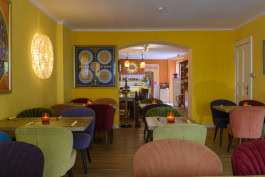
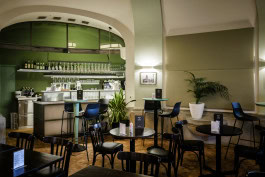
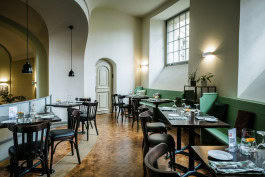
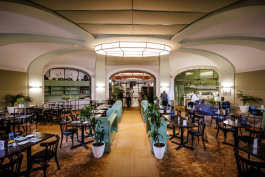
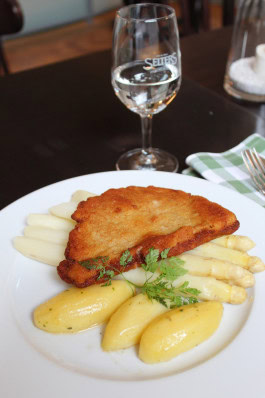
A simple and stylish restaurant in Gendarmenmarkt’s Französischer Dom, Hugo & Notte features a French-inspired aesthetic and menu. It is a white, elegant space with long tables, glassware, and daylight streaming in through the glass windows. There is a classic menu for those who know their favorites, but they also have seasonal dishes for the experimental diner. It has appetizers, soups, main courses, dessert, and cake. Try the restaurant’s specialty coffee and cake while watching the Berlin Cathedral and the Red City Hall from a distance.
The conscious diner will be happy to find organic-certified, vegetarian, vegan, lactose- and gluten-free options at Hugo & Notte. Taste high-quality wines, long drinks, spirits, draft beer, hot drinks, and non-alcoholic beverages with your friends and family. The restaurant also provides services for company parties, family reunions, birthdays, and anniversaries. There are packages to reserve tables for groups of up to ten people, larger groups, buffets, and events – available by reservation only.
Restaurant Hugo & Notte, Gendarmenmarkt 5, 10117 Berlin
Contact: +49 (0)30 5268021 - 730
E-Mail: hugo-und-notte@besondere-orte.com
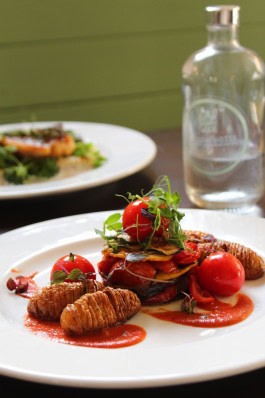
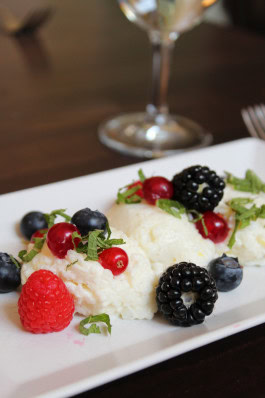

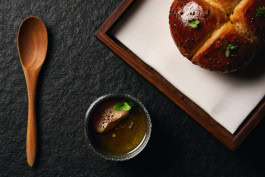
The restaurant’s design is inspired by minimalist Japanese architecture and the wabi-sabi philosophy, which values imperfection. The space is decorated in deep colors and follows a straightforward design, such as tinted mirrors in the corridor, clay tiles on the ceiling, and a respectful silence. A three-meter-high bonsai ficus plant is the focal point of the place, alongside the long community tables that invite and encourage conversations between fellow diners.
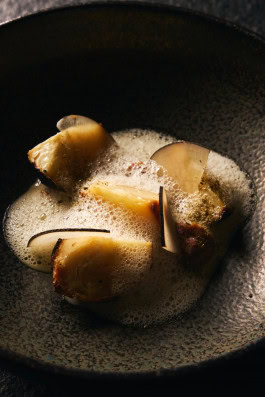
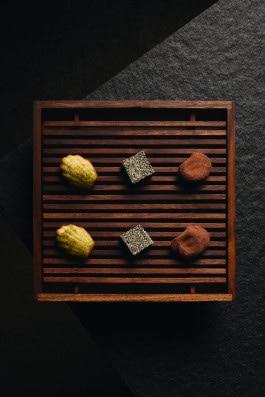
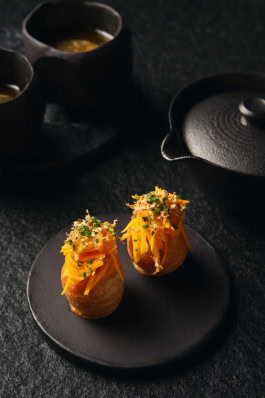
The restaurant’s plant-based menu, curated by Steven Vick, ensures that they only use the highest-quality ingredients available. They produce many products in their fermentation laboratory itself, the most popular being their vinegar, flavored oils, and soy sauces. In fact, most of their ingredients come from Japan. Due to the Spartan design, diners only focus on mindful eating. There is a regularly changing tasting menu serving wine, cocktails, Japanese spirits, and specialty teas from China, Japan, and Taiwan. Their black rice koji cake and oyster leaf ganache are interesting options.
Ackerstraße 144, 10115 Berlin
Contact: +49 30 54 77 47 16
E-Mail: contact@oukan.de
Guten Appetit!
Related Articles:

First of all, what defines slow dining in Berlin? The loud nightclubs are now joined by quieter and intentionally designed restaurants characterized by candlelight dinners, longer conversations, classical music, and, if you’re lucky, a wedding proposal. Slow dining counters food overproduction, industrial agriculture, high sugar consumption, and the demand for exotic ingredients that harm our health and the environment.
Hyper-local and seasonal ingredients are now central to Berlin’s slow dining culture, with chefs working with regional farmers to reduce their carbon footprint and maintain biodiversity. We find more organic supermarkets opening in Berlin these days, which are undoubtedly more expensive. If that doesn’t suit your budget, welcome back to the local farmer’s market. No matter where the ingredients are from, both chefs and diners now prioritize healthy, wholesome, and sustainably sourced food.
Berlin is also a melting pot of cultures, which is why we see an increasing foreign influence on European food. The döner kebab itself evolved from Turkish immigrant communities, but we have alternatives from Arabic, Mediterranean, and Asian cuisines. These cuisines use citrus, olive oil, and mixed herbs. While the butter and lard used in traditional German cooking keep us warm and cozy during the winter months, these summer ingredients keep our hearts light and minds active in the hot season.
It is suddenly too warm outside to think about Kaffee und Kuchen, and light, refreshing teas now sound more doable. Asia and Britain are known for their specialty tea rituals and afternoon teas, respectively. Berlin, too, has now embraced black teas, herbal teas, and fruit teas in its slow-living philosophy. The tea culture in Berlin is developing so fast that the city now hosts its own Berlin Tea Festival, based on mindful cultivation, sustainability, and slow living.
Speaking of tea, matcha plays the perfect role in Berlin’s up-and-coming slow-living policy. Unlike the caffeine crash and sleep-depriving anxiety that coffee gives, matcha is all about the calm, focused, and emotional well-being vibe. Its artisanal beauty, high antioxidant content, and alignment with the longevity culture have made it a Millennial and Gen Z favorite. More than that, it can be enjoyed with plant-based milk and flavored syrups, and made into cheesecakes and lava cakes.
Slow dining in Berlin isn’t simply about the food; it’s about intention. Food and sustainability experts discuss the impact of food on the environment, leading to an increased awareness about food education, food waste, and food-sharing communities. Berlin restaurants now build strong relationships with fruit and vegetable farmers, bakers, and dairy producers to support ethical food choices, creating a win-win situation for everyone. If you’re looking forward to slow dining alone or with your loved ones, here are our choices for slow-dining restaurants in Berlin:

Described as a ‘1000 sq. m.’ space in Richardstraße, Café Botanico is an Italian-inspired farm-to-table restaurant with a permaculture garden in the backyard. Once inside, it feels like one of the greenest cafes in the city, complete with rust-colored walls, wooden outdoor furniture, and an open-air environment. Guests enjoy Italian appetizers, lunches, and dinners in the garden or on the terrace. The dishes – pasta, risotto, and desserts – are garnished with fresh herbs from their garden.
There are vegan and non-vegetarian food options, along with long drinks, wine, beer, and alcohol-free beverages. Tea is an important part of the café’s ‘winter drinks’ list, offering choices across lemon balm, chamomile, ginger, orange, and herbs. Due to its unique location and plant-themed interiors, Café Botanico is popular for parties, celebrations, team gatherings, and even business events.
Café Botanico, Richardstraße 100, 12043 Berlin
Contact: +49 30 89622000
WhatsApp/Call after 4 pm: +49 151 1225 1320 (Martin Höfft, Management)
E-Mail: info@cafe-botanico.de.


Indian cuisine is known for its time-intensive food preparation, multi-course meals, vegetarian and vegan options, and, of course, eating with one’s hands. Satyam, meaning ‘truth’ in Sanskrit, follows the same philosophy through its food. It has a warm color palette, framed mandalas, and wooden furniture. Diners enjoy vegan and vegetarian Ayurvedic South Indian cuisine here, with fermentation, steaming, and tempering as part of the slow-cooking process.
Appetizers and Indian specialities are on offer here using soybean, jackfruit, and paneer. Apart from offering vegan options and Sunday buffets that change regularly, Satyam holds cooking classes for those interested in Indian cuisine. Guided by an Ayurvedic doctor, Berliners learn how to cook an entire menu using spices. Also, a masala box is available for gifting.
Satyam, Goethestraße 5, 10623 Berlin
Contact: +49 30 318 061 11
E-Mail: info@mysatyam.de


Located in Kastanienallee, W Der Imbiss makes sustainability its guiding principle. Its interiors are cozy and comfortable, with interesting rustic and water features as décor. The options combine Indian and European cuisine: salads, wraps, rolls, pizza, and naan. You can get vegan, vegetarian, and non-vegetarian options, such as a soup of the day, warm salad with grilled salmon, tofu teriyaki, and thali with rice, naan, lentil soup, curried vegetables, and yogurt.
The menu also includes alcoholic and non-alcoholic beverages, with the most interesting option being the mango-flavoured lassi, a popular yoghurt-based drink in India. To support the restaurant’s sustainable philosophy, you can add Vytal’s six-digit code. Through this, you can order food wrapped in environmentally friendly reusable packaging instead of the conventional disposable packaging.
W-Der Imbiss, Kastanienallee 49, 10119 Berlin
E-Mail: info@w-derimbiss.de
A simple and stylish restaurant in Gendarmenmarkt’s Französischer Dom, Hugo & Notte features a French-inspired aesthetic and menu. It is a white, elegant space with long tables, glassware, and daylight streaming in through the glass windows. There is a classic menu for those who know their favorites, but they also have seasonal dishes for the experimental diner. It has appetizers, soups, main courses, dessert, and cake. Try the restaurant’s specialty coffee and cake while watching the Berlin Cathedral and the Red City Hall from a distance.
The conscious diner will be happy to find organic-certified, vegetarian, vegan, lactose- and gluten-free options at Hugo & Notte. Taste high-quality wines, long drinks, spirits, draft beer, hot drinks, and non-alcoholic beverages with your friends and family. The restaurant also provides services for company parties, family reunions, birthdays, and anniversaries. There are packages to reserve tables for groups of up to ten people, larger groups, buffets, and events – available by reservation only.
Restaurant Hugo & Notte, Gendarmenmarkt 5, 10117 Berlin
Contact: +49 (0)30 5268021 - 730
E-Mail: hugo-und-notte@besondere-orte.com


The restaurant’s design is inspired by minimalist Japanese architecture and the wabi-sabi philosophy, which values imperfection. The space is decorated in deep colors and follows a straightforward design, such as tinted mirrors in the corridor, clay tiles on the ceiling, and a respectful silence. A three-meter-high bonsai ficus plant is the focal point of the place, alongside the long community tables that invite and encourage conversations between fellow diners.
The restaurant’s plant-based menu, curated by Steven Vick, ensures that they only use the highest-quality ingredients available. They produce many products in their fermentation laboratory itself, the most popular being their vinegar, flavored oils, and soy sauces. In fact, most of their ingredients come from Japan. Due to the Spartan design, diners only focus on mindful eating. There is a regularly changing tasting menu serving wine, cocktails, Japanese spirits, and specialty teas from China, Japan, and Taiwan. Their black rice koji cake and oyster leaf ganache are interesting options.
Ackerstraße 144, 10115 Berlin
Contact: +49 30 54 77 47 16
E-Mail: contact@oukan.de
Guten Appetit!


Related Articles:
You need to load content from reCAPTCHA to submit the form. Please note that doing so will share data with third-party providers.
More InformationYou need to load content from Turnstile to submit the form. Please note that doing so will share data with third-party providers.
More InformationYou are currently viewing a placeholder content from Facebook. To access the actual content, click the button below. Please note that doing so will share data with third-party providers.
More InformationYou are currently viewing a placeholder content from Instagram. To access the actual content, click the button below. Please note that doing so will share data with third-party providers.
More InformationYou need to load content from hCaptcha to submit the form. Please note that doing so will share data with third-party providers.
More InformationYou need to load content from reCAPTCHA to submit the form. Please note that doing so will share data with third-party providers.
More InformationYou are currently viewing a placeholder content from Turnstile. To access the actual content, click the button below. Please note that doing so will share data with third-party providers.
More InformationYou are currently viewing a placeholder content from X. To access the actual content, click the button below. Please note that doing so will share data with third-party providers.
More Information