

From London’s iconic The River Cafe to Melbourne’s Attica, Emily has spent decades exploring the global gastronomy scene, gathering a profound tactile experience that no textbook could ever provide. As a wine consultant, podcast co-host, and the visionary behind Sublime Wine, she has been bridging different terroirs and stories with a grounded, down-to-earth perspective that completely smashes the traditional, elitist narratives historically embedded in the wine world.
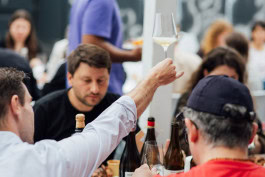
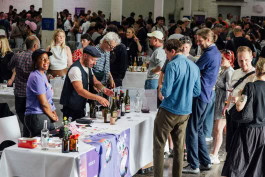
In 2019, she launched the Berlin Sommer Weinfest, a festival born out of the realization that Berlin was missing a bigger summer wine event that could showcase artisan wines alongside curated music, talks, and local collaborators. Today, the festival has rapidly grown to host over 70 producers from all over the world and more than 1,200 attendees, effortlessly capturing the unique, explorative essence of Berlin’s consumer profile.
We sat down with Emily Harman to talk about her journey, the transformation of Berlin's wine culture, the importance of breaking down barriers in hospitality, and many more.
— From London’s The River Cafe to Melbourne’s Attica, you’ve experienced various facets of the global gastronomy scene. How has this international perspective shaped your approach to wine and hospitality?
— There are sometimes people doing very similar almost identical things in opposite corners of the world and equally sometimes it can be so radically different and unique. The more people I meet and places I go, the more I realise - there is no single way to do something. I have learnt to think more widely and to always dig deeper. Exploring and constantly learning has helped me to always keep an open mind and to always stay curious.

ㅤ
— Beyond being a wine consultant, you have also worked harvests in regions like the Barossa Valley, Chianti, and Sierra de Gredos. In your opinion, how does being involved in the actual winemaking process impact your understanding of wine compared to relying solely on textbook knowledge?
— So much of the knowledge we acquire as wine professionals is gathered through tactile experience. Yes - there is a lot of theory too, however I would say 90% of what I have learned is not from wine courses or wine books. It is from spending decades visiting wine regions, tasting wines, talking and exchanging. Working in a winery is an amazing opportunity to be part of every process, to see what ripe fruit looks like, taste it before, during and after fermentation. I feel it is the best way to deeply understand the region, varietals, soils and importantly the person behind the wine too. I would also add that some of the information I read in old school wine books was also proven wrong in a couple cases too!
— You launched the Berlin Sommer Weinfest in 2019, and the festival has grown to feature 70 producers and over 1,200 attendees in a remarkably short time. What made Berlin the perfect destination to organize such an event? How do you view Berlin’s cultural connection with wine, especially compared to other European capitals?
— Well firstly, I live and work in Berlin, and until 2019, there was only really two fairs that focused on artisan wines which were Wine Rush (which doesn't happen every year) and RAW. I really felt that Berlin was missing a bigger summer wine event that focused on a wider range of producers (region wise) and with added elements such as wine talks,music and great food! None of this was reinventing the wheel of what a wine fair had been before but we always made an effort to connect to the city with local collaborators where possible. In the last three events, we worked hard on the music curation too, to connect with something that is a vital part of what makes Berlin a unique city as we wanted to connect with Berliners and bring wine to them in a context that was inviting!
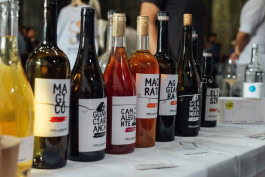
— Although many people still associate Berlin with beer, over the last few years, the city has become one of the most dynamic hubs for wine, especially natural wines. How do you evaluate the role of the Berlin Sommer Weinfest in this transformation? Do you aim to reshape Berlin’s gastronomy and wine identity?
— It definitely has changed a lot in the ten years I have been living in Berlin - it has been super exciting to see how the wine industry has developed. It is hard to really know how the Weinfest has impacted that, other than to say I think its a great opportunity for any city to host over 70 producers from all over the world to explore and make connections in the city (we even have a winery from Bolivia presenting wine this year!). It is super powerful to share expertise, stories all through the medium of wine. In the last couple of years, a few smaller wine events and fairs have also begun to emerge too!
— Alongside the festival, you were also the co-founder of the wine bar ORA and have consulted on various wine lists over the last ten years at places such as Standard Serious Pizza. Based on your experiences, how would you define the profile of Berlin’s wine consumers? Are they more traditional, innovative, or explorative?
— The beautiful thing about Berlin’s wine consumers is that we have a range of everything. There are people who appreciate precise, clean and classic styles of wine all the way to those who just want to really try something off the wall and even challenging. It makes the experience of putting together wine lists and recommending wine very fun.
— Through Sublime Wine, you place a strong emphasis on boutique producers and emerging regions. Which regions have caught your radar recently that wine lovers should definitely keep an eye on?
— I am exploring Greece more and more every year and still believe Greek wine is seriously underrated. The range of grapes but also different terroir is impressive from high mountain vineyards to volcanic islands. This year we feature Greece as one of wine talks which should include some brilliant insights as we have winemaker Meli Ligas from Pella alongside Melina Antonopoulou from Dameli wines who is a wine importer inAthens and Jan Konetzki who is the wine director at the Four Seasons Astir Palace in Athens.
— Your work spans the entire world of wine, from festivals and restaurants to consultancy. On top of that, you also co-host "Just Another Wine Podcast" with DougWregg and Jamie Goode. To beginners, the wine industry can often seem a bit snobbish or distant. In that sense, podcasts act as a down-to-earth medium that breaks down these constructed barriers and invites people in. Why do you think it is crucial to move past that elitist narrative when sharing the world of wine?
— Historically parts of the wine world have been elitist - I come from the UK where it is very apparent without having to dig deep that we still feel the impact of the imperialism and colonialism embedded in wine. However there is a totally opposite face of wine in regions where drinking a daily glass of wine is so engrained in the culture of the place. I would like to point to our European blue zones of Sardinia and Ikaria as beautiful examples of how people literally live longer through connecting with people daily (in person!) and having a glass of wine or two. I think anything that is snobby and pretentious puts off most people, communicating about wine in a more grounded, accessible way is vital to bring people together. It is a wonderful thing to share a plate of food or raise a glass of wine together.
— Do you have any upcoming projects to share with us? What is next for Emily Harman and your dedication to the world of wine?
— Well, I am quite busy with my current projects honestly but what's coming up…there are a couple of things. We will travel with the podcast and also start to produce videos as well as audios. I am currently working on the summer wine list update for the Comodo Hotel in Bad Gastein, Austria. AND….it seems I could be organising a winter wine fair in Athens.
Curious to experience it yourself? Explore Berlin Sommer Weinfest now.
Related Articles:

From London’s iconic The River Cafe to Melbourne’s Attica, Emily has spent decades exploring the global gastronomy scene, gathering a profound tactile experience that no textbook could ever provide. As a wine consultant, podcast co-host, and the visionary behind Sublime Wine, she has been bridging different terroirs and stories with a grounded, down-to-earth perspective that completely smashes the traditional, elitist narratives historically embedded in the wine world.
In 2019, she launched the Berlin Sommer Weinfest, a festival born out of the realization that Berlin was missing a bigger summer wine event that could showcase artisan wines alongside curated music, talks, and local collaborators. Today, the festival has rapidly grown to host over 70 producers from all over the world and more than 1,200 attendees, effortlessly capturing the unique, explorative essence of Berlin’s consumer profile.
We sat down with Emily Harman to talk about her journey, the transformation of Berlin's wine culture, the importance of breaking down barriers in hospitality, and many more.
— From London’s The River Cafe to Melbourne’s Attica, you’ve experienced various facets of the global gastronomy scene. How has this international perspective shaped your approach to wine and hospitality?
— There are sometimes people doing very similar almost identical things in opposite corners of the world and equally sometimes it can be so radically different and unique. The more people I meet and places I go, the more I realise - there is no single way to do something. I have learnt to think more widely and to always dig deeper. Exploring and constantly learning has helped me to always keep an open mind and to always stay curious.

ㅤ
— Beyond being a wine consultant, you have also worked harvests in regions like the Barossa Valley, Chianti, and Sierra de Gredos. In your opinion, how does being involved in the actual winemaking process impact your understanding of wine compared to relying solely on textbook knowledge?
— So much of the knowledge we acquire as wine professionals is gathered through tactile experience. Yes - there is a lot of theory too, however I would say 90% of what I have learned is not from wine courses or wine books. It is from spending decades visiting wine regions, tasting wines, talking and exchanging. Working in a winery is an amazing opportunity to be part of every process, to see what ripe fruit looks like, taste it before, during and after fermentation. I feel it is the best way to deeply understand the region, varietals, soils and importantly the person behind the wine too. I would also add that some of the information I read in old school wine books was also proven wrong in a couple cases too!
— You launched the Berlin Sommer Weinfest in 2019, and the festival has grown to feature 70 producers and over 1,200 attendees in a remarkably short time. What made Berlin the perfect destination to organize such an event? How do you view Berlin’s cultural connection with wine, especially compared to other European capitals?
— Well firstly, I live and work in Berlin, and until 2019, there was only really two fairs that focused on artisan wines which were Wine Rush (which doesn't happen every year) and RAW. I really felt that Berlin was missing a bigger summer wine event that focused on a wider range of producers (region wise) and with added elements such as wine talks,music and great food! None of this was reinventing the wheel of what a wine fair had been before but we always made an effort to connect to the city with local collaborators where possible. In the last three events, we worked hard on the music curation too, to connect with something that is a vital part of what makes Berlin a unique city as we wanted to connect with Berliners and bring wine to them in a context that was inviting!

— Although many people still associate Berlin with beer, over the last few years, the city has become one of the most dynamic hubs for wine, especially natural wines. How do you evaluate the role of the Berlin Sommer Weinfest in this transformation? Do you aim to reshape Berlin’s gastronomy and wine identity?
— It definitely has changed a lot in the ten years I have been living in Berlin - it has been super exciting to see how the wine industry has developed. It is hard to really know how the Weinfest has impacted that, other than to say I think its a great opportunity for any city to host over 70 producers from all over the world to explore and make connections in the city (we even have a winery from Bolivia presenting wine this year!). It is super powerful to share expertise, stories all through the medium of wine. In the last couple of years, a few smaller wine events and fairs have also begun to emerge too!
— Alongside the festival, you were also the co-founder of the wine bar ORA and have consulted on various wine lists over the last ten years at places such as Standard Serious Pizza. Based on your experiences, how would you define the profile of Berlin’s wine consumers? Are they more traditional, innovative, or explorative?
— The beautiful thing about Berlin’s wine consumers is that we have a range of everything. There are people who appreciate precise, clean and classic styles of wine all the way to those who just want to really try something off the wall and even challenging. It makes the experience of putting together wine lists and recommending wine very fun.


— Through Sublime Wine, you place a strong emphasis on boutique producers and emerging regions. Which regions have caught your radar recently that wine lovers should definitely keep an eye on?
— I am exploring Greece more and more every year and still believe Greek wine is seriously underrated. The range of grapes but also different terroir is impressive from high mountain vineyards to volcanic islands. This year we feature Greece as one of wine talks which should include some brilliant insights as we have winemaker Meli Ligas from Pella alongside Melina Antonopoulou from Dameli wines who is a wine importer inAthens and Jan Konetzki who is the wine director at the Four Seasons Astir Palace in Athens.
— Your work spans the entire world of wine, from festivals and restaurants to consultancy. On top of that, you also co-host "Just Another Wine Podcast" with DougWregg and Jamie Goode. To beginners, the wine industry can often seem a bit snobbish or distant. In that sense, podcasts act as a down-to-earth medium that breaks down these constructed barriers and invites people in. Why do you think it is crucial to move past that elitist narrative when sharing the world of wine?
— Historically parts of the wine world have been elitist - I come from the UK where it is very apparent without having to dig deep that we still feel the impact of the imperialism and colonialism embedded in wine. However there is a totally opposite face of wine in regions where drinking a daily glass of wine is so engrained in the culture of the place. I would like to point to our European blue zones of Sardinia and Ikaria as beautiful examples of how people literally live longer through connecting with people daily (in person!) and having a glass of wine or two. I think anything that is snobby and pretentious puts off most people, communicating about wine in a more grounded, accessible way is vital to bring people together. It is a wonderful thing to share a plate of food or raise a glass of wine together.
— Do you have any upcoming projects to share with us? What is next for Emily Harman and your dedication to the world of wine?
— Well, I am quite busy with my current projects honestly but what's coming up…there are a couple of things. We will travel with the podcast and also start to produce videos as well as audios. I am currently working on the summer wine list update for the Comodo Hotel in Bad Gastein, Austria. AND….it seems I could be organising a winter wine fair in Athens.
Curious to experience it yourself? Explore Berlin Sommer Weinfest now.

Related Articles:
You need to load content from reCAPTCHA to submit the form. Please note that doing so will share data with third-party providers.
More InformationYou need to load content from Turnstile to submit the form. Please note that doing so will share data with third-party providers.
More InformationYou are currently viewing a placeholder content from Facebook. To access the actual content, click the button below. Please note that doing so will share data with third-party providers.
More InformationYou are currently viewing a placeholder content from Instagram. To access the actual content, click the button below. Please note that doing so will share data with third-party providers.
More InformationYou need to load content from hCaptcha to submit the form. Please note that doing so will share data with third-party providers.
More InformationYou need to load content from reCAPTCHA to submit the form. Please note that doing so will share data with third-party providers.
More InformationYou are currently viewing a placeholder content from Turnstile. To access the actual content, click the button below. Please note that doing so will share data with third-party providers.
More InformationYou are currently viewing a placeholder content from X. To access the actual content, click the button below. Please note that doing so will share data with third-party providers.
More Information