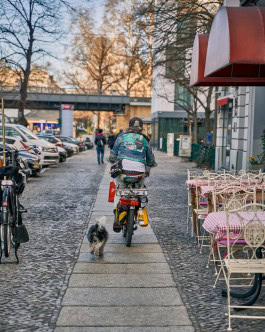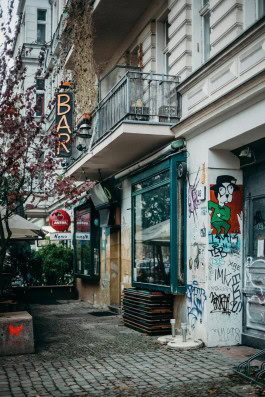

Painting the picture of tomorrow with the lines of yesterday, retro-futurism was born in the 1950s as a philosophical movement based on the interconnectedness of time. In the post-WW2 climate, while nuclear energy and the space race had become the new currency of the global agenda, the focus on the future strengthened along with post-war optimism. Of course, things were a bit different in Berlin: with the city split in two, the race was shaped around who represented the "brightest future." Retro-futurism, which draws the path to the future inspired by the retro aesthetics of the past, was born within this struggle to showcase these dreams, giving retro-futuristic buildings built in a classic style to Berlin's heritage between 1957 and 1980. The Columbist, in collaboration with the esteemed photographer Konrad Langer, has compiled these buildings through Langer's lens.
Â
Designed as the showcase of modernism, Hansaviertel was built as an exhibition by West Berlin in 1957 after being completely destroyed in World War II. Within the scope of the international housing exhibition Interbau organized that year, Hansaviertel came into the world as a kind of utopia envisioning the future. Interestingly, many names who left their mark on architectural history, including Walter Gropius, Alvar Aalto, Oscar Niemeyer, and Le Corbusier, were invited to Berlin for the construction of Hansaviertel. This project was not only the rebirth of West Berlin but was simultaneously constructing "another utopia" equation against the socialist classicism buildings rising on Karl-Marx-Allee: one that was light, filled with illumination, and spoke more closely with nature. The neighborhood remains an open-air museum today.

ă…¤
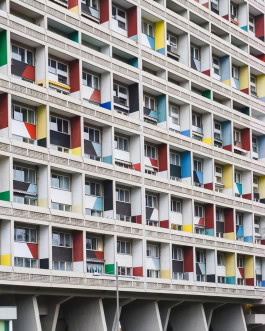
In some utopias, cities rise vertically. Designed by Le Corbusier as the Berlin face of the "Unité d'Habitation" concept, also within the scope of the Interbau project just like Hansaviertel, Corbusierhaus was designed as a self-sufficient vertical village. Hosting exactly 530 apartments, this massive structure was actually planned to be built inside Hansaviertel but could not fit within the neighborhood's borders. Therefore, it was moved to the forested area next to the Olympiastadion. The main goal, contrary to classical utopian dreams, was to construct a structure where people would not need to go outside. Hence, the interiors of Corbusierhaus host streets, shops, a post office, and a rooftop kindergarten. Withthe vivid colors of its corridors and its brutalist raw concrete, Corbusierhaus still creates a sci-fi impression today.
Â
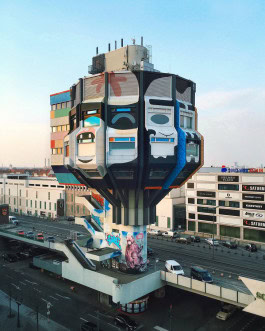
Perhaps the most interesting structure of the pop-art movement, Bierpinsel rises up to 47 meters from the ground in Steglitz. Built in 1976 by the couple Ralf SchĂĽler and Ursulina SchĂĽler-Witte, the "beer brush" takes its name from the people of Berlin. Indeed, the structure, which actually started from the silhouette of a tree, was likened to a shaving brush by Berliners and given this name. Operating restaurants, cafes, and a disco, Bierpinsel reflected the hedonistic tendencies of the period, truly creating a utopian climate. Although it is now abandoned, despite everything, it remains an important symbol of Berlin's side that holds onto the future with hope.
Â
In 1979, a spaceship landed in Berlin. The captains of the ship were none other than the SchĂĽler couple, who were also the architects of Bierpinsel! As one of the most expensive and largest congress centers in the world at the time, with a length of 320 meters and a width of 80 meters, the ICC caused great controversy, costing approximately 1 billion Marks. Inviting you on a time travel journey like a futuristic set with its silver aluminum facade covering the exterior, glowing neon orange and yellow corridors on the inside, and space base doors, the ICC continues to draw attention by the side of the Berlin highway today; though it remained closed for a long time, it is protected under listed monument status.


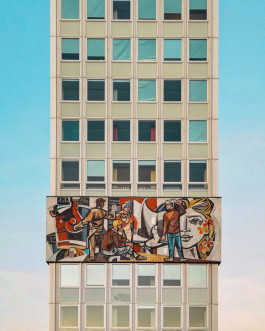
The legendary chief architect of the GDR era, Hermann Henselmann, created an example showing the progressive face of East Berlin by designing this teachers' house, which opened in Alexanderplatz in 1964. As one of the city's first curtain-wall glass-clad skyscrapers, the point where HDL draws the most attention is the mosaic belt completely covering the 3rd and 4th floors. Signed by Walter Womacka and named "Unser Leben" (Our Life), this macro-mosaic piece is not just an architectural accessory but also a narrator embodying socialist societal ideals: it tells the story of social dynamics on a socialist plane, the ongoing space race, and how science and technology were envisioned, melting communist propaganda and cyber-futuristic aesthetics in the same pot.
Â
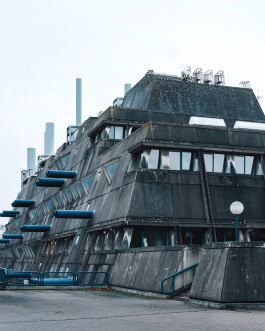
This "mouse bunker," belonging to the Free University of Berlin, may have been used as a former animal experimentation laboratory; however, calling it the peak point of brutalismwould be the correct term. Taking the lead among the cyberpunk and dystopian architectural structures spreading through Berlin, the Mäusebunker was designed by Gerd Hänska in 1980. Ventilation shafts extend like gun barrels from the exterior of the building, while its inward-sloping triangular windows add a military and nuclear vibe to the structure. Despite appearing aggressive to our eyes, this building is actually the work of futuristic engineering. The ventilation system developed to keep the animal laboratory sterile actually created that "barrel" atmosphere. On the other hand, it wasn't particularly liked by the public due to the mysterious experiments that once took place inside and its harsh brutalist structure. Although its demolition was planned for many years, thanks to protests from architects and cyberpunk lovers worldwide, it is protected today and stands its ground.
Related Articles:

Painting the picture of tomorrow with the lines of yesterday, retro-futurism was born in the 1950s as a philosophical movement based on the interconnectedness of time. In the post-WW2 climate, while nuclear energy and the space race had become the new currency of the global agenda, the focus on the future strengthened along with post-war optimism. Of course, things were a bit different in Berlin: with the city split in two, the race was shaped around who represented the "brightest future." Retro-futurism, which draws the path to the future inspired by the retro aesthetics of the past, was born within this struggle to showcase these dreams, giving retro-futuristic buildings built in a classic style to Berlin's heritage between 1957 and 1980. The Columbist, in collaboration with the esteemed photographer Konrad Langer, has compiled these buildings through Langer's lens.
Â
Designed as the showcase of modernism, Hansaviertel was built as an exhibition by West Berlin in 1957 after being completely destroyed in World War II. Within the scope of the international housing exhibition Interbau organized that year, Hansaviertel came into the world as a kind of utopia envisioning the future. Interestingly, many names who left their mark on architectural history, including Walter Gropius, Alvar Aalto, Oscar Niemeyer, and Le Corbusier, were invited to Berlin for the construction of Hansaviertel. This project was not only the rebirth of West Berlin but was simultaneously constructing "another utopia" equation against the socialist classicism buildings rising on Karl-Marx-Allee: one that was light, filled with illumination, and spoke more closely with nature. The neighborhood remains an open-air museum today.

ă…¤
In some utopias, cities rise vertically. Designed by Le Corbusier as the Berlin face of the "Unité d'Habitation" concept, also within the scope of the Interbau project just like Hansaviertel, Corbusierhaus was designed as a self-sufficient vertical village. Hosting exactly 530 apartments, this massive structure was actually planned to be built inside Hansaviertel but could not fit within the neighborhood's borders. Therefore, it was moved to the forested area next to the Olympiastadion. The main goal, contrary to classical utopian dreams, was to construct a structure where people would not need to go outside. Hence, the interiors of Corbusierhaus host streets, shops, a post office, and a rooftop kindergarten. Withthe vivid colors of its corridors and its brutalist raw concrete, Corbusierhaus still creates a sci-fi impression today.
Â
Perhaps the most interesting structure of the pop-art movement, Bierpinsel rises up to 47 meters from the ground in Steglitz. Built in 1976 by the couple Ralf SchĂĽler and Ursulina SchĂĽler-Witte, the "beer brush" takes its name from the people of Berlin. Indeed, the structure, which actually started from the silhouette of a tree, was likened to a shaving brush by Berliners and given this name. Operating restaurants, cafes, and a disco, Bierpinsel reflected the hedonistic tendencies of the period, truly creating a utopian climate. Although it is now abandoned, despite everything, it remains an important symbol of Berlin's side that holds onto the future with hope.
Â
In 1979, a spaceship landed in Berlin. The captains of the ship were none other than the SchĂĽler couple, who were also the architects of Bierpinsel! As one of the most expensive and largest congress centers in the world at the time, with a length of 320 meters and a width of 80 meters, the ICC caused great controversy, costing approximately 1 billion Marks. Inviting you on a time travel journey like a futuristic set with its silver aluminum facade covering the exterior, glowing neon orange and yellow corridors on the inside, and space base doors, the ICC continues to draw attention by the side of the Berlin highway today; though it remained closed for a long time, it is protected under listed monument status.


The legendary chief architect of the GDR era, Hermann Henselmann, created an example showing the progressive face of East Berlin by designing this teachers' house, which opened in Alexanderplatz in 1964. As one of the city's first curtain-wall glass-clad skyscrapers, the point where HDL draws the most attention is the mosaic belt completely covering the 3rd and 4th floors. Signed by Walter Womacka and named "Unser Leben" (Our Life), this macro-mosaic piece is not just an architectural accessory but also a narrator embodying socialist societal ideals: it tells the story of social dynamics on a socialist plane, the ongoing space race, and how science and technology were envisioned, melting communist propaganda and cyber-futuristic aesthetics in the same pot.
Â
This "mouse bunker," belonging to the Free University of Berlin, may have been used as a former animal experimentation laboratory; however, calling it the peak point of brutalismwould be the correct term. Taking the lead among the cyberpunk and dystopian architectural structures spreading through Berlin, the Mäusebunker was designed by Gerd Hänska in 1980. Ventilation shafts extend like gun barrels from the exterior of the building, while its inward-sloping triangular windows add a military and nuclear vibe to the structure. Despite appearing aggressive to our eyes, this building is actually the work of futuristic engineering. The ventilation system developed to keep the animal laboratory sterile actually created that "barrel" atmosphere. On the other hand, it wasn't particularly liked by the public due to the mysterious experiments that once took place inside and its harsh brutalist structure. Although its demolition was planned for many years, thanks to protests from architects and cyberpunk lovers worldwide, it is protected today and stands its ground.

Related Articles:
 ABOUT         CONTACT         INSTAGRAM         DATA PRIVACY         IMPRINT
You need to load content from reCAPTCHA to submit the form. Please note that doing so will share data with third-party providers.
More InformationYou need to load content from Turnstile to submit the form. Please note that doing so will share data with third-party providers.
More InformationYou are currently viewing a placeholder content from Facebook. To access the actual content, click the button below. Please note that doing so will share data with third-party providers.
More InformationYou are currently viewing a placeholder content from Instagram. To access the actual content, click the button below. Please note that doing so will share data with third-party providers.
More InformationYou need to load content from hCaptcha to submit the form. Please note that doing so will share data with third-party providers.
More InformationYou need to load content from reCAPTCHA to submit the form. Please note that doing so will share data with third-party providers.
More InformationYou are currently viewing a placeholder content from Turnstile. To access the actual content, click the button below. Please note that doing so will share data with third-party providers.
More InformationYou are currently viewing a placeholder content from X. To access the actual content, click the button below. Please note that doing so will share data with third-party providers.
More Information