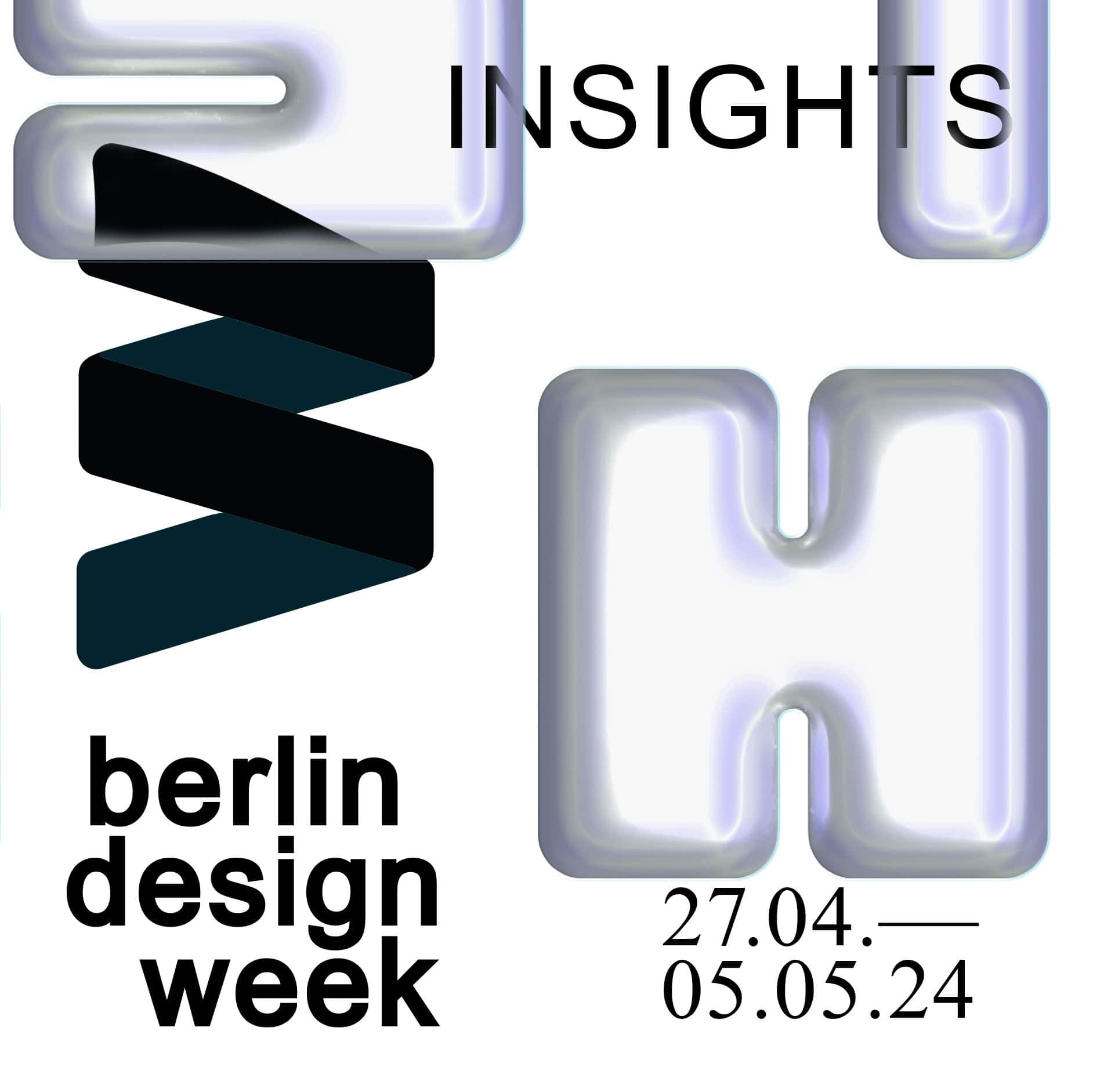

One of the most notable additions was the introduction of a new central hub at Die Macherei Berlin-Kreuzberg, bringing exhibitions, talks and design projects together under one roof for the first time and offering a glimpse of what the festival could become in the future.
Among the many presentations across the city, these were our highlights.
Â
A visit to the Berlin studio of Swedish designer Monica Förster offered a rare insight into the creative process behind her internationally recognised work. Alongside stories about her studio's approach to design, a particular highlight was her award-winning rug collection I Inherited a Forest. Inspired by the landscapes of northern Sweden, the hand-crafted pieces transform forests, rivers and mountains into tactile textile compositions and provided one of the week's most memorable aesthetic experiences.


The new festival centre at Die Macherei showcased a diverse mix of projects, from established brands to emerging creative concepts. Among them was Design fĂĽr Deine Wand, demonstrating how art and design are increasingly becoming part of everyday living spaces rather than existing solely within galleries and museums. The project reflected a growing desire for individuality and storytelling within contemporary interiors.
Â
At Budapester Salon, fashion, craftsmanship and spatial design came together for the premiere of Shiki Mirage. Positioned somewhere between installation, object and experience, the project demonstrated how contemporary design increasingly moves beyond traditional categories and embraces interdisciplinary thinking.


One of the most surprising discoveries was TITAN, a futuristic electric supercar developed by students from the Czech Republic. Presented within the impressive surroundings of the former Kaufhaus Jandorf, the project demonstrated both technical ambition and creative courage. More than a vehicle concept, TITAN opened a conversation about the future of mobility and the role young designers may play in shaping it.
Â
Among the international contributions, Guatemala stood out with a presentation that brought together contemporary design and traditional craftsmanship. The exhibition introduced visitors to locally rooted materials, techniques and narratives, while showcasing how cultural heritage can inspire contemporary design solutions.
It also sparked an interesting thought: as Berlin Design Week continues to evolve, could future editions introduce country-focused design pavilions similar to those at the Venice Biennale? Bringing together international design scenes alongside Berlin's own artists, designers and makers could become one of the festival's most exciting future directions.
Rather than trying to become another Milan, Berlin Design Week's greatest strength may lie in its ability to connect different creative worlds, cultures and ideas. Ten years in, that potential is becoming increasingly visible.


Related Articles:

One of the most notable additions was the introduction of a new central hub at Die Macherei Berlin-Kreuzberg, bringing exhibitions, talks and design projects together under one roof for the first time and offering a glimpse of what the festival could become in the future.
Among the many presentations across the city, these were our highlights.
Â
A visit to the Berlin studio of Swedish designer Monica Förster offered a rare insight into the creative process behind her internationally recognised work. Alongside stories about her studio's approach to design, a particular highlight was her award-winning rug collection I Inherited a Forest. Inspired by the landscapes of northern Sweden, the hand-crafted pieces transform forests, rivers and mountains into tactile textile compositions and provided one of the week's most memorable aesthetic experiences.


The new festival centre at Die Macherei showcased a diverse mix of projects, from established brands to emerging creative concepts. Among them was Design fĂĽr Deine Wand, demonstrating how art and design are increasingly becoming part of everyday living spaces rather than existing solely within galleries and museums. The project reflected a growing desire for individuality and storytelling within contemporary interiors.
Â
At Budapester Salon, fashion, craftsmanship and spatial design came together for the premiere of Shiki Mirage. Positioned somewhere between installation, object and experience, the project demonstrated how contemporary design increasingly moves beyond traditional categories and embraces interdisciplinary thinking.


One of the most surprising discoveries was TITAN, a futuristic electric supercar developed by students from the Czech Republic. Presented within the impressive surroundings of the former Kaufhaus Jandorf, the project demonstrated both technical ambition and creative courage. More than a vehicle concept, TITAN opened a conversation about the future of mobility and the role young designers may play in shaping it.
Â
Among the international contributions, Guatemala stood out with a presentation that brought together contemporary design and traditional craftsmanship. The exhibition introduced visitors to locally rooted materials, techniques and narratives, while showcasing how cultural heritage can inspire contemporary design solutions.
It also sparked an interesting thought: as Berlin Design Week continues to evolve, could future editions introduce country-focused design pavilions similar to those at the Venice Biennale? Bringing together international design scenes alongside Berlin's own artists, designers and makers could become one of the festival's most exciting future directions.
Rather than trying to become another Milan, Berlin Design Week's greatest strength may lie in its ability to connect different creative worlds, cultures and ideas. Ten years in, that potential is becoming increasingly visible.


Related Articles:
 ABOUT         CONTACT         INSTAGRAM         DATA PRIVACY         IMPRINT
You need to load content from reCAPTCHA to submit the form. Please note that doing so will share data with third-party providers.
More InformationYou need to load content from Turnstile to submit the form. Please note that doing so will share data with third-party providers.
More InformationYou are currently viewing a placeholder content from Facebook. To access the actual content, click the button below. Please note that doing so will share data with third-party providers.
More InformationYou are currently viewing a placeholder content from Instagram. To access the actual content, click the button below. Please note that doing so will share data with third-party providers.
More InformationYou need to load content from hCaptcha to submit the form. Please note that doing so will share data with third-party providers.
More InformationYou need to load content from reCAPTCHA to submit the form. Please note that doing so will share data with third-party providers.
More InformationYou are currently viewing a placeholder content from Turnstile. To access the actual content, click the button below. Please note that doing so will share data with third-party providers.
More InformationYou are currently viewing a placeholder content from X. To access the actual content, click the button below. Please note that doing so will share data with third-party providers.
More Information