


Web3 Summit, which explicitly rejects being defined as just a crypto conference, or a commercial blockchain trade show, positions itself as a festival for digital freedom and a participatory workspace to build the next internet together.
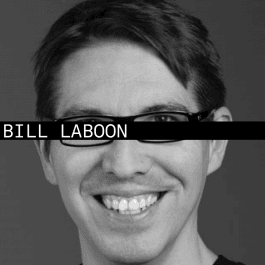
On this platform, sponsorships, logos, and pay-to-play speaker slots are strictly excluded. Instead, it offers a fully transparent critique of the data exploitation driven by major technology monopolies, as well as the disinformation caused by AI, highlighting mathematical proof as a constructive counterweight. As The Columbist, we came together with the Vice President of Technical Operation, Web3 Foundation, Bill Laboon, for an insightful conversation.
From the internet’s naive beginnings to cyberpunk dystopias, Berlin’s hacker legacy, and AI’s mechanism of "correctly hallucinating" this interview captures a deeply crucial perspective. How can we reclaim our digital destiny in this age? Laboon’s insights pave the way for you to understand your position as an individual in the era of data, AI, and hyper-digitalization. Moving between a healthy skepticism and a firm reliance on the concrete boundaries of reality, this is a matter we should all pay close attention to. Web3 Summit is set to take place at Funkhaus Berlin on June 18 and 19 to discuss it all. Book your ticket now through this link.

ă…¤
— The experience is meant as a celebration and planning point for a freer online future, not a place to shill anything. This has meant that we have tried to do everything in a decentralized way, even when it’s more difficult. A special demo network has been set up for the summit which lets you communicate with each other, provide identity, pay for things, even make your own applications – in an online, decentralized way. We hope that this not only shows what is possible in the future, but also inspires people to start building it today.
Web3 Summit has a no-sponsorship policy, with no advertising of specific projects, no logo placement, no pay-to-play speaker slots. We do not want - and have never wanted - to be a blockchain trade show. Blockchain is one specific technology used to help bring about digital freedom, among many, many others. This conference is about getting people to start controlling their own online destiny and providing them a demonstration of potential tools to do so.
Â
— The seeds of this distrust were born with the Internet itself. The traditional internet architecture was built with a charming sense of naivete. There’s a really great anecdote in Steven Levy’s book “Hackers” about Richard Stallman protesting having passwords on user accounts back in the 1970s.
Today, though, we’ve seen that we can’t just trust anyone on the Internet. You can see this every time you open your Spam folder. You can see this every time on the news, some company’s database gets hacked, and your personal information is stolen. You can see this every time you actually read the terms and conditions of a website, and see the hundreds of companies your data is sold to every time you visit a website.
Web3 Foundation’s mission is to help ensure a decentralized Internet where people are in charge of their data and destiny. It’s to let people keep private what they want to keep private, and to allow people to publish what they want without fear of censorship. It’s to put power back in the hands of the people, and Web3 Summit is a celebration of that.
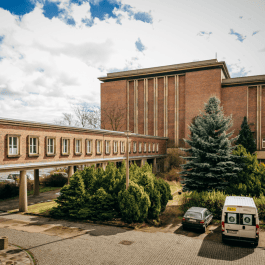
— Web3 Summit has always been held in Berlin - this will be our fifth year there. Of course, the strong hacker culture makes it a perfect place to hold it. Symbolically, Berlin perfectly shows the failure of any broad governmental system to control people. Centralized systems are by their very nature brittle, and perhaps nothing showed that better than the fall of the Berlin Wall in 1989. A centralised failure led to an unforeseen domino effect. Decentralized technology is similar - thousands of people voluntarily opting out of a system that restricts them, and into a system that lets them be their own masters.
Â
— I like to joke that blockchain is the opposite of AI. Blockchain is all about proof - you can easily verify what has happened on-chain. You can’t lie about having bitcoin, or sending it to someone - anyone in the world can mathematically verify that you did. AI is all about lying - everything an LLM ( Large Language Models, the technology behind AI applications like ChatGPT) does is hallucinating, it’s just that most of the time it hallucinates correctly. By their very nature, LLMs act somewhat randomly.
It’s straightforward to put proof on a blockchain that a particular picture, video or text was produced at a certain time. I can have my computer go check every single Bitcoin transaction since 2009 to ensure that they are all valid. Someone might be able to make a fake video starring a generated Bill Laboon, but they won’t be able to sign a message from my Polkadot account. As our slogan puts it, blockchains are all about “less trust, more truth”. Mathematical proof of personhood is becoming increasingly important as major social media sites and many other sites are being flooded with hallucinations from LLM bots. Blockchain and other Web3 technologies give us a way out of that morass.

— The problems related to this are engineering problems and just require smart people to work on them. When Bitcoin was designed in 2008, it was astounding… but it was a first attempt at a decentralized network, and to be honest, it shows. It uses more electricity than Switzerland to run. It’s limited to about four transactions per second on the base network. Developing an application on Bitcoin is difficult – for some types of applications even, impossible, but not easy in any way.
We have solutions to these problems, though. We have developed faster, more efficient networks that scale thousands of times beyond Bitcoin. We can use proof-of-stake and other technologies to avoid Bitcoin's massive electricity consumption. We can create much more powerful and usable applications after fifteen years of evolution, even if people don’t always realize it.
We will also be demonstrating easier ways for individuals to produce applications that meet their own needs at the Web3 Summit. If there’s something they need to do, they can do it themselves. We want to give people agency not just to use these technologies, but to help develop them themselves.
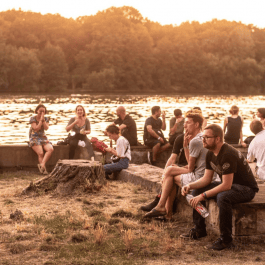
— There’s the stereotype of the type of nerd who cares about this stuff, but it impacts everyone, not just an obscure subset of developers. Be it the artist being exploited, the researcher who finds themself blocked from accessing data, the activist shadow-banned and censored, or even the ordinary person whose data is recorded without informed consent and sold on, every human using the Internet is affected.
Working together, we can find solutions more easily than if we work in our own silos. The developer who can help journalists receive information from whistleblowers safely. The artist who awakens an idea in a researcher to go down a new path. The activist who helps change laws to allow developers to write code freely. Our fates are all intertwined, and solutions are more likely to come from a mixing of expertise and background.
Â
— The key point we want to get across at Web3 Summit is that a digital dystopia is not inevitable. If we collectively care enough, we can bend the arc of history to something that respects individuals more than the current system in which we live. I want people to realize that the future is in their hands – that they have the power and capability to shape it. The problem is well-known; the answer is not. The question I hope they are asking themselves is definitely not “What is going to be done about this?” but rather “What am I going to do about it?”
Â
Related Articles:

Web3 Summit, which explicitly rejects being defined as just a crypto conference, or a commercial blockchain trade show, positions itself as a festival for digital freedom and a participatory workspace to build the next internet together.
On this platform, sponsorships, logos, and pay-to-play speaker slots are strictly excluded. Instead, it offers a fully transparent critique of the data exploitation driven by major technology monopolies, as well as the disinformation caused by AI, highlighting mathematical proof as a constructive counterweight. As The Columbist, we came together with the Vice President of Technical Operation, Web3 Foundation, Bill Laboon, for an insightful conversation.
From the internet’s naive beginnings to cyberpunk dystopias, Berlin’s hacker legacy, and AI’s mechanism of "correctly hallucinating" this interview captures a deeply crucial perspective. How can we reclaim our digital destiny in this age? Laboon’s insights pave the way for you to understand your position as an individual in the era of data, AI, and hyper-digitalization. Moving between a healthy skepticism and a firm reliance on the concrete boundaries of reality, this is a matter we should all pay close attention to. Web3 Summit is set to take place at Funkhaus Berlin on June 18 and 19 to discuss it all. Book your ticket now through this link.

ă…¤
— The experience is meant as a celebration and planning point for a freer online future, not a place to shill anything. This has meant that we have tried to do everything in a decentralized way, even when it’s more difficult. A special demo network has been set up for the summit which lets you communicate with each other, provide identity, pay for things, even make your own applications – in an online, decentralized way. We hope that this not only shows what is possible in the future, but also inspires people to start building it today.
Web3 Summit has a no-sponsorship policy, with no advertising of specific projects, no logo placement, no pay-to-play speaker slots. We do not want - and have never wanted - to be a blockchain trade show. Blockchain is one specific technology used to help bring about digital freedom, among many, many others. This conference is about getting people to start controlling their own online destiny and providing them a demonstration of potential tools to do so.
Â
— The seeds of this distrust were born with the Internet itself. The traditional internet architecture was built with a charming sense of naivete. There’s a really great anecdote in Steven Levy’s book “Hackers” about Richard Stallman protesting having passwords on user accounts back in the 1970s.
Today, though, we’ve seen that we can’t just trust anyone on the Internet. You can see this every time you open your Spam folder. You can see this every time on the news, some company’s database gets hacked, and your personal information is stolen. You can see this every time you actually read the terms and conditions of a website, and see the hundreds of companies your data is sold to every time you visit a website.
Web3 Foundation’s mission is to help ensure a decentralized Internet where people are in charge of their data and destiny. It’s to let people keep private what they want to keep private, and to allow people to publish what they want without fear of censorship. It’s to put power back in the hands of the people, and Web3 Summit is a celebration of that.

— Web3 Summit has always been held in Berlin - this will be our fifth year there. Of course, the strong hacker culture makes it a perfect place to hold it. Symbolically, Berlin perfectly shows the failure of any broad governmental system to control people. Centralized systems are by their very nature brittle, and perhaps nothing showed that better than the fall of the Berlin Wall in 1989. A centralised failure led to an unforeseen domino effect. Decentralized technology is similar - thousands of people voluntarily opting out of a system that restricts them, and into a system that lets them be their own masters.
Â
— I like to joke that blockchain is the opposite of AI. Blockchain is all about proof - you can easily verify what has happened on-chain. You can’t lie about having bitcoin, or sending it to someone - anyone in the world can mathematically verify that you did. AI is all about lying - everything an LLM ( Large Language Models, the technology behind AI applications like ChatGPT) does is hallucinating, it’s just that most of the time it hallucinates correctly. By their very nature, LLMs act somewhat randomly.
It’s straightforward to put proof on a blockchain that a particular picture, video or text was produced at a certain time. I can have my computer go check every single Bitcoin transaction since 2009 to ensure that they are all valid. Someone might be able to make a fake video starring a generated Bill Laboon, but they won’t be able to sign a message from my Polkadot account. As our slogan puts it, blockchains are all about “less trust, more truth”. Mathematical proof of personhood is becoming increasingly important as major social media sites and many other sites are being flooded with hallucinations from LLM bots. Blockchain and other Web3 technologies give us a way out of that morass.

— The problems related to this are engineering problems and just require smart people to work on them. When Bitcoin was designed in 2008, it was astounding… but it was a first attempt at a decentralized network, and to be honest, it shows. It uses more electricity than Switzerland to run. It’s limited to about four transactions per second on the base network. Developing an application on Bitcoin is difficult – for some types of applications even, impossible, but not easy in any way.
We have solutions to these problems, though. We have developed faster, more efficient networks that scale thousands of times beyond Bitcoin. We can use proof-of-stake and other technologies to avoid Bitcoin's massive electricity consumption. We can create much more powerful and usable applications after fifteen years of evolution, even if people don’t always realize it.
We will also be demonstrating easier ways for individuals to produce applications that meet their own needs at the Web3 Summit. If there’s something they need to do, they can do it themselves. We want to give people agency not just to use these technologies, but to help develop them themselves.

— There’s the stereotype of the type of nerd who cares about this stuff, but it impacts everyone, not just an obscure subset of developers. Be it the artist being exploited, the researcher who finds themself blocked from accessing data, the activist shadow-banned and censored, or even the ordinary person whose data is recorded without informed consent and sold on, every human using the Internet is affected.
Working together, we can find solutions more easily than if we work in our own silos. The developer who can help journalists receive information from whistleblowers safely. The artist who awakens an idea in a researcher to go down a new path. The activist who helps change laws to allow developers to write code freely. Our fates are all intertwined, and solutions are more likely to come from a mixing of expertise and background.
Â
— The key point we want to get across at Web3 Summit is that a digital dystopia is not inevitable. If we collectively care enough, we can bend the arc of history to something that respects individuals more than the current system in which we live. I want people to realize that the future is in their hands – that they have the power and capability to shape it. The problem is well-known; the answer is not. The question I hope they are asking themselves is definitely not “What is going to be done about this?” but rather “What am I going to do about it?”
Â
Related Articles:
 ABOUT         CONTACT         INSTAGRAM         DATA PRIVACY         IMPRINT
You need to load content from reCAPTCHA to submit the form. Please note that doing so will share data with third-party providers.
More InformationYou need to load content from Turnstile to submit the form. Please note that doing so will share data with third-party providers.
More InformationYou are currently viewing a placeholder content from Facebook. To access the actual content, click the button below. Please note that doing so will share data with third-party providers.
More InformationYou are currently viewing a placeholder content from Instagram. To access the actual content, click the button below. Please note that doing so will share data with third-party providers.

More InformationYou need to load content from hCaptcha to submit the form. Please note that doing so will share data with third-party providers.
More InformationYou need to load content from reCAPTCHA to submit the form. Please note that doing so will share data with third-party providers.
More InformationYou are currently viewing a placeholder content from Turnstile. To access the actual content, click the button below. Please note that doing so will share data with third-party providers.
More InformationYou are currently viewing a placeholder content from X. To access the actual content, click the button below. Please note that doing so will share data with third-party providers.
More Information