
Sign up here to subscribe to The Columbist newsletter.
This selection of exhibitions to see this October aims to explore memory as a common thread, showing us different directions that converge on the same goal: echoing the past to shape a better future.
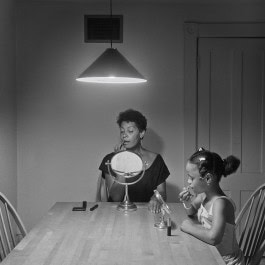
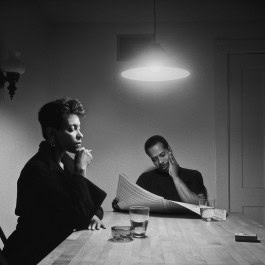
During Berlin Art Week C/O Berlin opened an extensive retrospective of the work of acclaimed artist Carrie Mae Weems, The Heart of the Matter. With her photographs, videos, and installations, Weems has been examining for decades how images shape history, create memory, and separate what remains visible from what stays hidden. Race and femininity are two other pillars of her practice, intertwined with her personal biography to address universal themes such as identity, belonging, and representation.


Showcased in the exhibition is one of her early series, Family Pictures and Stories (1978-84), which combines photos of family members and autobiographical texts to understand family as a carrier of collective memory and cultural identities. From the domestic space, the exhibition expands into public environments, examining them as places of memory and power. The exhibition also includes a recent series on Black communities of faith, highlighting the importance of solidarity, spirituality and resistance. With her practice, Weems ultimately shows us how history can be reshaped, paving an intimate path to understanding the past and dismantling inequality.
“At one time or another we all feel a profound need to know, and/or to create our own history, to define our families, our friends, ourselves in relationship to all other things, people, places, and events. And no doubt there is something grand in the knowing and the creating of ourselves... In my work.. that ‘something grand’ has to do with making a number of connections in my own personal history that have to do with being poor, black, working class, and a woman to boot.”
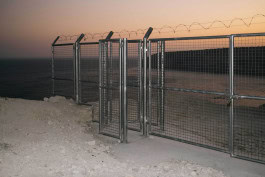
C/O Berlin is also presenting the two winners of the After Nature. Ulrike Crespo Photography Prize 26: Stelios Kallinikou and Susanne Kriemann. Both projects have the power to transport us to places where the past persists in the present and memory echoes deeply: the island of Cyprus and former uranium extraction sites across Germany and France. By exploring radiation, pollution and military control, these two artists use photography to show what cannot be seen, documenting the issues that leak from our past into our future.



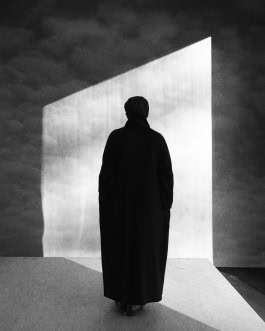
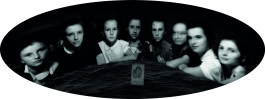
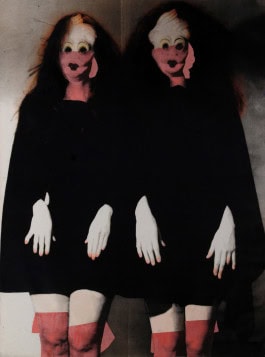
On September 10, KVOST opened the solo show Home’s Shadows by Izabella Gustowska. The Polish artist is the recipient of this year’s KVOST scholarship and the winner of the Claus Michaletz Preis 2026. Her practice operates at the intersection of bodies, subjectivity and feminism, and engages directly with memory, identity and temporality.
With this new series of works, Gustowska also explores family bonds, as a way to address the self in relation to the Other. Her focus is the relationship between siblings, specifically twins, and directly echoes her personal story. In one of the most recent works, She and I, the artist addresses her sister’s death and brings the conversation to an even more poignant level. The ghostly atmosphere of her artworks also links her practice to a form of spirituality, creating a ritual of conjuring spirits, and bringing past and present back into dialogue.
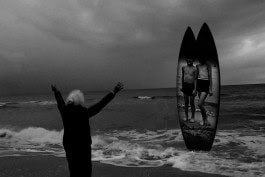
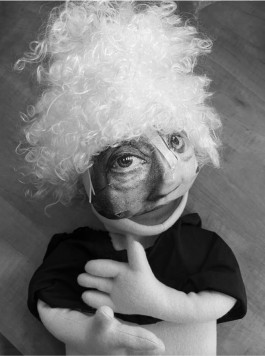
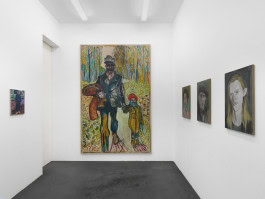
The intertwining of family and memory is also evident in the three new exhibitions that neugerriemschneider recently opened. billy childish and the children of the sect directly presents the artistic practice of a family across two generations of creatives: Billy Childish and his children, Huddie and Scout Hamper.
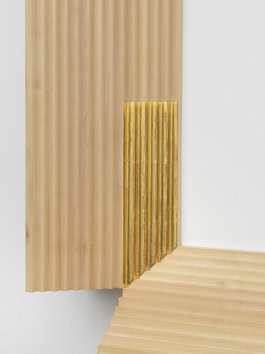
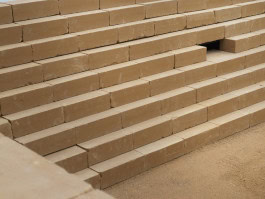
At the Linienstraße location, the gallery is also presenting its second exhibition with Cevdet Erek, them and us. Through stadium-like constructs, the artist explores the sonic potential of architecture, connecting ancient times to the modern world while suspending time and space. The exhibition title itself prompts viewers to understand them, and our societies as their reflection – as both shared and divergent.
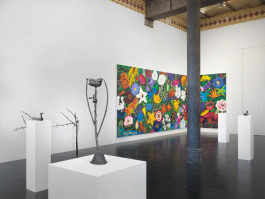
A different and impactful form of familiarity is created with painting the path, an exhibition displaying side by side the work of Swedish artist Andreas Eriksson and South Korean artist Kim Chong Hak. The closeness arises from a shared sensibility toward nature and a predisposition to a secluded life.
Particularly moving are the bronze sculptures cast by Eriksson from the bodies of dead birds: a tender reflection on life and death, and on the concept of illusion. Alternating with them are two pieces from Kim’s personal collection of kirogi: hand-carved ducks gifted in South Korea to celebrate important occasions. Life and death, family moments, and memory intertwine once again, showing us the beauty that lies in the smallest things.
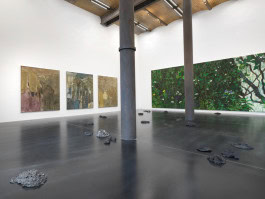
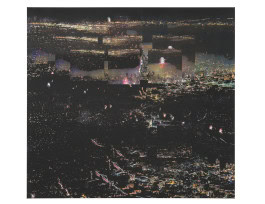
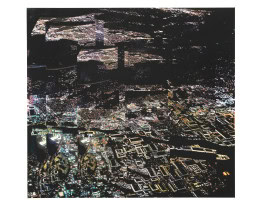
Connecting time to space, and life to death, is the exhibition Hollywood Forever by Kate Mosher Hall at Trautwein Herleth. Memory is addressed in the exhibition through two powerful levels. The paintings all represent the city of Los Angeles, using abstraction and layers of temporalities to show how perception and experience are constantly mediated and adaptable.
What is familiar about the city becomes unknown through each layer. The title of the exhibition itself, Hollywood Forever, refers to a cemetery located on Santa Monica Boulevard, reminding us once again how important both the dead and the living are in keeping alive the dream that LA represents, and unveiling a side of its charming illusion that lies deep within our collective memory.
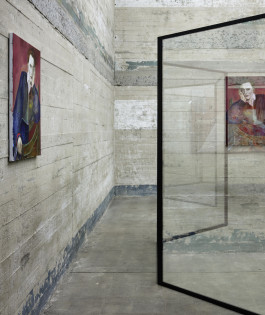
Probably no other space in Berlin can summarize the multilayered soul of the city and the traces of memory as powerfully as the Boros Collection. Originally built as a World War II bunker, the building later served as a prison, a storage facility for exotic fruits sent from Cuba to the GDR, and ultimately as the most iconic techno club of the 1990s. The collectors Karen and Christian Boros purchased and reopened it to the public in the early 2000s, showcasing a new selection of artworks from their collection every four years.
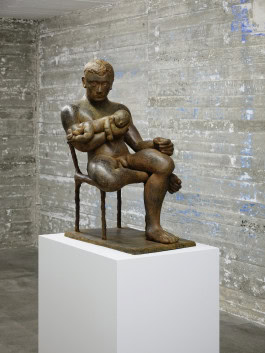
This May, the Boros Collection opened its fifth presentation, which focuses on liminal layers of transience and inner states to address the troubling and precarious times we are living in. From the impact of cruelty and the twisted role of family powerfully addressed in Pol Taburet’s drawings, to the echoes of rape culture powerfully represented by Jill Mulleady, to immersive sound installations and intimate sculptures – like the one by Louis Fratino who shifts the focus to paternity – the presentation is a journey through our collective memory.
By linking once again the historically charged building to our compelling present, the exhibition provides us with provocative inputs to reshape our understanding of the world.
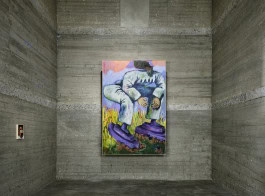
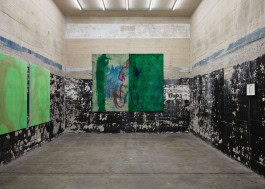
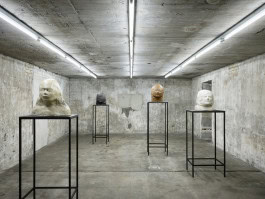
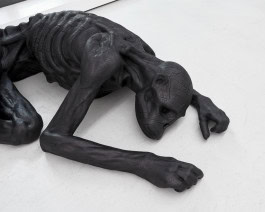
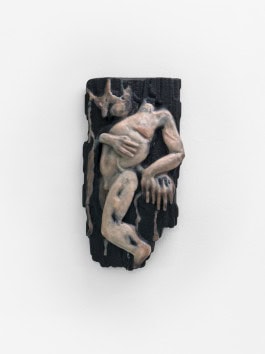
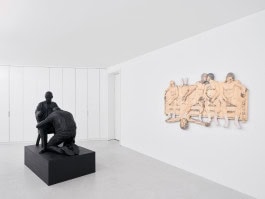
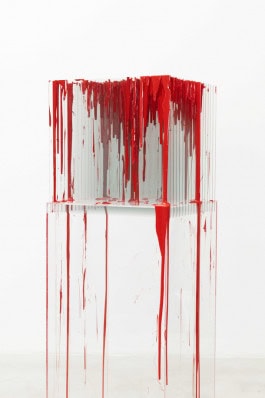
During Berlin Art Week, Ersan Mondtag opened his first solo exhibition with DITTRICH & SCHLECHTRIEM. Titled Dispair, the show navigates between personal history and collective memory to examine the impact of social relationships on both bodies and places. His large scale sculptures are made of carbonized wood, creating another powerful link between transience and memory. Mondtag’s practice revolves around the fragility of our societal structures and their twisted dynamics of inclusion and exclusion. By addressing them, his works open up a space to confront the present and re-imagine our collectivity.
“Neoliberalism with its cannibalistic exploitation of care, infrastructure, and natural resources as well as art, culture, and political and social utopias has instilled a sense in people that time is no longer moving forward. Today’s culture often merely recycles old forms instead of engendering radical innovations or visions of the future,” wrote Oliver Koerner von Gustorf in an essay about the exhibition, bringing the most pressing themes of our time into a new perspective.
Memory is a vital force, and today more than ever we should all use it to remember past mistakes and try not to repeat them. It echoes everywhere in life: in family dynamics, political conflicts, nature, and it is effectively used as a means to shape society. This selection of exhibitions to see in Berlin this October aims to remind us of its permeating power and its ability to connect past and future in a truly meaningful present. Don’t miss the chance to visit these thought-provoking exhibitions, and see where this journey takes you.

Sign up here to subscribe to The Columbist newsletter.
Related Articles:

Sign up here to subscribe to The Columbist newsletter.
This selection of exhibitions to see this October aims to explore memory as a common thread, showing us different directions that converge on the same goal: echoing the past to shape a better future.
During Berlin Art Week C/O Berlin opened an extensive retrospective of the work of acclaimed artist Carrie Mae Weems, The Heart of the Matter. With her photographs, videos, and installations, Weems has been examining for decades how images shape history, create memory, and separate what remains visible from what stays hidden. Race and femininity are two other pillars of her practice, intertwined with her personal biography to address universal themes such as identity, belonging, and representation.
Showcased in the exhibition is one of her early series, Family Pictures and Stories (1978-84), which combines photos of family members and autobiographical texts to understand family as a carrier of collective memory and cultural identities. From the domestic space, the exhibition expands into public environments, examining them as places of memory and power. The exhibition also includes a recent series on Black communities of faith, highlighting the importance of solidarity, spirituality and resistance. With her practice, Weems ultimately shows us how history can be reshaped, paving an intimate path to understanding the past and dismantling inequality.
“At one time or another we all feel a profound need to know, and/or to create our own history, to define our families, our friends, ourselves in relationship to all other things, people, places, and events. And no doubt there is something grand in the knowing and the creating of ourselves... In my work.. that ‘something grand’ has to do with making a number of connections in my own personal history that have to do with being poor, black, working class, and a woman to boot.”
C/O Berlin is also presenting the two winners of the After Nature. Ulrike Crespo Photography Prize 26: Stelios Kallinikou and Susanne Kriemann. Both projects have the power to transport us to places where the past persists in the present and memory echoes deeply: the island of Cyprus and former uranium extraction sites across Germany and France. By exploring radiation, pollution and military control, these two artists use photography to show what cannot be seen, documenting the issues that leak from our past into our future.


On September 10, KVOST opened the solo show Home’s Shadows by Izabella Gustowska. The Polish artist is the recipient of this year’s KVOST scholarship and the winner of the Claus Michaletz Preis 2026. Her practice operates at the intersection of bodies, subjectivity and feminism, and engages directly with memory, identity and temporality.
With this new series of works, Gustowska also explores family bonds, as a way to address the self in relation to the Other. Her focus is the relationship between siblings, specifically twins, and directly echoes her personal story. In one of the most recent works, She and I, the artist addresses her sister’s death and brings the conversation to an even more poignant level. The ghostly atmosphere of her artworks also links her practice to a form of spirituality, creating a ritual of conjuring spirits, and bringing past and present back into dialogue.


The intertwining of family and memory is also evident in the three new exhibitions that neugerriemschneider recently opened. billy childish and the children of the sect directly presents the artistic practice of a family across two generations of creatives: Billy Childish and his children, Huddie and Scout Hamper.
At the Linienstraße location, the gallery is also presenting its second exhibition with Cevdet Erek, them and us. Through stadium-like constructs, the artist explores the sonic potential of architecture, connecting ancient times to the modern world while suspending time and space. The exhibition title itself prompts viewers to understand them, and our societies as their reflection – as both shared and divergent.
A different and impactful form of familiarity is created with painting the path, an exhibition displaying side by side the work of Swedish artist Andreas Eriksson and South Korean artist Kim Chong Hak. The closeness arises from a shared sensibility toward nature and a predisposition to a secluded life.
Particularly moving are the bronze sculptures cast by Eriksson from the bodies of dead birds: a tender reflection on life and death, and on the concept of illusion. Alternating with them are two pieces from Kim’s personal collection of kirogi: hand-carved ducks gifted in South Korea to celebrate important occasions. Life and death, family moments, and memory intertwine once again, showing us the beauty that lies in the smallest things.


Connecting time to space, and life to death, is the exhibition Hollywood Forever by Kate Mosher Hall at Trautwein Herleth. Memory is addressed in the exhibition through two powerful levels. The paintings all represent the city of Los Angeles, using abstraction and layers of temporalities to show how perception and experience are constantly mediated and adaptable.
What is familiar about the city becomes unknown through each layer. The title of the exhibition itself, Hollywood Forever, refers to a cemetery located on Santa Monica Boulevard, reminding us once again how important both the dead and the living are in keeping alive the dream that LA represents, and unveiling a side of its charming illusion that lies deep within our collective memory.


Probably no other space in Berlin can summarize the multilayered soul of the city and the traces of memory as powerfully as the Boros Collection. Originally built as a World War II bunker, the building later served as a prison, a storage facility for exotic fruits sent from Cuba to the GDR, and ultimately as the most iconic techno club of the 1990s. The collectors Karen and Christian Boros purchased and reopened it to the public in the early 2000s, showcasing a new selection of artworks from their collection every four years.
This May, the Boros Collection opened its fifth presentation, which focuses on liminal layers of transience and inner states to address the troubling and precarious times we are living in. From the impact of cruelty and the twisted role of family powerfully addressed in Pol Taburet’s drawings, to the echoes of rape culture powerfully represented by Jill Mulleady, to immersive sound installations and intimate sculptures – like the one by Louis Fratino who shifts the focus to paternity – the presentation is a journey through our collective memory.
By linking once again the historically charged building to our compelling present, the exhibition provides us with provocative inputs to reshape our understanding of the world.


During Berlin Art Week, Ersan Mondtag opened his first solo exhibition with DITTRICH & SCHLECHTRIEM. Titled Dispair, the show navigates between personal history and collective memory to examine the impact of social relationships on both bodies and places. His large scale sculptures are made of carbonized wood, creating another powerful link between transience and memory. Mondtag’s practice revolves around the fragility of our societal structures and their twisted dynamics of inclusion and exclusion. By addressing them, his works open up a space to confront the present and re-imagine our collectivity.
“Neoliberalism with its cannibalistic exploitation of care, infrastructure, and natural resources as well as art, culture, and political and social utopias has instilled a sense in people that time is no longer moving forward. Today’s culture often merely recycles old forms instead of engendering radical innovations or visions of the future,” wrote Oliver Koerner von Gustorf in an essay about the exhibition, bringing the most pressing themes of our time into a new perspective.
Memory is a vital force, and today more than ever we should all use it to remember past mistakes and try not to repeat them. It echoes everywhere in life: in family dynamics, political conflicts, nature, and it is effectively used as a means to shape society. This selection of exhibitions to see in Berlin this October aims to remind us of its permeating power and its ability to connect past and future in a truly meaningful present. Don’t miss the chance to visit these thought-provoking exhibitions, and see where this journey takes you.


Sign up here to subscribe to The Columbist newsletter.
Related Articles:
You need to load content from reCAPTCHA to submit the form. Please note that doing so will share data with third-party providers.
More InformationYou need to load content from Turnstile to submit the form. Please note that doing so will share data with third-party providers.
More InformationYou are currently viewing a placeholder content from Facebook. To access the actual content, click the button below. Please note that doing so will share data with third-party providers.
More InformationYou are currently viewing a placeholder content from Instagram. To access the actual content, click the button below. Please note that doing so will share data with third-party providers.
More InformationYou need to load content from hCaptcha to submit the form. Please note that doing so will share data with third-party providers.
More InformationYou need to load content from reCAPTCHA to submit the form. Please note that doing so will share data with third-party providers.
More InformationYou are currently viewing a placeholder content from Turnstile. To access the actual content, click the button below. Please note that doing so will share data with third-party providers.
More InformationYou are currently viewing a placeholder content from X. To access the actual content, click the button below. Please note that doing so will share data with third-party providers.
More Information