Sign up here to subscribe to The Columbist newsletter.
What is lost is lost. Yet, we are often comforted by the feeling that what is gone still remains with us in some way, either accompanying or haunting us. Presence and absence do not exist without one another. Sometimes I think this might be the reason why ghosts were invented. This selection of exhibitions to see in Berlin in December aims to help us approach this lingering feeling of loss, and meet our ghosts halfway.
KW Institute for Contemporary Art focused its entire fall programme on investigating this concept: translating phenomena that resist easy explanation, and reflecting on shifting states, unseen forces, and human memory. Bad Dreams is the first survey of British artist Susan Hiller in Berlin and brings us face to face with these hidden dimensions. In the artist’s own words: “I’m committed to working with what I call ghosts, that is, with cultural discards, fragments and things that are invisible to most people but intensely important to a few: situations, ideas and experiences that haunt us collectively.”
Drawing on her fascination with these topics, the exhibition unfolds as a series of encounters, populated by ghostly images, supernatural children, aliens, and near-death experiences. With her practice, Hiller shows us that the uncanny is never removed from everyday life, but lives right within it. Her multifaceted and poignant retrospective reveals different ways to process and give form to what we cannot fully explain.


With OUSSSEAN, South Korean artist KOO JEONG A also connects us with the hidden forces that lie beyond what’s visible, playing with our perception and letting our senses read the places and objects we encounter. The title refers to Ousss, a fictional territory that the artist invented, a kingdom that can only be perceived with presence and patience. Part of the exhibition is the early artwork [ ABSTRACT HOUSE #10 ] (1999), an assortment of numerous small toys collected during their travels. These objects offer a kind of comfort in times of need, and carry with them the lives and histories of those who owned them before, making us face the transitional state of every existence, and connecting us all through a common gesture.
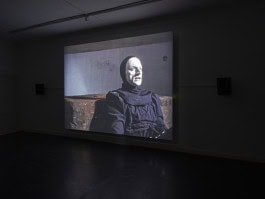
The City and the City by Egyptian artist Rafik Greiss works on the stratification of fragments, addressing time as an accumulation of traces rather than a linear movement. His newly commissioned video of the same title is inhabited by enigmatic figures and desert landscapes, waiting for something that seems about to happen yet may never occur. Channeling a contemporary Tartar Steppe, his work reconnects personal memory and collective history through a shared haunting feeling.


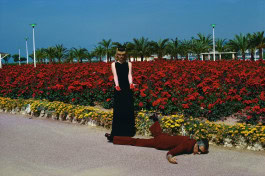
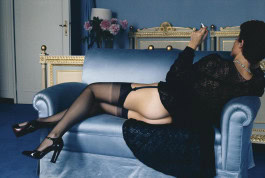
On December 2, the Newton Foundation opens a new exhibition that traces back to the beginning of its founder’s career. As one of the most influential photographers of the 20th century, Helmut Newton became renowned for his stunning ability to create seductive and provocative imagery that pushed past the social mores of his time. The exhibition, titled Helmut Newton’s Early Books, brings together three of his first publications: Femmes Secrètes, Sleepless Nights and Big Nudes.
Each book brought the artist’s practice to the next level. Femmes Secrètes distinguished itself and caused a sensation as the first of its kind. Sleepless Nights debuted three of Newton’s most iconic series: models with orthopedic braces, models with Hermès leather saddles, and the so-called “dummies”. These fake bodies can be seen as a link to the lost presences that accompany us, and to the liminal space that lies between presence and absence. Big Nudes made him world-famous, and its origin was curiously traced back to the oversized wanted posters for the RAF members issued by the German police. Art imitates life and life imitates art, in a continuous loop of connections and layers.


Haus am Waldsee has recently opened the first comprehensive institutional exhibition of German artist Peter Wächtler. Titled Ständig, which means “ongoing” but also “incessantly”, it transforms familiar genres and narratives into a fragile interplay of longing and routine. The show starts in the garden, with the two sculptures Lupo and Orso, an uncanny representation of a wolf and a bear that, by becoming unrecognizable, question tradition and reveal its fragility. The laconic title of the exhibition comes from a new film of the same name, which investigates how individuality dissolves into societal formulas.
Wächtler’s interest lies in how the supposed comfort of the past reveals the contradiction between self-determination and self-abandonment in contemporary times. Like Lupo and Orso, the figures inhabiting the movie convey a sense of familiarity, yet, by being taken out of context, they become haunting beings, channeling our fears and emotions. The film is divided into four chapters: And, Or, But, and Then, which also mark a life journey, from adolescence to death, linking us directly with the artist’s inner ghosts and making us reflect on our own.
As part of its 80th anniversary, Haus am Waldsee also opened the exhibition Gigantomania by Sophie Kovel. The show addresses the ghosts of our past through buildings, in this case the nearby Studio Babelsberg. Spanning across the German film industry, the Nazi era, and the present, the artist uses a sense of grand scale to make us question its hidden meanings. Emptiness and overcrowded spaces alternate, inviting us to reflect on the constant connection between what is present and what is lost.

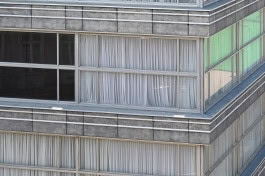
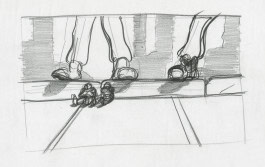


On November 27, Galerie Buchholz opens Plastic expressions, a solo show by American artist Samuel Hindolo. His work poignantly navigates psychological suspense and narrative ambiguity through painting, drawing, and installation.
With his practice, Hindolo addresses the issues of our era, specifically the haunting contemporary anxiety that afflicts us. His architecture feels estranged, his figures elusive. It seems like we are stuck with them in a sort of limbo, where these haunted spaces and physical absences become powerful metaphors for lingering presences and suspended times.

On December 5, n.b.k. opens three exhibitions, investigating haunting chapters of our past and present. With Total Loss Ghost, Gala Porras-Kim opens up an interesting dialogue on how collections are created and preserved, and the complex relationship between objects, their material, and the ritual conditions under which they were made. The title refers to an insurance term used to define artifacts that have been damaged beyond repair or have been accidentally lost. These artworks, even if not circulating anymore, continue to exist, living in a liminal state that makes us intertwine their history with ours, connecting what is lost to what remains, and the past to its impact on the present.
On the same day, the n.b.k. Showroom will open a solo show by artist Bethan Huws. This new room-filling arrangement of works underscores her practice, which is based on language and hermeneutics as a means of artistic expression. For the occasion, Huws engages with one of the most famous artists of the past, Marcel Duchamp. The series of panels investigates his work under new lenses, uncovering layers of hidden meanings and references that got lost along the way.


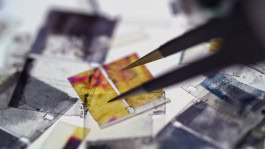
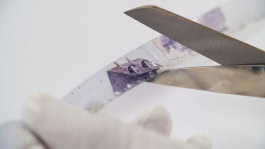
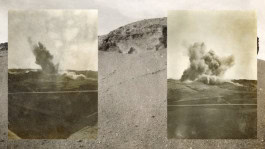
With The Zapruder Effect. Four Investigations, n.b.k. brings together four films by Canadian artists and filmmakers Emanuel Licha, Miles Rufelds, Susan Schuppli, and Sanaz Sohrabi, to investigate the eponymous effect in contemporary times. Abraham Zapruder was the person who captured the assassination of John F. Kennedy in 1963, unaware of creating one of the most famous and scrutinized pieces of footage in contemporary history.
What is interesting is how this amateur film created the need to examine a scene from as many different angles as possible, in order to reproduce and understand the real sequence of events. These four films explore how this effect is still present today, examining how artists draw on archives, technology, and investigative methods, to bring to the forefront topics and realities that have historically remained outside the frame.

On December 5, Dorothée Nilsson Gallery closes the solo exhibition the now and then by Swedish artist Henrik Strömberg. The artist uses sculpture and photography, including found objects and reused materials, to investigate concepts like transformation and otherness. Deconstructing and reconstructing images becomes another way to confront reality, here approached as a spatial and temporal lens through which we can understand our lives.
FOR THAT BRIEF TIME
August 9th, 2026
Before we make our escape
into the great unknown
you should know a few things…
As for how I cared for you
and mourned the loss of time
that appeared to never end
within our arms
Yet arms hold not the time
that lingers in our breaths
Too early and too late
it seems at times
to know what we were together
and meant
for that brief time
William Cody Maher
Loss is a universal experience that we all go through in the span of our lives. Its shared essence is what makes it more bearable. What we always need to remember is that absence and presence are always intertwined, so nothing is really lost for good—it just changes its form. That is why ghosts have always been positive figures to me. This selection of exhibitions to see in Berlin this December aims to help us embrace our past and present ghosts, and invite us to stay with them in a liminal space of connection. Don’t miss the chance to visit these evocative exhibitions, and see where this journey takes you.


Sign up here to subscribe to The Columbist newsletter.
Related Articles:

Sign up here to subscribe to The Columbist newsletter.
What is lost is lost. Yet, we are often comforted by the feeling that what is gone still remains with us in some way, either accompanying or haunting us. Presence and absence do not exist without one another. Sometimes I think this might be the reason why ghosts were invented. This selection of exhibitions to see in Berlin in December aims to help us approach this lingering feeling of loss, and meet our ghosts halfway.
KW Institute for Contemporary Art focused its entire fall programme on investigating this concept: translating phenomena that resist easy explanation, and reflecting on shifting states, unseen forces, and human memory. Bad Dreams is the first survey of British artist Susan Hiller in Berlin and brings us face to face with these hidden dimensions. In the artist’s own words: “I’m committed to working with what I call ghosts, that is, with cultural discards, fragments and things that are invisible to most people but intensely important to a few: situations, ideas and experiences that haunt us collectively.”
Drawing on her fascination with these topics, the exhibition unfolds as a series of encounters, populated by ghostly images, supernatural children, aliens, and near-death experiences. With her practice, Hiller shows us that the uncanny is never removed from everyday life, but lives right within it. Her multifaceted and poignant retrospective reveals different ways to process and give form to what we cannot fully explain.


With OUSSSEAN, South Korean artist KOO JEONG A also connects us with the hidden forces that lie beyond what’s visible, playing with our perception and letting our senses read the places and objects we encounter. The title refers to Ousss, a fictional territory that the artist invented, a kingdom that can only be perceived with presence and patience. Part of the exhibition is the early artwork [ ABSTRACT HOUSE #10 ] (1999), an assortment of numerous small toys collected during their travels. These objects offer a kind of comfort in times of need, and carry with them the lives and histories of those who owned them before, making us face the transitional state of every existence, and connecting us all through a common gesture.
The City and the City by Egyptian artist Rafik Greiss works on the stratification of fragments, addressing time as an accumulation of traces rather than a linear movement. His newly commissioned video of the same title is inhabited by enigmatic figures and desert landscapes, waiting for something that seems about to happen yet may never occur. Channeling a contemporary Tartar Steppe, his work reconnects personal memory and collective history through a shared haunting feeling.


On December 2, the Newton Foundation opens a new exhibition that traces back to the beginning of its founder’s career. As one of the most influential photographers of the 20th century, Helmut Newton became renowned for his stunning ability to create seductive and provocative imagery that pushed past the social mores of his time. The exhibition, titled Helmut Newton’s Early Books, brings together three of his first publications: Femmes Secrètes, Sleepless Nights and Big Nudes.
Each book brought the artist’s practice to the next level. Femmes Secrètes distinguished itself and caused a sensation as the first of its kind. Sleepless Nights debuted three of Newton’s most iconic series: models with orthopedic braces, models with Hermès leather saddles, and the so-called “dummies”. These fake bodies can be seen as a link to the lost presences that accompany us, and to the liminal space that lies between presence and absence. Big Nudes made him world-famous, and its origin was curiously traced back to the oversized wanted posters for the RAF members issued by the German police. Art imitates life and life imitates art, in a continuous loop of connections and layers.


Haus am Waldsee has recently opened the first comprehensive institutional exhibition of German artist Peter Wächtler. Titled Ständig, which means “ongoing” but also “incessantly”, it transforms familiar genres and narratives into a fragile interplay of longing and routine. The show starts in the garden, with the two sculptures Lupo and Orso, an uncanny representation of a wolf and a bear that, by becoming unrecognizable, question tradition and reveal its fragility. The laconic title of the exhibition comes from a new film of the same name, which investigates how individuality dissolves into societal formulas.
Wächtler’s interest lies in how the supposed comfort of the past reveals the contradiction between self-determination and self-abandonment in contemporary times. Like Lupo and Orso, the figures inhabiting the movie convey a sense of familiarity, yet, by being taken out of context, they become haunting beings, channeling our fears and emotions. The film is divided into four chapters: And, Or, But, and Then, which also mark a life journey, from adolescence to death, linking us directly with the artist’s inner ghosts and making us reflect on our own.
As part of its 80th anniversary, Haus am Waldsee also opened the exhibition Gigantomania by Sophie Kovel. The show addresses the ghosts of our past through buildings, in this case the nearby Studio Babelsberg. Spanning across the German film industry, the Nazi era, and the present, the artist uses a sense of grand scale to make us question its hidden meanings. Emptiness and overcrowded spaces alternate, inviting us to reflect on the constant connection between what is present and what is lost.


On November 27, Galerie Buchholz opens Plastic expressions, a solo show by American artist Samuel Hindolo. His work poignantly navigates psychological suspense and narrative ambiguity through painting, drawing, and installation.
With his practice, Hindolo addresses the issues of our era, specifically the haunting contemporary anxiety that afflicts us. His architecture feels estranged, his figures elusive. It seems like we are stuck with them in a sort of limbo, where these haunted spaces and physical absences become powerful metaphors for lingering presences and suspended times.

On December 5, n.b.k. opens three exhibitions, investigating haunting chapters of our past and present. With Total Loss Ghost, Gala Porras-Kim opens up an interesting dialogue on how collections are created and preserved, and the complex relationship between objects, their material, and the ritual conditions under which they were made. The title refers to an insurance term used to define artifacts that have been damaged beyond repair or have been accidentally lost. These artworks, even if not circulating anymore, continue to exist, living in a liminal state that makes us intertwine their history with ours, connecting what is lost to what remains, and the past to its impact on the present.
On the same day, the n.b.k. Showroom will open a solo show by artist Bethan Huws. This new room-filling arrangement of works underscores her practice, which is based on language and hermeneutics as a means of artistic expression. For the occasion, Huws engages with one of the most famous artists of the past, Marcel Duchamp. The series of panels investigates his work under new lenses, uncovering layers of hidden meanings and references that got lost along the way.


With The Zapruder Effect. Four Investigations, n.b.k. brings together four films by Canadian artists and filmmakers Emanuel Licha, Miles Rufelds, Susan Schuppli, and Sanaz Sohrabi, to investigate the eponymous effect in contemporary times. Abraham Zapruder was the person who captured the assassination of John F. Kennedy in 1963, unaware of creating one of the most famous and scrutinized pieces of footage in contemporary history.
What is interesting is how this amateur film created the need to examine a scene from as many different angles as possible, in order to reproduce and understand the real sequence of events. These four films explore how this effect is still present today, examining how artists draw on archives, technology, and investigative methods, to bring to the forefront topics and realities that have historically remained outside the frame.


On December 5, Dorothée Nilsson Gallery closes the solo exhibition the now and then by Swedish artist Henrik Strömberg. The artist uses sculpture and photography, including found objects and reused materials, to investigate concepts like transformation and otherness. Deconstructing and reconstructing images becomes another way to confront reality, here approached as a spatial and temporal lens through which we can understand our lives.
FOR THAT BRIEF TIME
August 9th, 2026
Before we make our escape
into the great unknown
you should know a few things…
As for how I cared for you
and mourned the loss of time
that appeared to never end
within our arms
Yet arms hold not the time
that lingers in our breaths
Too early and too late
it seems at times
to know what we were together
and meant
for that brief time
William Cody Maher
Loss is a universal experience that we all go through in the span of our lives. Its shared essence is what makes it more bearable. What we always need to remember is that absence and presence are always intertwined, so nothing is really lost for good—it just changes its form. That is why ghosts have always been positive figures to me. This selection of exhibitions to see in Berlin this December aims to help us embrace our past and present ghosts, and invite us to stay with them in a liminal space of connection. Don’t miss the chance to visit these evocative exhibitions, and see where this journey takes you.


Sign up here to subscribe to The Columbist newsletter.
Related Articles:
You need to load content from reCAPTCHA to submit the form. Please note that doing so will share data with third-party providers.
More InformationYou need to load content from Turnstile to submit the form. Please note that doing so will share data with third-party providers.
More InformationYou are currently viewing a placeholder content from Facebook. To access the actual content, click the button below. Please note that doing so will share data with third-party providers.
More InformationYou are currently viewing a placeholder content from Instagram. To access the actual content, click the button below. Please note that doing so will share data with third-party providers.
More InformationYou need to load content from hCaptcha to submit the form. Please note that doing so will share data with third-party providers.
More InformationYou need to load content from reCAPTCHA to submit the form. Please note that doing so will share data with third-party providers.
More InformationYou are currently viewing a placeholder content from Turnstile. To access the actual content, click the button below. Please note that doing so will share data with third-party providers.
More InformationYou are currently viewing a placeholder content from X. To access the actual content, click the button below. Please note that doing so will share data with third-party providers.
More Information