


Sign up here to subscribe to The Columbist newsletter.
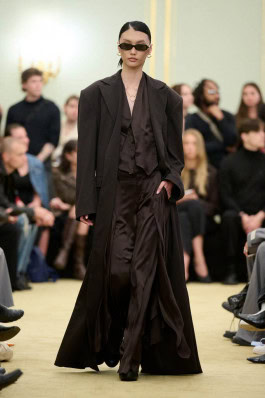
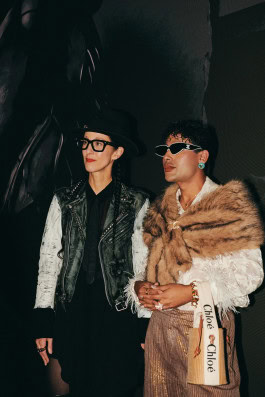
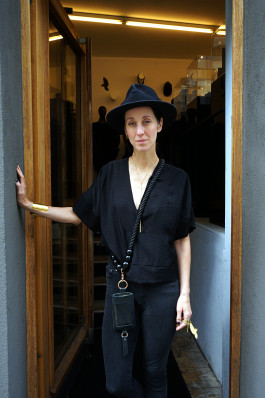
Having stamped her mark on Berlin’s fashion ecosystem with her signature "all black" aesthetic throughout her 18-year brand journey, Perbandt has always been a muse of innovation. She is a cultural figure who constantly seeks the new, embraces change, and does so while prioritizing her brand and her craft. blackhearts, which she unveiled during the recent Fashion Week, is the ultimate proof of this. To those unfamiliar, blackhearts might sound like the name of a new collection. However, the truth is far richer: it is a story of survival for an established brand navigating today’s fashion landscape, a tale forged from over 300 hours of dedication, a digital twin, and a bridge built between craft and the future, opening doors to new realms of creation.
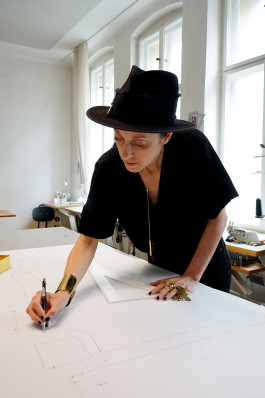
Discover Esther Perbandt’s latest chapter through our lens, tracing her path from fashion education to the future she now faces. The Columbist visited her studio in Mitte for an exclusive look into every detail.
— Six months ago, I realized that launching another collection wouldn’t help my brand survive these turbulent economic times. Special times call for special actions. I needed to elevate my online store into a top-notch, luxurious experience. Around that time, an IT innovator invited me to pilot a bespoke AI shopping assistant. For six months, we trained this Digital Esther on my brand knowledge, tone of voice, and humor.
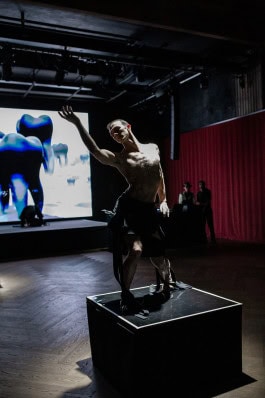
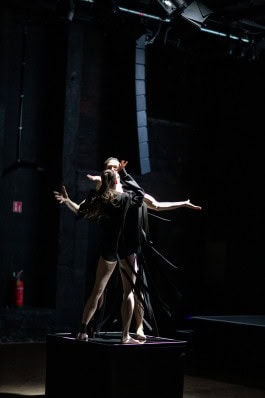
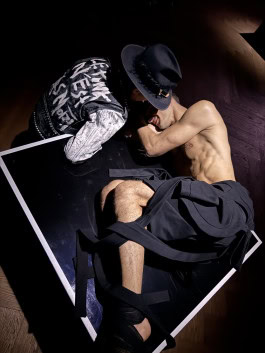
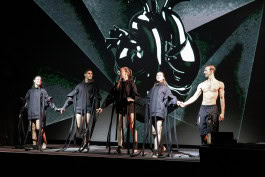
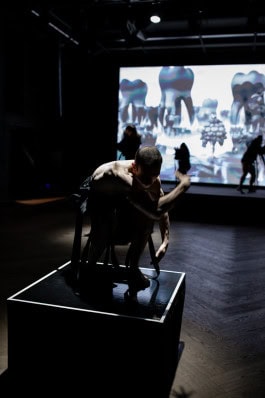
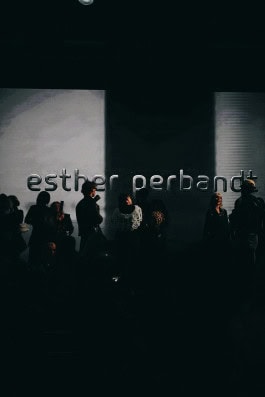
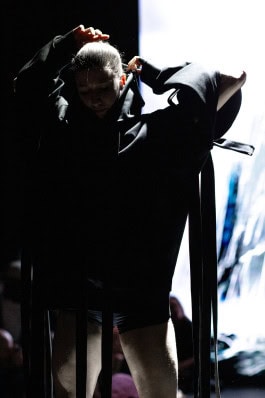
My presentation at Berlin Fashion Week celebrated this new chapter, which I call blackhearts. Five dancers from DANCÆ showcased our signature piece; a high-concept hoodie featuring heart cutouts and long ribbons, a first in the brand's history. We also screened a self-produced AI fashion film that I spent 300 hours creating, and launched a virtual try-on feature on the site. In that sense, blackhearts isn’t just a collection; it’s my strategy to stay independent and survive for the next 20 years.


— Not at all. I’ve always seen myself as a bridge between traditional craftsmanship and the future. In 2021, I was the first German designer to host a 3D-animated digital fashion show during COVID. Back then, I had to rely heavily on expensive agencies. This time, when agencies quoted €12,000 just for AI generation credits, I decided to teach myself everything in six weeks.Learning to produce my own campaigns and videos from scratch was incredibly empowering, especially as a woman in a tech-dominated space. Staying in the driver's seat and maintaining full creative control is what keeps my business alive.
— Chatting with her is super entertaining! She acts as a 24/7 personal stylist and assistant for my global customers, particularly in the U.S. where time differences make instant communication tricky. Instead of manually browsing, a customer can ask for high-waisted, wide-leg trousers, and she will curate pieces, suggest sizing, and offer styling ideas.
She holds the entire history and archive of the brand. Honestly, she remembers catalog details better than I do! Because it’s a completely closed and secure system without open internet access, the experience remains strictly focused on our brand heritage.
— Never! During my 300 hours making the film, I was often appalled by how ugly the AI’s design suggestions were. I’d literally think, 'I am Esther Perbandt, how dare you show me something like this?' Today, everyone is training AI, even people with no taste, so it’s up to real creatives to teach it aesthetics. But I would never let AI design for me; you have to stay in your own creative bubble to protect your soul.
I use it purely as an efficiency tool. For instance, when I lacked the budget and time for a traditional editorial photoshoot for the hoodie, I created campaign images using my own custom AI models. AI won't replace my creativity; it just speeds up execution so I can handle multiple roles as a solo founder.
— The skepticism is valid because fast-fashion giants can now feed massive mood boards into AI and generate flat, soulless collections in seconds. The danger is that younger generations, raised on fast TikTok trends, might lose appreciation for true craftsmanship.
Copyright regulations are trying to keep up, but enforcing transparency at scale is nearly impossible. Ultimately, AI is like any major technological leap: both a curse and a blessing. It can easily be misused to flood the market with soul-free products, but when used intentionally by independent creators, it becomes a powerful tool for survival and creative freedom.
— Looking ahead, what other unique intersections of AI and technology can we expect from you? What’s on your mind when it comes to future innovations?
— There is always a gap between what I dream of doing and what I can actually execute within my small team, but I’m always hungry for new ideas.
For instance, because I studied in the 90s when sustainability wasn’t taught, my process isn’t zero-waste by default. I design first, and only then realize how much fabric is left over. My dream is to develop a machine that takes all my black fabric scraps, mixing various textures and shades, to recycle them into a new, raw, fringed textile. I can't finance that alone yet, but I keep putting these ideas out there.
As for concrete projects, our work with AI is just beginning. In the near future, Digital Esther will speak with my actual voice so customers can talk to her directly. Eventually, we might create a 3D digital twin of me sitting on screen, moving, and demonstrating products. The more immersive and entertaining you make the digital space, the better it is for your brand. Otherwise, independent labels risk getting left behind very quickly.
— Fashion education has become overwhelmingly intense. When I studied in the 90s, it was purely about design. Then, over the last two decades, business and entrepreneurship were added to the curriculum because every graduate wanted to launch their own brand. Now, a third layer has been forced into the mix: advanced tech like digital fashion, and AI.
It’s an exhausting time to study fashion. My biggest fear is that essential craftsmanship, knowing how a garment is constructed, fitted, and made by hand, will get pushed aside for digital skills. You cannot become a true designer with AI alone; you must master the core technical skills first.
It looks glamorous from the outside, but hundreds of new graduates are thrown onto the market every year trying to launch labels. I will always encourage people to follow their passion as I did it myself and I don't regret it, but it requires immense sacrifice. As a woman, I had to choose between starting a family or dedicating my life entirely to this brand. I chose my brand, and while I’m happy with my path, the reality of this industry requires making tough decisions.
Sign up here to subscribe to The Columbist newsletter.
Related Articles:

Sign up here to subscribe to The Columbist newsletter.
Having stamped her mark on Berlin’s fashion ecosystem with her signature "all black" aesthetic throughout her 18-year brand journey, Perbandt has always been a muse of innovation. She is a cultural figure who constantly seeks the new, embraces change, and does so while prioritizing her brand and her craft. blackhearts, which she unveiled during the recent Fashion Week, is the ultimate proof of this. To those unfamiliar, blackhearts might sound like the name of a new collection. However, the truth is far richer: it is a story of survival for an established brand navigating today’s fashion landscape, a tale forged from over 300 hours of dedication, a digital twin, and a bridge built between craft and the future, opening doors to new realms of creation.
Discover Esther Perbandt’s latest chapter through our lens, tracing her path from fashion education to the future she now faces. The Columbist visited her studio in Mitte for an exclusive look into every detail.
— Six months ago, I realized that launching another collection wouldn’t help my brand survive these turbulent economic times. Special times call for special actions. I needed to elevate my online store into a top-notch, luxurious experience. Around that time, an IT innovator invited me to pilot a bespoke AI shopping assistant. For six months, we trained this Digital Esther on my brand knowledge, tone of voice, and humor.
My presentation at Berlin Fashion Week celebrated this new chapter, which I call blackhearts. Five dancers from DANCÆ showcased our signature piece; a high-concept hoodie featuring heart cutouts and long ribbons, a first in the brand's history. We also screened a self-produced AI fashion film that I spent 300 hours creating, and launched a virtual try-on feature on the site. In that sense, blackhearts isn’t just a collection; it’s my strategy to stay independent and survive for the next 20 years.


— Not at all. I’ve always seen myself as a bridge between traditional craftsmanship and the future. In 2021, I was the first German designer to host a 3D-animated digital fashion show during COVID. Back then, I had to rely heavily on expensive agencies. This time, when agencies quoted €12,000 just for AI generation credits, I decided to teach myself everything in six weeks.Learning to produce my own campaigns and videos from scratch was incredibly empowering, especially as a woman in a tech-dominated space. Staying in the driver's seat and maintaining full creative control is what keeps my business alive.
— Chatting with her is super entertaining! She acts as a 24/7 personal stylist and assistant for my global customers, particularly in the U.S. where time differences make instant communication tricky. Instead of manually browsing, a customer can ask for high-waisted, wide-leg trousers, and she will curate pieces, suggest sizing, and offer styling ideas.
She holds the entire history and archive of the brand. Honestly, she remembers catalog details better than I do! Because it’s a completely closed and secure system without open internet access, the experience remains strictly focused on our brand heritage.
— Never! During my 300 hours making the film, I was often appalled by how ugly the AI’s design suggestions were. I’d literally think, 'I am Esther Perbandt, how dare you show me something like this?' Today, everyone is training AI, even people with no taste, so it’s up to real creatives to teach it aesthetics. But I would never let AI design for me; you have to stay in your own creative bubble to protect your soul.
I use it purely as an efficiency tool. For instance, when I lacked the budget and time for a traditional editorial photoshoot for the hoodie, I created campaign images using my own custom AI models. AI won't replace my creativity; it just speeds up execution so I can handle multiple roles as a solo founder.

— The skepticism is valid because fast-fashion giants can now feed massive mood boards into AI and generate flat, soulless collections in seconds. The danger is that younger generations, raised on fast TikTok trends, might lose appreciation for true craftsmanship.
Copyright regulations are trying to keep up, but enforcing transparency at scale is nearly impossible. Ultimately, AI is like any major technological leap: both a curse and a blessing. It can easily be misused to flood the market with soul-free products, but when used intentionally by independent creators, it becomes a powerful tool for survival and creative freedom.
— Looking ahead, what other unique intersections of AI and technology can we expect from you? What’s on your mind when it comes to future innovations?
— There is always a gap between what I dream of doing and what I can actually execute within my small team, but I’m always hungry for new ideas.
For instance, because I studied in the 90s when sustainability wasn’t taught, my process isn’t zero-waste by default. I design first, and only then realize how much fabric is left over. My dream is to develop a machine that takes all my black fabric scraps, mixing various textures and shades, to recycle them into a new, raw, fringed textile. I can't finance that alone yet, but I keep putting these ideas out there.
As for concrete projects, our work with AI is just beginning. In the near future, Digital Esther will speak with my actual voice so customers can talk to her directly. Eventually, we might create a 3D digital twin of me sitting on screen, moving, and demonstrating products. The more immersive and entertaining you make the digital space, the better it is for your brand. Otherwise, independent labels risk getting left behind very quickly.

— Fashion education has become overwhelmingly intense. When I studied in the 90s, it was purely about design. Then, over the last two decades, business and entrepreneurship were added to the curriculum because every graduate wanted to launch their own brand. Now, a third layer has been forced into the mix: advanced tech like digital fashion, and AI.
It’s an exhausting time to study fashion. My biggest fear is that essential craftsmanship, knowing how a garment is constructed, fitted, and made by hand, will get pushed aside for digital skills. You cannot become a true designer with AI alone; you must master the core technical skills first.
It looks glamorous from the outside, but hundreds of new graduates are thrown onto the market every year trying to launch labels. I will always encourage people to follow their passion as I did it myself and I don't regret it, but it requires immense sacrifice. As a woman, I had to choose between starting a family or dedicating my life entirely to this brand. I chose my brand, and while I’m happy with my path, the reality of this industry requires making tough decisions.


Sign up here to subscribe to The Columbist newsletter.
Related Articles:
You need to load content from reCAPTCHA to submit the form. Please note that doing so will share data with third-party providers.
More InformationYou need to load content from Turnstile to submit the form. Please note that doing so will share data with third-party providers.
More InformationYou are currently viewing a placeholder content from Facebook. To access the actual content, click the button below. Please note that doing so will share data with third-party providers.
More InformationYou are currently viewing a placeholder content from Instagram. To access the actual content, click the button below. Please note that doing so will share data with third-party providers.
More InformationYou need to load content from hCaptcha to submit the form. Please note that doing so will share data with third-party providers.
More InformationYou need to load content from reCAPTCHA to submit the form. Please note that doing so will share data with third-party providers.
More InformationYou are currently viewing a placeholder content from Turnstile. To access the actual content, click the button below. Please note that doing so will share data with third-party providers.
More InformationYou are currently viewing a placeholder content from X. To access the actual content, click the button below. Please note that doing so will share data with third-party providers.
More Information