

Â
I am originally from Georgia, but I grew up in Abkhazia, a region of Georgia shaped by conflict. Although I was born after the war had ended, my family returned to a burned and destroyed home. My childhood took shape among ruins, where loss and survival were part of everyday life. Stability felt fragile, and silence often spoke louder than words.
Music became my refuge early on. Before I understood it as art, it was the only place where I felt safe. Singing gave me a voice when words were not enough, and a sense of freedom in a world that felt uncertain. Music was not an escape; it was how I survived emotionally.
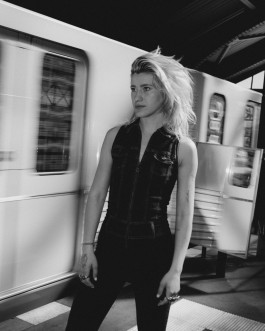
Years later, that voice carried me far from where I started. I came to Germany as an au pair, without knowing that this step would change my life completely. I arrived with limited language skills, no network, and only a quiet belief that music might help me belong. Berlin felt overwhelming at first loud, distant, and demanding, but it was also honest. Here, I was not asked to explain my past. I was allowed to become who I was still discovering.

Music followed me everywhere. I sang wherever I could, in small rooms, in moments of doubt and courage. Winning The Voice of Germany suddenly placed my voice in front of millions. What mattered most was not visibility, but validation - the feeling that my story, my sound, and my language of emotion had a place.
Living in Germany as an immigrant artist has not been easy. Building a career in English-language soul and jazz-inspired music, without a label or management, while raising a small child, often feels like another quiet battle. Being an Ausländer means constantly proving your presence, your value, and your right to be heard. Still, I continue performing at festivals, teaching music, and creating spaces where music becomes connection rather than competition.
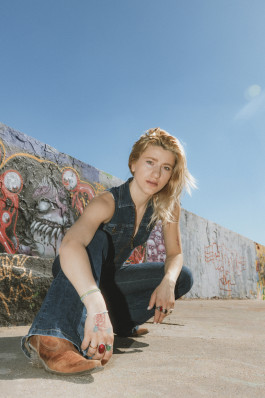
Today, I work in Berlin as a singer, songwriter, and music teacher. I work closely with children and families, often in socially accessible spaces. This is deeply personal to me. As a child, I had no financial or structural access to music education, only the desire to learn and the dream to express myself. Now, offering that space to others feels like closing a circle.
Berlin has become more than a city. It is where my voice stopped being only a survival tool and became a conscious choice. A place where freedom is not the absence of struggle, but the courage to keep creating despite it. Music remains my freedom and my bridge between past and present, between who I was and who I am becoming.
Related Articles:

Â
I am originally from Georgia, but I grew up in Abkhazia, a region of Georgia shaped by conflict. Although I was born after the war had ended, my family returned to a burned and destroyed home. My childhood took shape among ruins, where loss and survival were part of everyday life. Stability felt fragile, and silence often spoke louder than words.
Music became my refuge early on. Before I understood it as art, it was the only place where I felt safe. Singing gave me a voice when words were not enough, and a sense of freedom in a world that felt uncertain. Music was not an escape; it was how I survived emotionally.
Years later, that voice carried me far from where I started. I came to Germany as an au pair, without knowing that this step would change my life completely. I arrived with limited language skills, no network, and only a quiet belief that music might help me belong. Berlin felt overwhelming at first loud, distant, and demanding, but it was also honest. Here, I was not asked to explain my past. I was allowed to become who I was still discovering.

Music followed me everywhere. I sang wherever I could, in small rooms, in moments of doubt and courage. Winning The Voice of Germany suddenly placed my voice in front of millions. What mattered most was not visibility, but validation - the feeling that my story, my sound, and my language of emotion had a place.
Living in Germany as an immigrant artist has not been easy. Building a career in English-language soul and jazz-inspired music, without a label or management, while raising a small child, often feels like another quiet battle. Being an Ausländer means constantly proving your presence, your value, and your right to be heard. Still, I continue performing at festivals, teaching music, and creating spaces where music becomes connection rather than competition.
Today, I work in Berlin as a singer, songwriter, and music teacher. I work closely with children and families, often in socially accessible spaces. This is deeply personal to me. As a child, I had no financial or structural access to music education, only the desire to learn and the dream to express myself. Now, offering that space to others feels like closing a circle.
Berlin has become more than a city. It is where my voice stopped being only a survival tool and became a conscious choice. A place where freedom is not the absence of struggle, but the courage to keep creating despite it. Music remains my freedom and my bridge between past and present, between who I was and who I am becoming.


Related Articles:
 ABOUT         CONTACT         INSTAGRAM         DATA PRIVACY         IMPRINT
You need to load content from reCAPTCHA to submit the form. Please note that doing so will share data with third-party providers.
More InformationYou need to load content from Turnstile to submit the form. Please note that doing so will share data with third-party providers.
More InformationYou are currently viewing a placeholder content from Facebook. To access the actual content, click the button below. Please note that doing so will share data with third-party providers.
More InformationYou are currently viewing a placeholder content from Instagram. To access the actual content, click the button below. Please note that doing so will share data with third-party providers.
More InformationYou need to load content from hCaptcha to submit the form. Please note that doing so will share data with third-party providers.
More InformationYou need to load content from reCAPTCHA to submit the form. Please note that doing so will share data with third-party providers.
More InformationYou are currently viewing a placeholder content from Turnstile. To access the actual content, click the button below. Please note that doing so will share data with third-party providers.
More InformationYou are currently viewing a placeholder content from X. To access the actual content, click the button below. Please note that doing so will share data with third-party providers.
More Information