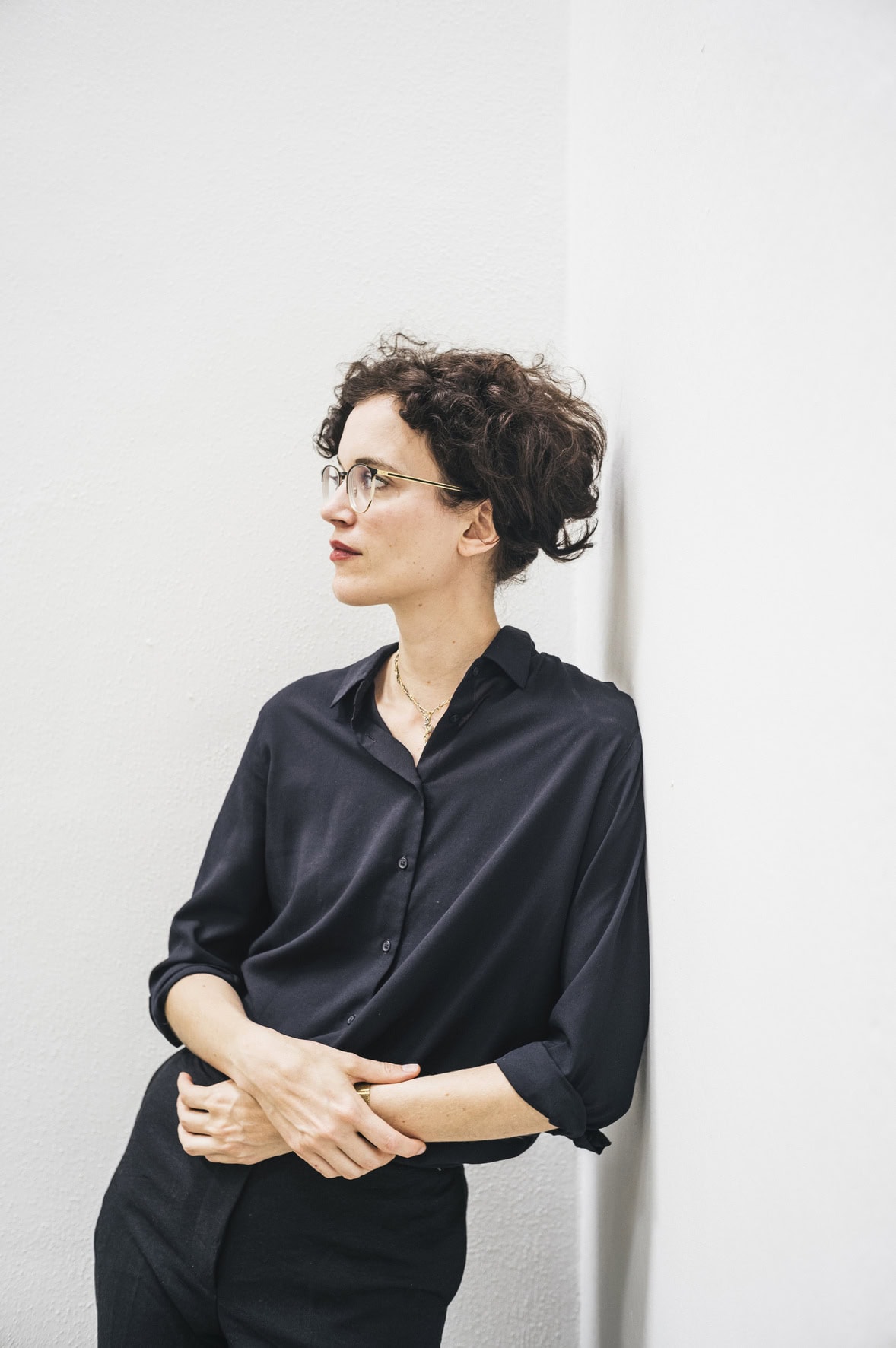

Set in an indistinct wooded countryside, Aïnouz presents a gilded cage where siblings both compete with one another and vie for attention and power. The result is an incestuous web of lies, lust and deceit - a devolution of a sibling hierarchy in which passions of love and envy are reminiscent of a Greek tragedy.
Aïnouz’s film debuted at Berlinale this past February, marking a drastic shift in tone from the director’s earlier works and entering into territories of the satirical and the absurd. I sat down with the Berlin-based Brazilian director at MUBI studios to discuss his thoughts behind the making of his most recent debut.
— This film feels like a departure from some of your previous films such as Firebrand and Motel Destino, those of which adopt a more humanistic, sentimental quality. It connotes what a lot of people have termed the “Weird Wave,” within Greek cinema, specifically. I know you partnered with Greek writer Efthimis Filippou. What was your impulse in changing your stylistic and thematic approach with this film?

— I was always really interested in humor. There is something about humor that has been present in my life forever, and I never really dealt with it. I always dealt with something that I knew, which was drama.
The idea of coupling me with the writer of the film was not mine. It was [that of] the producers. It was a blind date during the pandemic, and was one of the most fun exchanges I've had. He was so interested in laughing in that meeting that I thought, “wow, I can learn a lot here.” And maybe I can also talk about certain issues through humor and irony.
We wanted to make a movie that people are curious about and intrigued by. This [film] is like a test tube - you don't know if you can laugh and if you cannot. We are in an age where cinema really needs to activate an audience, and this [film] was a great way to do that. Post pandemic cinema is really tricky.

— You feel like there's a marked difference between pre-pandemic and post-pandemic cinema?
— There is certainly a different challenge. The first is to get people to the cinema. It's becoming harder and harder, so you need to activate people, to make them interested. It's funny to talk about this place [gestures to his surroundings], which actually runs a streaming service [laughs].
I've always said that I would like to make a movie that's funny because it's one of the hardest things to do. I was really grateful to be introduced to this writer, who I think is really funny. And laughter can be a great way to engage with certain things which we're not supposed to laugh about.

— The film is loosely based on Marco Bellocchio’s 1965 classic, Fists in The Pocket, which you reinterpret, particularly through the ways in which the characters deal with an inner friction of envy and love, which is a central theme within the film - envy and love within sibling rivalry. The idolization of the first born son is something that's happened for thousands of years, with biblical associations. Is that something that resonates with you on a personal level in your own family life?
— It's funny, because I'm an only son.
— You're the first born son and also last born son [laughs]
— [laughs] I am but I'm not. I have a half sister, but I wasn't raised with her. We met when she was 10. I was 20, so we didn't grow up together. I've always had this fantasy of a brother or sister. It's been in every story I've told and I've made, this searching for brotherly love or sisterly love. I’m also interested in how far [one is] willing to go to sacrifice [one’s self] for one’s sibling.
I've been really obsessed with family. I come from a family with an absent father that is run by women. A family of affection - a broader sense of family, which is not only the immediate family, but a larger family. It's a theme that's always been in my films. I was really interested in looking at something that I never experienced full on, which is the traditional heterosexual family, in this case, white privilege. [The film] experiments in wealth and privilege - isolation and patriarchy, but the first idea was [that of] family, and how [it] can be so toxic, but also can save you.

— There is a critique of patriarchal familial structures. There's something poetic about the fact that the father is blind, yet he governs the household. He oversees the actions of his children who eventually seek revenge against him.
— It's not exactly revenge, which is very personal. It's more like settling a score. I'm really interested in collective revenge. And here, despite the fact that [only] one of the siblings takes revenge on the father, he is acting for the family.
— There is this Almodovarian color palette: rich gem tones, lots reds and greens. What did you want to communicate with these color choices?
— It's such a dark, painful story about how this family is dissolved and eaten up by [one another] that I always like to counterpoint, in the sense of world building. It was very important that it was bright and colorful. You can't paint darker darkness. I think you need to paint with a dark brightness to construct something detached from reality.

— There’s also this very strong element of water, which creates a cyclical structure to the film. We open with this scene of a blue ocean backdrop, with the voices of characters from out of frame. Scenes of water then punctuate the rest of the plot. How did the water function as a narrative device?
— There's something about how the feminine can actually break the spell here. For the mothers, for the character of Martha, there's a sense of breaking a cycle. It's linked across the majority of the film - the fluidity of water and all the possibilities that it gives you. When I looked at the film, it really made sense that there's a rigidity and a sense of [entrapment] that the sea and the swimming pools [counteract], particularly in female space, which is the house of the mother.
— There’s a rigidity in their perceptions towards one another. Ed then breaks out of the confinement of his house and his family and encounters the water once again, arriving full circle through the cyclical plot structure.
— Yes, exactly. I also think about love - there's this softness of [both] water and love. It's through the passion for George that Ed decides to break the spell and free his family. It's love that can be [both] transgressive and transformative.
Related Articles:

Set in an indistinct wooded countryside, Aïnouz presents a gilded cage where siblings both compete with one another and vie for attention and power. The result is an incestuous web of lies, lust and deceit - a devolution of a sibling hierarchy in which passions of love and envy are reminiscent of a Greek tragedy.
Aïnouz’s film debuted at Berlinale this past February, marking a drastic shift in tone from the director’s earlier works and entering into territories of the satirical and the absurd. I sat down with the Berlin-based Brazilian director at MUBI studios to discuss his thoughts behind the making of his most recent debut.
— This film feels like a departure from some of your previous films such as Firebrand and Motel Destino, those of which adopt a more humanistic, sentimental quality. It connotes what a lot of people have termed the “Weird Wave,” within Greek cinema, specifically. I know you partnered with Greek writer Efthimis Filippou. What was your impulse in changing your stylistic and thematic approach with this film?
— I was always really interested in humor. There is something about humor that has been present in my life forever, and I never really dealt with it. I always dealt with something that I knew, which was drama.
The idea of coupling me with the writer of the film was not mine. It was [that of] the producers. It was a blind date during the pandemic, and was one of the most fun exchanges I've had. He was so interested in laughing in that meeting that I thought, “wow, I can learn a lot here.” And maybe I can also talk about certain issues through humor and irony.
We wanted to make a movie that people are curious about and intrigued by. This [film] is like a test tube - you don't know if you can laugh and if you cannot. We are in an age where cinema really needs to activate an audience, and this [film] was a great way to do that. Post pandemic cinema is really tricky.

— You feel like there's a marked difference between pre-pandemic and post-pandemic cinema?
— There is certainly a different challenge. The first is to get people to the cinema. It's becoming harder and harder, so you need to activate people, to make them interested. It's funny to talk about this place [gestures to his surroundings], which actually runs a streaming service [laughs].
I've always said that I would like to make a movie that's funny because it's one of the hardest things to do. I was really grateful to be introduced to this writer, who I think is really funny. And laughter can be a great way to engage with certain things which we're not supposed to laugh about.

— The film is loosely based on Marco Bellocchio’s 1965 classic, Fists in The Pocket, which you reinterpret, particularly through the ways in which the characters deal with an inner friction of envy and love, which is a central theme within the film - envy and love within sibling rivalry. The idolization of the first born son is something that's happened for thousands of years, with biblical associations. Is that something that resonates with you on a personal level in your own family life?
— It's funny, because I'm an only son.
— You're the first born son and also last born son [laughs]
— [laughs] I am but I'm not. I have a half sister, but I wasn't raised with her. We met when she was 10. I was 20, so we didn't grow up together. I've always had this fantasy of a brother or sister. It's been in every story I've told and I've made, this searching for brotherly love or sisterly love. I’m also interested in how far [one is] willing to go to sacrifice [one’s self] for one’s sibling.
I've been really obsessed with family. I come from a family with an absent father that is run by women. A family of affection - a broader sense of family, which is not only the immediate family, but a larger family. It's a theme that's always been in my films. I was really interested in looking at something that I never experienced full on, which is the traditional heterosexual family, in this case, white privilege. [The film] experiments in wealth and privilege - isolation and patriarchy, but the first idea was [that of] family, and how [it] can be so toxic, but also can save you.

— There is a critique of patriarchal familial structures. There's something poetic about the fact that the father is blind, yet he governs the household. He oversees the actions of his children who eventually seek revenge against him.
— It's not exactly revenge, which is very personal. It's more like settling a score. I'm really interested in collective revenge. And here, despite the fact that [only] one of the siblings takes revenge on the father, he is acting for the family.
— There is this Almodovarian color palette: rich gem tones, lots reds and greens. What did you want to communicate with these color choices?
— It's such a dark, painful story about how this family is dissolved and eaten up by [one another] that I always like to counterpoint, in the sense of world building. It was very important that it was bright and colorful. You can't paint darker darkness. I think you need to paint with a dark brightness to construct something detached from reality.

— There’s also this very strong element of water, which creates a cyclical structure to the film. We open with this scene of a blue ocean backdrop, with the voices of characters from out of frame. Scenes of water then punctuate the rest of the plot. How did the water function as a narrative device?
— There's something about how the feminine can actually break the spell here. For the mothers, for the character of Martha, there's a sense of breaking a cycle. It's linked across the majority of the film - the fluidity of water and all the possibilities that it gives you. When I looked at the film, it really made sense that there's a rigidity and a sense of [entrapment] that the sea and the swimming pools [counteract], particularly in female space, which is the house of the mother.
— There’s a rigidity in their perceptions towards one another. Ed then breaks out of the confinement of his house and his family and encounters the water once again, arriving full circle through the cyclical plot structure.
— Yes, exactly. I also think about love - there's this softness of [both] water and love. It's through the passion for George that Ed decides to break the spell and free his family. It's love that can be [both] transgressive and transformative.

Related Articles:
You need to load content from reCAPTCHA to submit the form. Please note that doing so will share data with third-party providers.
More InformationYou need to load content from Turnstile to submit the form. Please note that doing so will share data with third-party providers.
More InformationYou are currently viewing a placeholder content from Facebook. To access the actual content, click the button below. Please note that doing so will share data with third-party providers.
More InformationYou are currently viewing a placeholder content from Instagram. To access the actual content, click the button below. Please note that doing so will share data with third-party providers.
More InformationYou need to load content from hCaptcha to submit the form. Please note that doing so will share data with third-party providers.
More InformationYou need to load content from reCAPTCHA to submit the form. Please note that doing so will share data with third-party providers.
More InformationYou are currently viewing a placeholder content from Turnstile. To access the actual content, click the button below. Please note that doing so will share data with third-party providers.
More InformationYou are currently viewing a placeholder content from X. To access the actual content, click the button below. Please note that doing so will share data with third-party providers.
More Information