
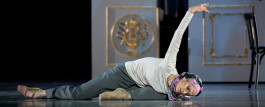
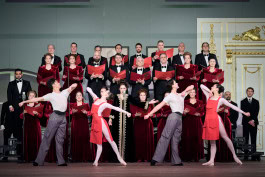
Staatsballet Berlin’s Nureyev premiered in Berlin last month, ten years after it was cancelled in Moscow. The production was a major success, with tickets sold out within hours. It is attributed to a modern-day Berlin audience who appreciates artistic freedom, democratization, and conversations around gender identity. We have seen this phenomenon in other head-turning events, such as Berlin Ballet Company’s Techno Ballet, Pina Bausch’s Tanztheater, and Marina Abramović’s Balkan Erotic Epic.
In 2017, Nureyev was shelved by the Bolshoi Theater because it promoted ‘non-traditional values’. Rudolf Nureyev, upon whom the performance is based, was known both for a brilliant stage presence and a hedonistic, intimidating lifestyle. He was a defector of the Soviet Union since 1961, and believed that art came before politics. Nureyev had a volatile temper, relationships with men and women against the societal norm, and a tendency to overwork.
In Spielzeithefte, Russian theater director Kirill Serebrennikov credits Nureyev with redefining male sexuality through his art. Nureyev inspired the costumes worn by today’s male dancers, brought artists and choreographers into his ballet performances, and combined different genres and narratives to create a modern art performance.

ㅤ
Nureyev was originally choreographed by Yuri Possokhov and composed by Ilya Demutsky back in 2017, combining three separate genres – drama, opera, and dance. Staatsballet’s troupe brought the story of one of the most prolific ballet dancers of the 20th century outside Russia for the first time; someone who is respected within the ballet and the outer fine arts world.
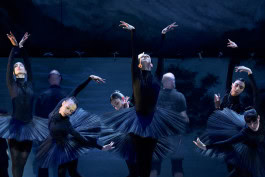
Possokhov and Serebrennikov integrate classical and contemporary aesthetics in scenes from Nureyev’s life: his career, relationships, and influence on ballet. The production is suitable for an audience above ten years old, presented in English, French, and Russian with German subtitles. In Nureyev, a classical art form like ballet refuses to follow a fixed narrative year after year. Ballet requires technical precision, adhering to format, and limited reinterpretation. Serebrennikov’s reinterpreted version of this classical art form is now open to everyone who enjoys music, dance, and theater.
As with most classical art forms that once followed traditional socio-cultural expectations, ballet, too, followed gender roles, hierarchy, and the inability to question and rebel. Things have changed today, where fine arts are much more democratic and accessible to people. Theater houses, concert houses, and opera houses were once meeting points for people. They are now joined by museums, industrial sites, abandoned factories, and minting facilities. To make an impact on the everyday Berliner, Nureyev is being staged at the Deutsche Oper Berlin, one of Berlin’s largest and most famous opera houses.
In Nureyev’s own time, speaking out against one’s country’s socio-politics risked imprisonment and exile. As part of a parliamentary democracy, artists now use the same art to comment on Berlin’s political, cultural, and societal stance, something that Nureyev, the ballet performance, wasn’t allowed to do even in 2017’s Moscow. Today, Nureyev and similar performances freely discuss artistic freedom, identity, and legacy on stage.
David Soares, the titular dancer, speaks on connecting himself with Nureyev, “For me, it is natural in some ways to show Nureyev’s complexity on stage because I feel very close to his story. I also come from Russia, I am homosexual, and I understand this feeling of loving the country that gave you so much while also finding freedom in Europe.
One of the things I love most in my profession, beyond the classical technique, is playing roles and truly becoming a character. This show fulfilled me as an artist because Nureyev was not only a genius dancer, but a very complex human being. As with any actor’s work, you must go deeply into the person’s emotions and experiences, and then repeat this every night on stage. You feel the sadness, the loneliness, the exhaustion; all of this becomes part of the performance.”
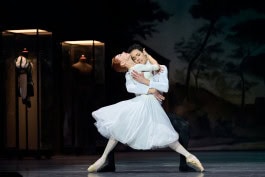
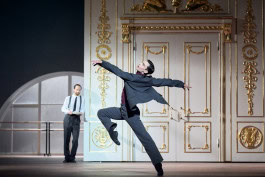
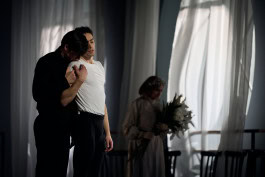
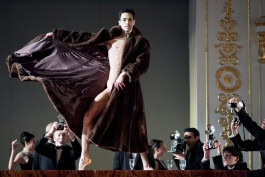
Fine arts is a multi-disciplinary subject, but it focuses beyond visuals and audio in Nureyev. Today, artists bring themselves to the performance instead of being mute imitators. Yuri Possokhov explains in an interview how important a dancer’s personality is, especially when they are performing. Unlike traditional ballet companies that don’t encourage creativity, the dancers here are expected to bring something different according to their reinterpretation of the narrative.
Even when performing Nureyev, the group’s focus was not on faithfully portraying Nureyev’s biography, but on him as a human being, rather than simply an artistic figure. Soares continues, “It is emotionally demanding, but also something I deeply love to do. I feel very proud when the audience is touched by the performance and can experience a part of Nureyev’s humanity, vulnerability, and genius through my interpretation.”
Once upon a time, art was heavily dependent on patronage. Artistic freedom is today constitutionally guaranteed in Germany, but there have been debates regarding indirect control. Arts and sciences, research, and teaching are free and protected under Article 5, Paragraph 3 of the German Basic Law.
Of course, artistic freedom is not absolute. There are legal restrictions on how art features minors and how hate speech and violence are depicted here. Unlike the Heimatfilm or the Trümmerfilme movie genres of the postwar world, classical art forms like Nureyev now build an audience on community, human relationships, and humanity for the more aware and empowered audience.
Classical art forms were never meant to be blindly preserved, but were destined to evolve with time and space. If we study them deeply, they have always displayed what’s been on people’s minds. All we need to do is see them, appreciate them, and learn from them to make them more relevant to the society we live in – today and tomorrow. Even after a month of release, Nureyev continues to make an impact on Berlin’s audience. The question is no longer whether the production can survive socio-politics this time, but what it could culturally mean beyond Germany.
You can now watch the recorded version of Staatsballet’s Nureyev on Arte.com. Nureyev will return in 2027, once again, as a live performance for the Berlin audience to understand fine arts beyond the ordinary.
Related Articles:

Staatsballet Berlin’s Nureyev premiered in Berlin last month, ten years after it was cancelled in Moscow. The production was a major success, with tickets sold out within hours. It is attributed to a modern-day Berlin audience who appreciates artistic freedom, democratization, and conversations around gender identity. We have seen this phenomenon in other head-turning events, such as Berlin Ballet Company’s Techno Ballet, Pina Bausch’s Tanztheater, and Marina Abramović’s Balkan Erotic Epic.
In 2017, Nureyev was shelved by the Bolshoi Theater because it promoted ‘non-traditional values’. Rudolf Nureyev, upon whom the performance is based, was known both for a brilliant stage presence and a hedonistic, intimidating lifestyle. He was a defector of the Soviet Union since 1961, and believed that art came before politics. Nureyev had a volatile temper, relationships with men and women against the societal norm, and a tendency to overwork.
In Spielzeithefte, Russian theater director Kirill Serebrennikov credits Nureyev with redefining male sexuality through his art. Nureyev inspired the costumes worn by today’s male dancers, brought artists and choreographers into his ballet performances, and combined different genres and narratives to create a modern art performance.

ㅤ
Nureyev was originally choreographed by Yuri Possokhov and composed by Ilya Demutsky back in 2017, combining three separate genres – drama, opera, and dance. Staatsballet’s troupe brought the story of one of the most prolific ballet dancers of the 20th century outside Russia for the first time; someone who is respected within the ballet and the outer fine arts world.
Possokhov and Serebrennikov integrate classical and contemporary aesthetics in scenes from Nureyev’s life: his career, relationships, and influence on ballet. The production is suitable for an audience above ten years old, presented in English, French, and Russian with German subtitles. In Nureyev, a classical art form like ballet refuses to follow a fixed narrative year after year. Ballet requires technical precision, adhering to format, and limited reinterpretation. Serebrennikov’s reinterpreted version of this classical art form is now open to everyone who enjoys music, dance, and theater.

As with most classical art forms that once followed traditional socio-cultural expectations, ballet, too, followed gender roles, hierarchy, and the inability to question and rebel. Things have changed today, where fine arts are much more democratic and accessible to people. Theater houses, concert houses, and opera houses were once meeting points for people. They are now joined by museums, industrial sites, abandoned factories, and minting facilities. To make an impact on the everyday Berliner, Nureyev is being staged at the Deutsche Oper Berlin, one of Berlin’s largest and most famous opera houses.
In Nureyev’s own time, speaking out against one’s country’s socio-politics risked imprisonment and exile. As part of a parliamentary democracy, artists now use the same art to comment on Berlin’s political, cultural, and societal stance, something that Nureyev, the ballet performance, wasn’t allowed to do even in 2017’s Moscow. Today, Nureyev and similar performances freely discuss artistic freedom, identity, and legacy on stage.
David Soares, the titular dancer, speaks on connecting himself with Nureyev, “For me, it is natural in some ways to show Nureyev’s complexity on stage because I feel very close to his story. I also come from Russia, I am homosexual, and I understand this feeling of loving the country that gave you so much while also finding freedom in Europe.
One of the things I love most in my profession, beyond the classical technique, is playing roles and truly becoming a character. This show fulfilled me as an artist because Nureyev was not only a genius dancer, but a very complex human being. As with any actor’s work, you must go deeply into the person’s emotions and experiences, and then repeat this every night on stage. You feel the sadness, the loneliness, the exhaustion; all of this becomes part of the performance.”


Fine arts is a multi-disciplinary subject, but it focuses beyond visuals and audio in Nureyev. Today, artists bring themselves to the performance instead of being mute imitators. Yuri Possokhov explains in an interview how important a dancer’s personality is, especially when they are performing. Unlike traditional ballet companies that don’t encourage creativity, the dancers here are expected to bring something different according to their reinterpretation of the narrative.
Even when performing Nureyev, the group’s focus was not on faithfully portraying Nureyev’s biography, but on him as a human being, rather than simply an artistic figure. Soares continues, “It is emotionally demanding, but also something I deeply love to do. I feel very proud when the audience is touched by the performance and can experience a part of Nureyev’s humanity, vulnerability, and genius through my interpretation.”
Once upon a time, art was heavily dependent on patronage. Artistic freedom is today constitutionally guaranteed in Germany, but there have been debates regarding indirect control. Arts and sciences, research, and teaching are free and protected under Article 5, Paragraph 3 of the German Basic Law.
Of course, artistic freedom is not absolute. There are legal restrictions on how art features minors and how hate speech and violence are depicted here. Unlike the Heimatfilm or the Trümmerfilme movie genres of the postwar world, classical art forms like Nureyev now build an audience on community, human relationships, and humanity for the more aware and empowered audience.


Classical art forms were never meant to be blindly preserved, but were destined to evolve with time and space. If we study them deeply, they have always displayed what’s been on people’s minds. All we need to do is see them, appreciate them, and learn from them to make them more relevant to the society we live in – today and tomorrow. Even after a month of release, Nureyev continues to make an impact on Berlin’s audience. The question is no longer whether the production can survive socio-politics this time, but what it could culturally mean beyond Germany.
You can now watch the recorded version of Staatsballet’s Nureyev on Arte.com. Nureyev will return in 2027, once again, as a live performance for the Berlin audience to understand fine arts beyond the ordinary.
Related Articles:
You need to load content from reCAPTCHA to submit the form. Please note that doing so will share data with third-party providers.
More InformationYou need to load content from Turnstile to submit the form. Please note that doing so will share data with third-party providers.
More InformationYou are currently viewing a placeholder content from Facebook. To access the actual content, click the button below. Please note that doing so will share data with third-party providers.
More InformationYou are currently viewing a placeholder content from Instagram. To access the actual content, click the button below. Please note that doing so will share data with third-party providers.

More InformationYou need to load content from hCaptcha to submit the form. Please note that doing so will share data with third-party providers.
More InformationYou need to load content from reCAPTCHA to submit the form. Please note that doing so will share data with third-party providers.
More InformationYou are currently viewing a placeholder content from Turnstile. To access the actual content, click the button below. Please note that doing so will share data with third-party providers.
More InformationYou are currently viewing a placeholder content from X. To access the actual content, click the button below. Please note that doing so will share data with third-party providers.
More Information