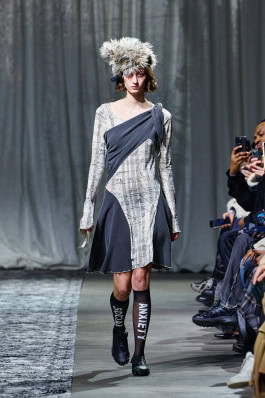

For FW26, Berlin Fashion Week is showcasing designers that embody precisely that character of the city. We will see many conceptual collections, gender-fluid silhouettes, and materials that are bio, recycled, or innovative.
As global fashion and wearers increasingly look for meaning beyond trends, Berlin positions itself as an incubator for creativity and forward-thinking fashion. Designers here question systems, rethink production, and create clothes that feel personal, authentic, and intentional.
This winter, we will see collections that favor layering, texture, resilience, and transformation. From established Berlin names to emerging voices redefining fashion, these are the local designers to watch during Berlin Fashion Week FW26, and how they contribute to the now movement.
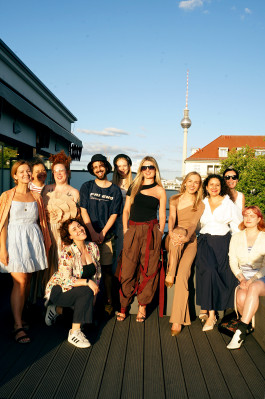
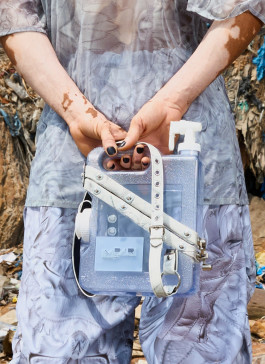
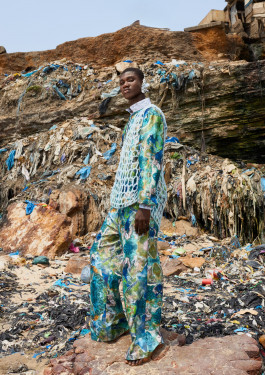
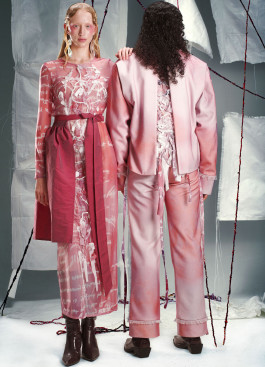
Presenting at Berlin Fashion Week for a fifth time now, IMPARI believes in fashion as a system of circular fashion, education, and giving back, not merely a product. All items are made from recycled PET materials. “We’re currently building a machine with an engineer that recycles all kinds of plastics into fiber, and we’re also working with AI for sorting plastic,” founder and designer Jana Heinemann explains.

Alongside producing circular collections, Jana Heinemann runs workshops focused on conscious brand-building and zero-waste practices, while also leading educational initiatives in Ghana. “We don’t need more clothes or more brands,” she says. “What we need is new perspectives, innovation, and change.”
Berlin Fashion Week, she believes, is finally catching up to this way of thinking. “But sustainability isn’t just about materials,” Jana says. “It’s about how you treat people, how you collaborate, and how you give something back to future generations. You have to create a whole system.”
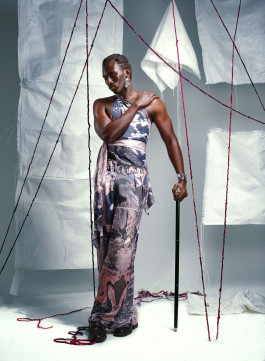
For FW26, IMPARI will present a new collection titled Permission Slip. “We don’t need to ask the system for permission to make change,” she says. “If you trust the voices outside too much, your own voice gets quiet, and you’ll never create what you’re actually capable of.” The collection explores the act of breaking through inherited structures and trusting instinct through IMPARI’s signature material storytelling. Expect muted yet richly layered tones, heavy woven materials balanced with lighter printed elements.
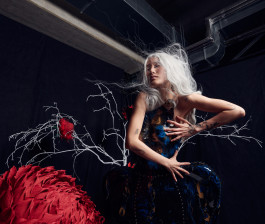
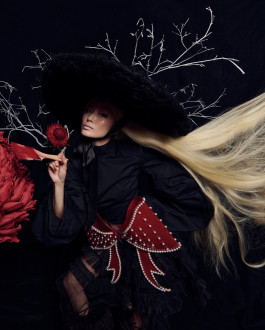
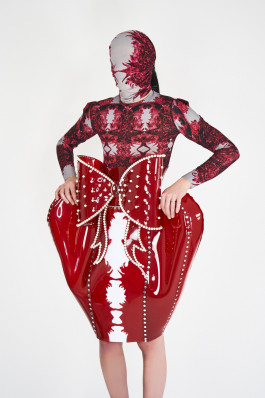
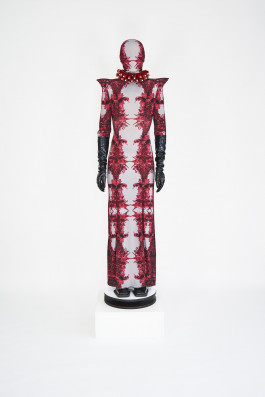
After a decade-long pause from the runway to refine his craft, Thomas Hanisch returns to Berlin Fashion Week with a better understanding of his own style. “Now I feel ready to show my potential,” says Hanisch. He has created astonishing work for celebrities such as Lady Gaga and Tilda Swinton, injecting his signature style.
“I’m an artist living for drama, couture, the avant-garde, and being myself,” says Hanisch of his artistic approach. “Now that Berlin wants to be more recognized internationally (as it should, because there is so much talent here), I think it’s time for me to be seen too.”
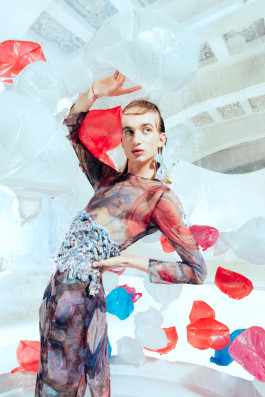
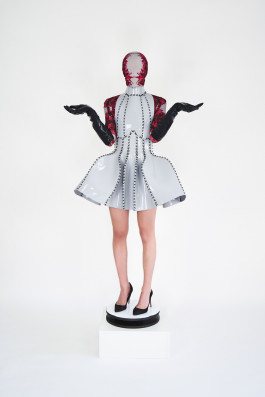
His FW26 collection, EXOS, draws from historical garments and body modification, where exaggerated silhouettes merge with nature. “I take my inspiration from protection: feathers, horns, shells,” he says. The collection’s name references an exoskeleton - “something that protects you and gives a feeling of danger from the outside, combined with beauty.”
The collection reflects both freedom and vulnerability. “When I moved to Berlin, I could finally be myself,” Hanisch says. Yet the garments also act as armor. “It’s still not safe for us [the LGBTQ community], and many other groups, and I see my clothes as protection against danger in the streets.”
Collaborating with his partner Krisztian, a 3D-printing designer, Hanisch integrates printed accessories into the collection, reinforcing BFW as a space for craftsmanship and innovation.
Looking ahead, he hopes for a more united creative scene. “So many talents live in this city. I wish we would come closer together, support each other more,” he says. He envisions “a kind of District 1 from The Hunger Games, where everyone is dressed in the boldest way possible. But without the actual Hunger Games, of course.”
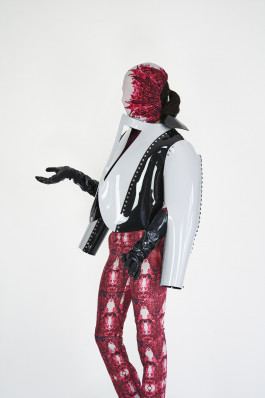
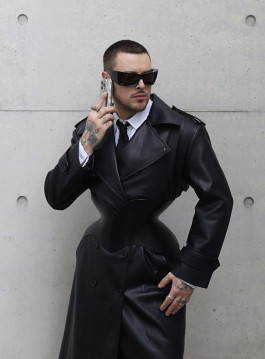
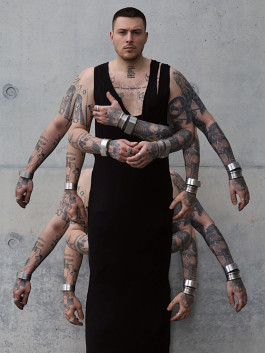
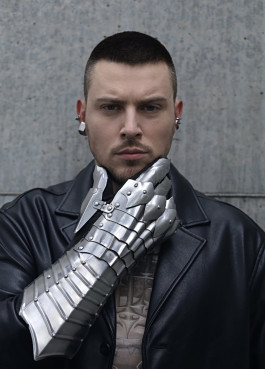
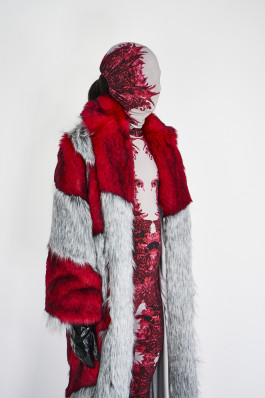
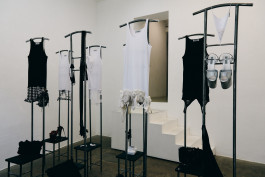
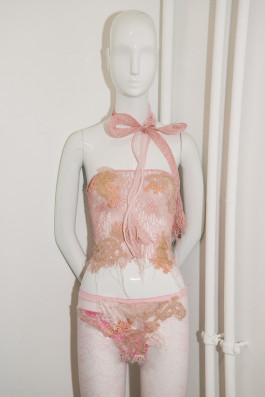
A master of cultural storytelling, William Fan’s work bridges East and West in a beautiful amalgamation of color, tailoring, and flattering silhouettes. His collections are deeply personal yet have a global resonance. Each piece carries heritage, identity, and craftsmanship, woven into contemporary fashion language, which makes it ever more unique and cherished.
William Fan’s designs embrace clean lines softened by rich textures, traditional references reinterpreted through modern forms. In Berlin, his work finds a natural home, where cultural hybridity and fashion as a narrative rather than a seasonal product are valued.
For Berlin Fashion Week FW26, we’re anticipating Fan’s soft design and approach to heritage exploration.
Known for her unapologetically experimental approach, Lou de Bètoly challenges traditional ideas of wearability and luxury with her deconstructed and avant-garde designs. Like many, she is committed to sustainability, craftsmanship, and one-of-a-kindness. Founded by French designer Odély Teboul in 2017, and drawing on her background in haute couture, the label merges high-fashion traditions with subversive artistry, often using upcycled materials to highlight imperfection.
Lou de Bètoly’s collections feature hand-crocheted elements, embroidered textures, and assemblages of repurposed fabrics and found materials. Color palettes and detailing emphasize individuality, blurring the line between fashion and art installation.
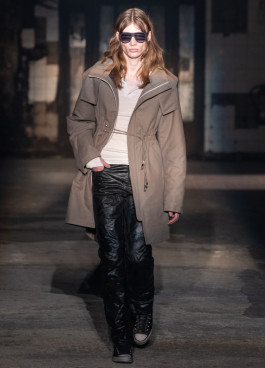
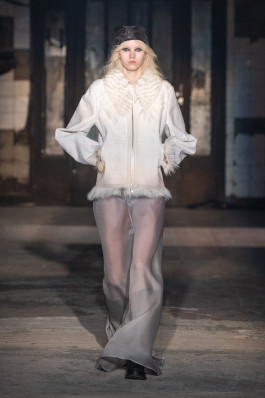
SF1OG is an example of Berlin’s underground scene. Founded by designer Huy Khiem Pham, SF1OG, the brand is rooted in street culture and club aesthetics. The label’s name references the city’s creative codes and subcultural identity, positioning itself between streetwear and high fashion. Its designs are raw, rebellious, and unapologetically bold, emphasizing transformation and recontextualization. Garments often feature detachable elements, raw edges, and modular layering, blurring gender boundaries and utilizing sustainable, repurposed fabrics.
For Berlin Fashion Week FW26, we expect SF1OG to continue to reflect the city as it is in his sort of uniform designs.
Few brands have shaped Berlin’s contemporary fashion identity as strongly as GmbH. Founded in the city and internationally recognized for its sharp tailoring, the label embraces both technical precision and cultural commentary.
Structured outerwear, sculptural tailoring, and symbolic detailing define GmbH’s aesthetic. Within the context of Berlin Fashion Week, GMBH stands as a benchmark, presenting not for the first time. At BFW FW26, we hope that GmbH will continue to affirm Berlin’s position on the global fashion stage by setting its own terms.
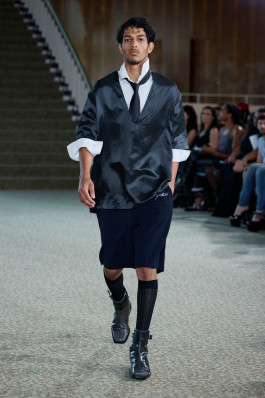
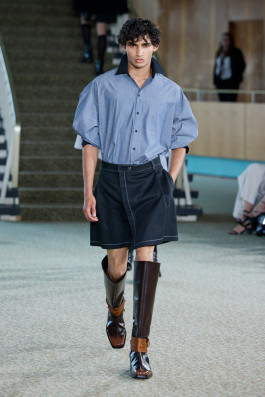
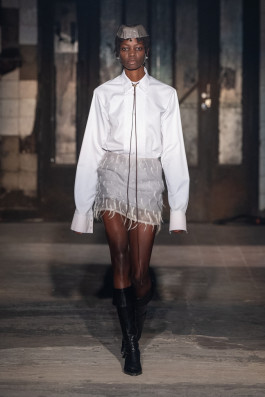
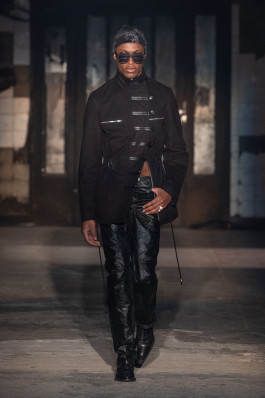
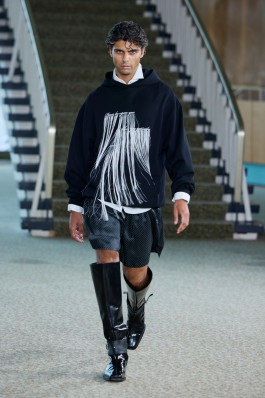
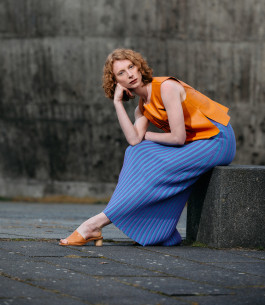
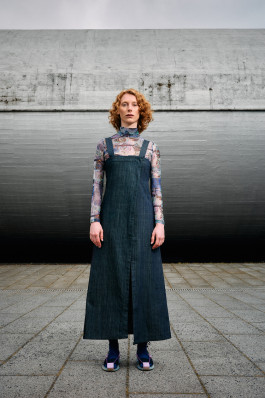
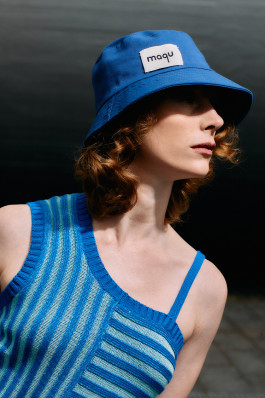
For the Berlin-based eco label celebrating Peruvian heritage MAQU, Berlin Fashion Week FW26 marks a significant debut. “It’s the first time we are introducing ourselves at BFW,” says founder Marisa Fuentes Prado. “We’ve been working in the city for several years, and now we feel ready to show more of who we are.” Rather than a traditional runway show, MAQU presents its vision for sustainability through MAQU LAB — an event where the brand will showcase an innovative bio-leather developed in Peru using waste from the cocoa industry.
Hosted at the Peruvian Embassy in Berlin, the presentation will also include an art exhibition and a live unveiling of MAQU’s newest designs. The collection blends contemporary Peruvian minimalism with European sophistication, articulating a transcontinental design language.
The city has shaped not only our creativity, but also how I think about community, culture, and responsibility,” Marisa explains. MAQU grows deliberately — slow, conscious, and rooted in identity. “We focus on craftsmanship and sustainable processes rather than fast cycles,” she says, positioning the brand firmly within Berlin Fashion Week’s evolving values.
Ultimately, MAQU LAB invites audiences to look closer. “We want people to leave with a sense of discovery,” she says — having encountered new materials, new perspectives, and a brand that treats fashion as dialogue rather than display.
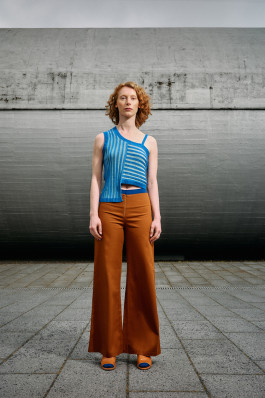
Check the BFW schedule and plan your four days accordingly. Also, make sure you fill in the accreditation form to get on the list.
Related Articles:

For FW26, Berlin Fashion Week is showcasing designers that embody precisely that character of the city. We will see many conceptual collections, gender-fluid silhouettes, and materials that are bio, recycled, or innovative.
As global fashion and wearers increasingly look for meaning beyond trends, Berlin positions itself as an incubator for creativity and forward-thinking fashion. Designers here question systems, rethink production, and create clothes that feel personal, authentic, and intentional.
This winter, we will see collections that favor layering, texture, resilience, and transformation. From established Berlin names to emerging voices redefining fashion, these are the local designers to watch during Berlin Fashion Week FW26, and how they contribute to the now movement.
Presenting at Berlin Fashion Week for a fifth time now, IMPARI believes in fashion as a system of circular fashion, education, and giving back, not merely a product. All items are made from recycled PET materials. “We’re currently building a machine with an engineer that recycles all kinds of plastics into fiber, and we’re also working with AI for sorting plastic,” founder and designer Jana Heinemann explains.

Alongside producing circular collections, Jana Heinemann runs workshops focused on conscious brand-building and zero-waste practices, while also leading educational initiatives in Ghana. “We don’t need more clothes or more brands,” she says. “What we need is new perspectives, innovation, and change.”
Berlin Fashion Week, she believes, is finally catching up to this way of thinking. “But sustainability isn’t just about materials,” Jana says. “It’s about how you treat people, how you collaborate, and how you give something back to future generations. You have to create a whole system.”
For FW26, IMPARI will present a new collection titled Permission Slip. “We don’t need to ask the system for permission to make change,” she says. “If you trust the voices outside too much, your own voice gets quiet, and you’ll never create what you’re actually capable of.” The collection explores the act of breaking through inherited structures and trusting instinct through IMPARI’s signature material storytelling. Expect muted yet richly layered tones, heavy woven materials balanced with lighter printed elements.


After a decade-long pause from the runway to refine his craft, Thomas Hanisch returns to Berlin Fashion Week with a better understanding of his own style. “Now I feel ready to show my potential,” says Hanisch. He has created astonishing work for celebrities such as Lady Gaga and Tilda Swinton, injecting his signature style.
“I’m an artist living for drama, couture, the avant-garde, and being myself,” says Hanisch of his artistic approach. “Now that Berlin wants to be more recognized internationally (as it should, because there is so much talent here), I think it’s time for me to be seen too.”
His FW26 collection, EXOS, draws from historical garments and body modification, where exaggerated silhouettes merge with nature. “I take my inspiration from protection: feathers, horns, shells,” he says. The collection’s name references an exoskeleton - “something that protects you and gives a feeling of danger from the outside, combined with beauty.”
The collection reflects both freedom and vulnerability. “When I moved to Berlin, I could finally be myself,” Hanisch says. Yet the garments also act as armor. “It’s still not safe for us [the LGBTQ community], and many other groups, and I see my clothes as protection against danger in the streets.”
Collaborating with his partner Krisztian, a 3D-printing designer, Hanisch integrates printed accessories into the collection, reinforcing BFW as a space for craftsmanship and innovation.
Looking ahead, he hopes for a more united creative scene. “So many talents live in this city. I wish we would come closer together, support each other more,” he says. He envisions “a kind of District 1 from The Hunger Games, where everyone is dressed in the boldest way possible. But without the actual Hunger Games, of course.”


A master of cultural storytelling, William Fan’s work bridges East and West in a beautiful amalgamation of color, tailoring, and flattering silhouettes. His collections are deeply personal yet have a global resonance. Each piece carries heritage, identity, and craftsmanship, woven into contemporary fashion language, which makes it ever more unique and cherished.
William Fan’s designs embrace clean lines softened by rich textures, traditional references reinterpreted through modern forms. In Berlin, his work finds a natural home, where cultural hybridity and fashion as a narrative rather than a seasonal product are valued.
For Berlin Fashion Week FW26, we’re anticipating Fan’s soft design and approach to heritage exploration.
Known for her unapologetically experimental approach, Lou de Bètoly challenges traditional ideas of wearability and luxury with her deconstructed and avant-garde designs. Like many, she is committed to sustainability, craftsmanship, and one-of-a-kindness. Founded by French designer Odély Teboul in 2017, and drawing on her background in haute couture, the label merges high-fashion traditions with subversive artistry, often using upcycled materials to highlight imperfection.
Lou de Bètoly’s collections feature hand-crocheted elements, embroidered textures, and assemblages of repurposed fabrics and found materials. Color palettes and detailing emphasize individuality, blurring the line between fashion and art installation.


SF1OG is an example of Berlin’s underground scene. Founded by designer Huy Khiem Pham, SF1OG, the brand is rooted in street culture and club aesthetics. The label’s name references the city’s creative codes and subcultural identity, positioning itself between streetwear and high fashion. Its designs are raw, rebellious, and unapologetically bold, emphasizing transformation and recontextualization. Garments often feature detachable elements, raw edges, and modular layering, blurring gender boundaries and utilizing sustainable, repurposed fabrics.
For Berlin Fashion Week FW26, we expect SF1OG to continue to reflect the city as it is in his sort of uniform designs.
Few brands have shaped Berlin’s contemporary fashion identity as strongly as GmbH. Founded in the city and internationally recognized for its sharp tailoring, the label embraces both technical precision and cultural commentary.
Structured outerwear, sculptural tailoring, and symbolic detailing define GmbH’s aesthetic. Within the context of Berlin Fashion Week, GMBH stands as a benchmark, presenting not for the first time. At BFW FW26, we hope that GmbH will continue to affirm Berlin’s position on the global fashion stage by setting its own terms.


For the Berlin-based eco label celebrating Peruvian heritage MAQU, Berlin Fashion Week FW26 marks a significant debut. “It’s the first time we are introducing ourselves at BFW,” says founder Marisa Fuentes Prado. “We’ve been working in the city for several years, and now we feel ready to show more of who we are.” Rather than a traditional runway show, MAQU presents its vision for sustainability through MAQU LAB — an event where the brand will showcase an innovative bio-leather developed in Peru using waste from the cocoa industry.
Hosted at the Peruvian Embassy in Berlin, the presentation will also include an art exhibition and a live unveiling of MAQU’s newest designs. The collection blends contemporary Peruvian minimalism with European sophistication, articulating a transcontinental design language.
The city has shaped not only our creativity, but also how I think about community, culture, and responsibility,” Marisa explains. MAQU grows deliberately — slow, conscious, and rooted in identity. “We focus on craftsmanship and sustainable processes rather than fast cycles,” she says, positioning the brand firmly within Berlin Fashion Week’s evolving values.
Ultimately, MAQU LAB invites audiences to look closer. “We want people to leave with a sense of discovery,” she says — having encountered new materials, new perspectives, and a brand that treats fashion as dialogue rather than display.


Check the BFW schedule and plan your four days accordingly. Also, make sure you fill in the accreditation form to get on the list.
Related Articles:
You need to load content from reCAPTCHA to submit the form. Please note that doing so will share data with third-party providers.
More InformationYou need to load content from Turnstile to submit the form. Please note that doing so will share data with third-party providers.
More InformationYou are currently viewing a placeholder content from Facebook. To access the actual content, click the button below. Please note that doing so will share data with third-party providers.
More InformationYou are currently viewing a placeholder content from Instagram. To access the actual content, click the button below. Please note that doing so will share data with third-party providers.
More InformationYou need to load content from hCaptcha to submit the form. Please note that doing so will share data with third-party providers.
More InformationYou need to load content from reCAPTCHA to submit the form. Please note that doing so will share data with third-party providers.
More InformationYou are currently viewing a placeholder content from Turnstile. To access the actual content, click the button below. Please note that doing so will share data with third-party providers.
More InformationYou are currently viewing a placeholder content from X. To access the actual content, click the button below. Please note that doing so will share data with third-party providers.
More Information