
It goes without saying that gender equality still has a long way to go, from the gender pay gap and the difference between paternity and maternity leave, to the deeply intersectional fears of navigating public spaces alone at night.
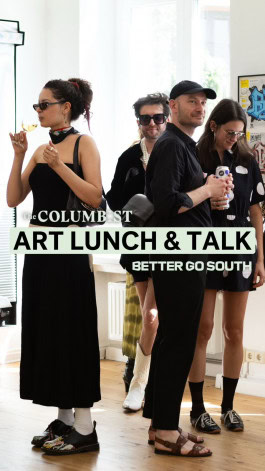
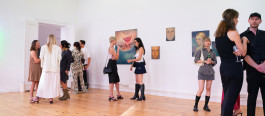
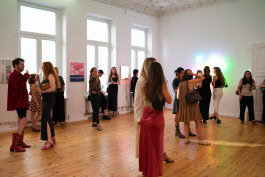
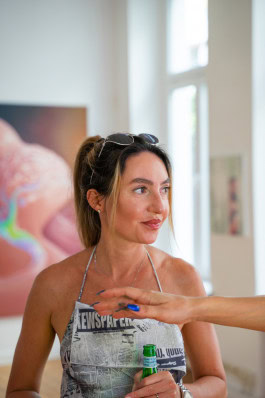
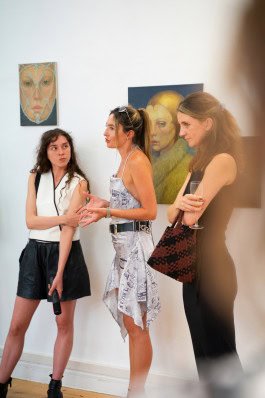
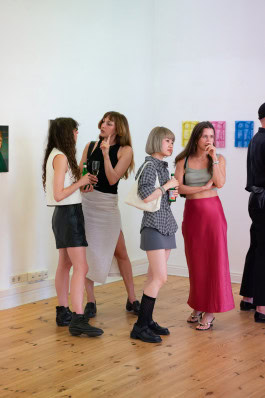
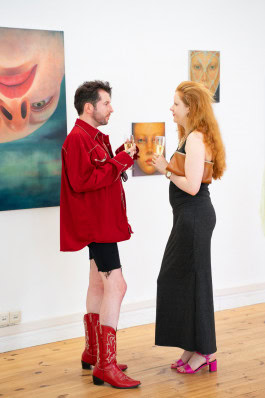
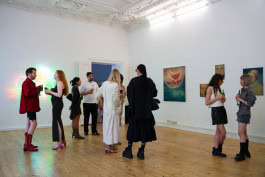
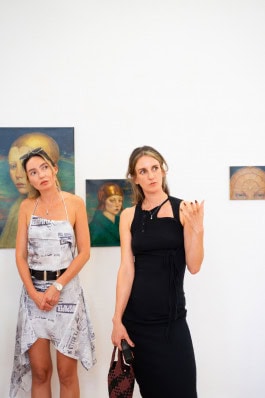
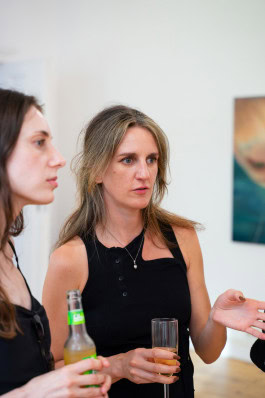
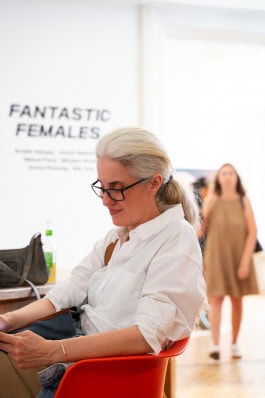
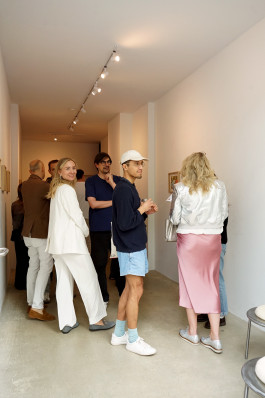
In the art world, this gap is also very much present and is an important matter, even if some steps are slowly being taken to change things. The exhibition, and our shared event, tried to position themselves within this framework, celebrating women in art and providing six emerging artists with a platform for their perspectives.
But before diving into their practices, comes a really difficult question: what does it mean to be a woman? Today, this definition goes far beyond biology, finally embracing the whole spectrum of identity. Yet, nobody anticipated this better than Simone de Beauvoir: “One is not born, but rather becomes, a woman. No biological, psychological, or economic destiny defines the figure that the human female takes on in society; it is civilization as a whole that produces this creature.”

Then comes a second question: what does it mean to be an artist within our society? For this, the words of Forough Farrokhzad come to our aid, reminding us that identity is not a given, but is actually shaped through our actions:”I want to be defined by what I make, not by what society expects me to be. My hands are small, but they build my own truth."
With this in mind, and forgetting all the polarizing forces that are disrupting our society, we talked with the protagonists of FANTASTIC FEMALES: Anaïs Goupy, Mirjam Roth, Anna Nezhnaya, Maud Paul, Anna Rüstig, and Wei Zhu. While the curatorial framework investigates the work of the six artists without categorization, there is nonetheless an underlying tone linking them all. All their works address, in various ways, the body as a central stage and the role of technology in our lives.
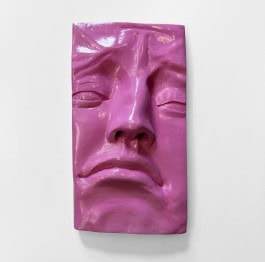
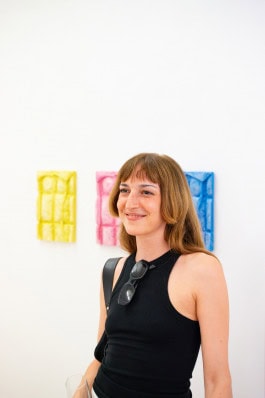
Anna Rüstig addresses through her bas-reliefs the history of this artistic medium, while bringing it back to contemporary times. The monochrome gives way to bright colors, and the conversation shifts to intimate moments. In a powerful subversion of a historically monumental medium, her series of jackets as bas-reliefs is an homage to her mother and the all-too-familiar phrase parents usually use: “Put on some clothes or you’ll catch a cold”.
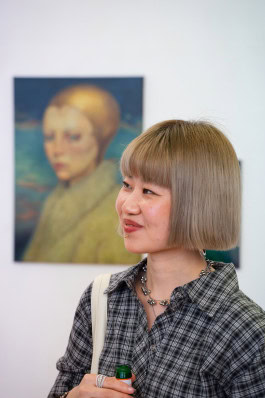
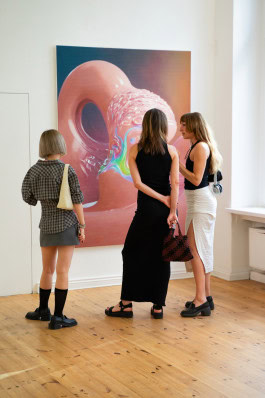
Wei Zhu also addresses intimacy and family relationships in her paintings, trying to deal with memory and to let go of troubling memories from the past. The pastel palette colors a series of everyday scenes, uniting them inside a single frame.
Her practice deals with the difficulties that lie in getting away from one’s roots and defining a space for oneself in the world. Particularly compelling are the details hidden in the canvases, even in their corners, reminding us that beauty often lies in the details.
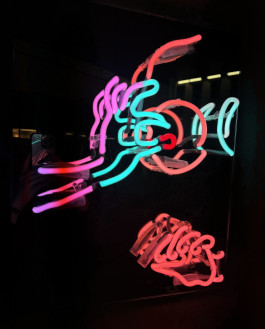
Anna Nezhnaya explores sensuality more directly by mixing it with the history of art. One of the neon works she exhibited in the show represents a famous sculpture by Jeff Koons, made while he was married to Cicciolina, an Italian former porn star and politician. The work shows them enveloped in a hug, naked, unveiling a very intimate moment and crystallizing it in art.
The artwork itself then became something completely different. After Koons and Cicciolina’s divorce, lengthy legal battles started over copyright and intellectual property. This reminds us, once again, of how vulnerable a woman's own image can become, showing that the representation of women and their own selves remains a constant battleground.
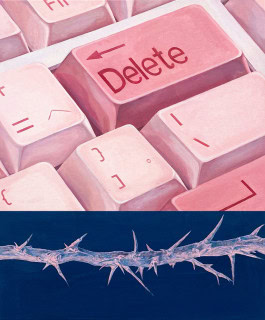
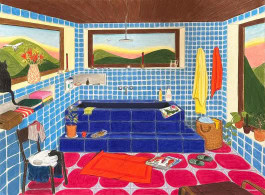
Maud Paul’s practice shifts the focus back to a more intimate space: the walls of our homes. Her beautiful drawings represent different interiors, marked by both a charming quiet and a subtle anxiety.
Her landscapes don’t actually exist but are based on real fragments of her life. With her work, she is able to celebrate the simple yet incredibly complicated act of living, and to see the places we inhabit from a different perspective.
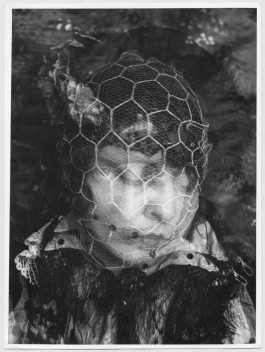
Seeing herself through completely different lenses is the root of Mirjam Roth’s work. Her self-portraits seem to come from another time, yet they bring within themselves some sort of contemporary surrealistic turbulence.
Her paintings are incredibly charming and haunting, shifting the conversation back to one of art history’s most used practices: self-portraits.
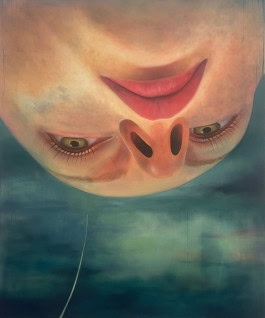
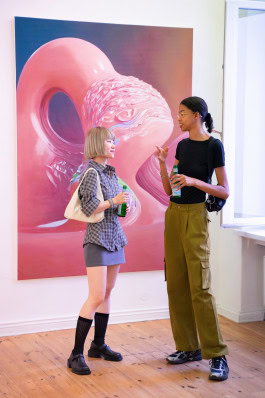
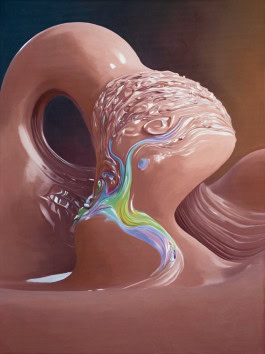
Working with portraits and unsettlement, but in a completely different way, is the practice of Anaïs Goupy. Her sensual and amorphous shapes, flowing inside her paintings, actually hide a reasoning on human bodies, on how society perceives them, and on how we treat them. With her paintings, she also addresses and directly works with one of the other pressing topics of our times: the role of artificial intelligence. Her bodies, read through these lenses, become something else, shifting shape and focus to what they hold within.
The exhibition tried to celebrate women in different ways, showing also a fluid spectrum of womanhood and of life experiences. With this comes one last question: what does it mean to be both a woman and an artist? We finish how we started, with Simone de Beauvoir’s wise words: “To desire freedom is also to desire the freedom of others, but to create is to refuse to accept the world as it is given to us." And this is probably one of the deepest meanings of making art.
Related Articles:

It goes without saying that gender equality still has a long way to go, from the gender pay gap and the difference between paternity and maternity leave, to the deeply intersectional fears of navigating public spaces alone at night.
In the art world, this gap is also very much present and is an important matter, even if some steps are slowly being taken to change things. The exhibition, and our shared event, tried to position themselves within this framework, celebrating women in art and providing six emerging artists with a platform for their perspectives.
But before diving into their practices, comes a really difficult question: what does it mean to be a woman? Today, this definition goes far beyond biology, finally embracing the whole spectrum of identity. Yet, nobody anticipated this better than Simone de Beauvoir: “One is not born, but rather becomes, a woman. No biological, psychological, or economic destiny defines the figure that the human female takes on in society; it is civilization as a whole that produces this creature.”
Then comes a second question: what does it mean to be an artist within our society? For this, the words of Forough Farrokhzad come to our aid, reminding us that identity is not a given, but is actually shaped through our actions:”I want to be defined by what I make, not by what society expects me to be. My hands are small, but they build my own truth."
With this in mind, and forgetting all the polarizing forces that are disrupting our society, we talked with the protagonists of FANTASTIC FEMALES: Anaïs Goupy, Mirjam Roth, Anna Nezhnaya, Maud Paul, Anna Rüstig, and Wei Zhu. While the curatorial framework investigates the work of the six artists without categorization, there is nonetheless an underlying tone linking them all. All their works address, in various ways, the body as a central stage and the role of technology in our lives.
Anna Rüstig addresses through her bas-reliefs the history of this artistic medium, while bringing it back to contemporary times. The monochrome gives way to bright colors, and the conversation shifts to intimate moments. In a powerful subversion of a historically monumental medium, her series of jackets as bas-reliefs is an homage to her mother and the all-too-familiar phrase parents usually use: “Put on some clothes or you’ll catch a cold”.


Wei Zhu also addresses intimacy and family relationships in her paintings, trying to deal with memory and to let go of troubling memories from the past. The pastel palette colors a series of everyday scenes, uniting them inside a single frame.
Her practice deals with the difficulties that lie in getting away from one’s roots and defining a space for oneself in the world. Particularly compelling are the details hidden in the canvases, even in their corners, reminding us that beauty often lies in the details.
Anna Nezhnaya explores sensuality more directly by mixing it with the history of art. One of the neon works she exhibited in the show represents a famous sculpture by Jeff Koons, made while he was married to Cicciolina, an Italian former porn star and politician. The work shows them enveloped in a hug, naked, unveiling a very intimate moment and crystallizing it in art.
The artwork itself then became something completely different. After Koons and Cicciolina’s divorce, lengthy legal battles started over copyright and intellectual property. This reminds us, once again, of how vulnerable a woman's own image can become, showing that the representation of women and their own selves remains a constant battleground.


Maud Paul’s practice shifts the focus back to a more intimate space: the walls of our homes. Her beautiful drawings represent different interiors, marked by both a charming quiet and a subtle anxiety.
Her landscapes don’t actually exist but are based on real fragments of her life. With her work, she is able to celebrate the simple yet incredibly complicated act of living, and to see the places we inhabit from a different perspective.
Seeing herself through completely different lenses is the root of Mirjam Roth’s work. Her self-portraits seem to come from another time, yet they bring within themselves some sort of contemporary surrealistic turbulence.
Her paintings are incredibly charming and haunting, shifting the conversation back to one of art history’s most used practices: self-portraits.


Working with portraits and unsettlement, but in a completely different way, is the practice of Anaïs Goupy. Her sensual and amorphous shapes, flowing inside her paintings, actually hide a reasoning on human bodies, on how society perceives them, and on how we treat them. With her paintings, she also addresses and directly works with one of the other pressing topics of our times: the role of artificial intelligence. Her bodies, read through these lenses, become something else, shifting shape and focus to what they hold within.
The exhibition tried to celebrate women in different ways, showing also a fluid spectrum of womanhood and of life experiences. With this comes one last question: what does it mean to be both a woman and an artist? We finish how we started, with Simone de Beauvoir’s wise words: “To desire freedom is also to desire the freedom of others, but to create is to refuse to accept the world as it is given to us." And this is probably one of the deepest meanings of making art.


Related Articles:
You need to load content from reCAPTCHA to submit the form. Please note that doing so will share data with third-party providers.
More InformationYou need to load content from Turnstile to submit the form. Please note that doing so will share data with third-party providers.
More InformationYou are currently viewing a placeholder content from Facebook. To access the actual content, click the button below. Please note that doing so will share data with third-party providers.
More InformationYou are currently viewing a placeholder content from Instagram. To access the actual content, click the button below. Please note that doing so will share data with third-party providers.
More InformationYou need to load content from hCaptcha to submit the form. Please note that doing so will share data with third-party providers.
More InformationYou need to load content from reCAPTCHA to submit the form. Please note that doing so will share data with third-party providers.
More InformationYou are currently viewing a placeholder content from Turnstile. To access the actual content, click the button below. Please note that doing so will share data with third-party providers.
More InformationYou are currently viewing a placeholder content from X. To access the actual content, click the button below. Please note that doing so will share data with third-party providers.
More Information