
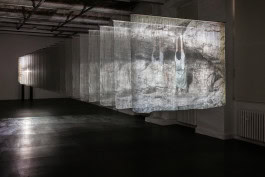
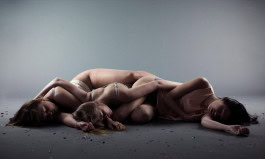
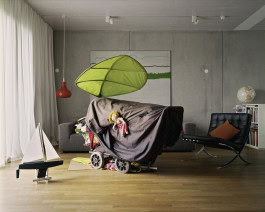
But what are light and darkness? They are not simply a form of energy and its absence, but a powerful metaphor for so many things: for the polarized times we live in, for the contrasting feelings colliding inside us. This selection of exhibitions to see this August in Berlin aims to delve into these powerful concepts, inviting us to jump right into their perennial dance.
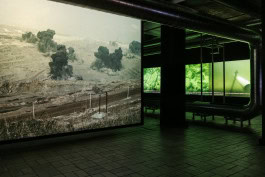
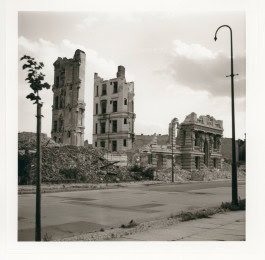
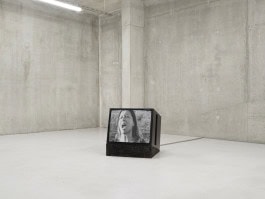
KW is presenting the new chapter of the Kyiv Biennial, under the evocative title A Bird That Cannot Land. The Kyiv Biennial is a nomadic international project that intertwines artistic, political and social issues from all over the world. The exhibition at KW, which unfolds across four floors, focuses on the notion of a “Middle-East Europe” and connects the results of colonialism and imperialism to contemporary conflicts and personal stories. Our times are marked by numerous wars, destruction, displacement, and growing polarization and control. Images themselves have become a battleground where reality is constantly distorted and negotiated.
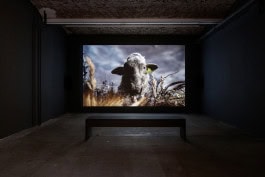
"What we perceive as the darkness of the heavens is this light that, though traveling toward us, cannot reach us,” said Giorgio Agamben in his essay on contemporary times. Under this haunting umbrella, the exhibition brings together several artists whose lives have been directly shaped by this overwhelming darkness. Ukraine, Palestine, Afghanistan, Romania, Kosovo and the former GDR are the countries of origin of many artists featured in the exhibition. With their work, they try to highlight the injustice and violence affecting the people, animals and lands involved. Particularly impactful is the video work and performance In Transit, by Lida Abdul, who documents the abandoned Soviet airplanes on the outskirts of Kabul, being reinhabited and tended to by a group of children. Destruction meets care, innocence meets violence, creating a direct link between light and darkness.


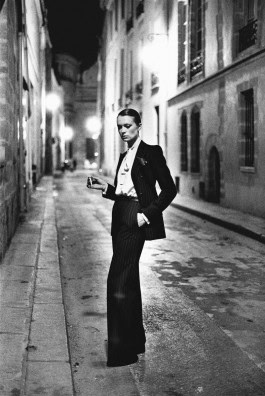
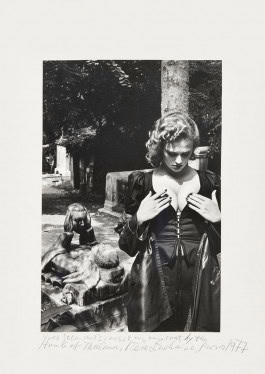
The Newton Foundation has literally decided to celebrate the in-between with their exhibition Intermezzo. Revisiting Helmut Newton. After more than 20 years, the permanent show will evolve and change, expanding the concept and knowledge of Helmut and June’s practices. The word “intermezzo” marks in itself a transition, spanning both time and space, the use of the photographic medium, and the changes that have affected our society throughout the years.
In June, the foundation also opened two other exhibitions, Rooms/Stages and Helmut’s One-off Album. Rooms/Stages is a collective show that investigates the interconnection and the differences that lie between the performative act and the space itself. Each artist is represented by a body of photographic work, using the medium in all its facets and bringing it back to its core, which is the intertwining of light and darkness, of presence and absence. Helmut’s One-off Album focuses instead on a photographic album that the artist created in 1999 for collector Gert Elfering. Now on view in Berlin for the very first time, the 103 small-format prints are individually framed for the occasion and can be admired side by side. The album beautifully summarizes Newton’s entire practice, from fashion shoots and polaroids, to intimate behind-the-scenes moments and iconic advertising images.
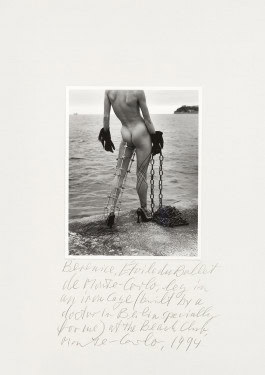


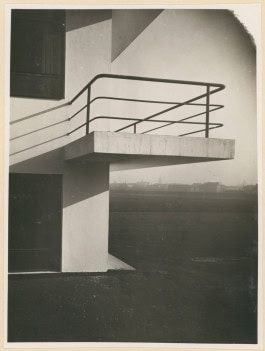
Housed in the same building as the Newton Foundation, the Museum für Fotografie recently opened a stunning and long-overdue exhibition. Conceived in collaboration with the Bauhaus-Archiv, New Woman, New Vision. Women Photographers of the Bauhaus finally brings the spotlight back to the numerous female artists who participated in the eponymous movement and impacted it.
Featuring about 300 photographs, the show spans as many different themes as possible: from self-representation to architecture, from documentary images to the experimental use of the medium itself. Photography is in fact rooted in the interconnection between light and darkness, here explored in its various facets. Many artists of the time also experimented with cameraless pictures, taking part in the invention of photograms and unveiling this intrinsic link between the two.
These talented artists not only dealt with light and darkness within their work, but also through the historical times they lived in. The Bauhaus was in fact founded in 1919, during the Weimar Republic, a period of radical innovation and progress. During those years, women were granted the right to vote and started gaining independence in many different fields, from professional endeavours to their personal lives.
As we unfortunately all know, these progressive years abruptly came to an end with the rise of Nazism and that glimmer of light and hope was overshadowed by a devastating darkness. The exhibition finally provides the long-overdue recognition to these 29 women, whose lives were directly impacted by these unsettling times. The different paths they took also stand as a powerful reminder for all of us, carrying the commitment to give resonance to all the underrepresented voices of our past and present.


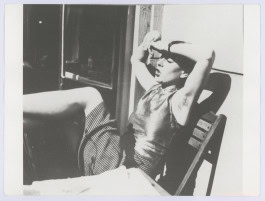

Contemporary Fine Arts Berlin decided to focus its current exhibition on the power of light. With Good Morning Sunshine, the gallery celebrates the artistic and human partnership between the acclaimed photographer Juergen Teller and his wife Dovile Drizyte. Focusing on optimism, warmth and playfulness, the show pays homage to their relationship and the fruits it bore.
From commercial works to nude studies, from family portraits to contemplative moments, the exhibition is a celebration of light, love and curiosity, reconnecting us to the photographic medium and its positive and truthful uses. The artistic duo chose this uplifting approach, paving the way for us to walk through a life that can feel, for once, a little lighter.
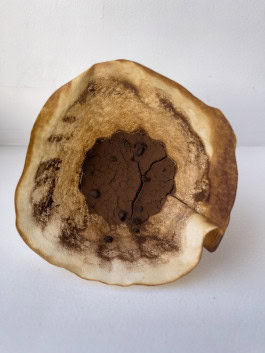

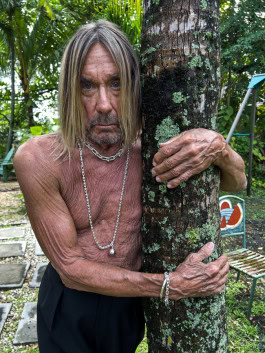
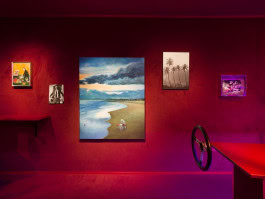
Exploring the exact opposite is the group exhibition at Pace Gallery, Goodbye Sadness, Hello Sadness.
Bringing together an international group of 27 artists and spanning across different media, the exhibition takes its title from the renowned novel Bonjour Tristesse, and applies it to the interconnection between Berlin and its nightlife. Night is in itself a setting for possibility and ambiguity, and clubs have certainly become spaces to explore our subconscious and dive into our inner selves.
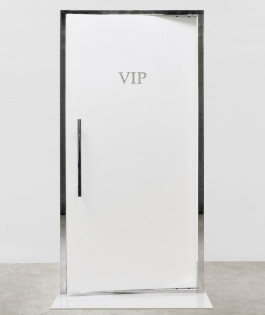
The exhibition brings together many acclaimed artists who investigate this threshold: Elmgreen and Dragset humorously address the familiar concept of guest lists with a glass VIP door that opens up to nothing, while Lauren Quin and Kyle Manning focus on the intertwining of day and darkness and the emotions that arise.
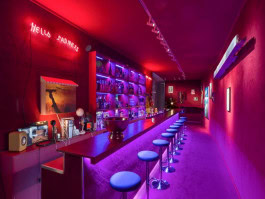
The centerpiece of the exhibition is the functioning replica of Friedrich Kunath’s bar Va Bene, installed on the gallery’s ground floor and effectively open to the public. By addressing the sadness and the darkness within us, the exhibition proves to be the perfect counterpart to the previous one, bringing the balance back to the middle.
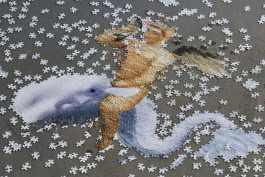
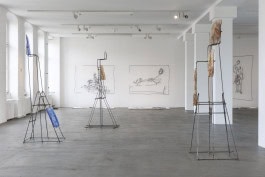
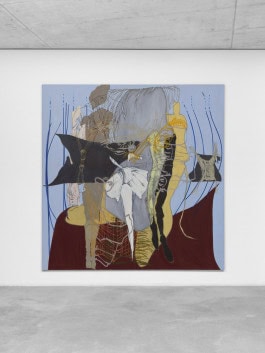
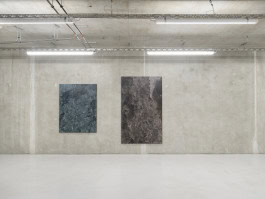
Galerie Molitor is showcasing from July 4 a group exhibition under the title Apophenia.
Apophenia is defined as the human tendency to perceive meaningful patterns or connections in random, unrelated data, objects, or ideas, with applications in several areas of life and psychological effects – from superstition to gambling and even data analysis.
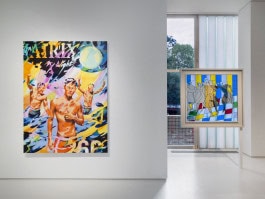
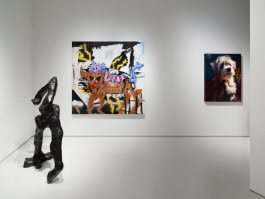
The four presented artists, Niloufar Emamifar, Lisa Jo, Laura Langer and Marina Xenofontos all approach this concept through their respective practices. Lisa Jo works in between revealing and concealing, constantly playing with negative space. Marina Xenofontos uses various media and reconnects the vernacular to power structures, bringing back to light the imaginary aspects obscured by historiography.
Related Articles:

But what are light and darkness? They are not simply a form of energy and its absence, but a powerful metaphor for so many things: for the polarized times we live in, for the contrasting feelings colliding inside us. This selection of exhibitions to see this August in Berlin aims to delve into these powerful concepts, inviting us to jump right into their perennial dance.
KW is presenting the new chapter of the Kyiv Biennial, under the evocative title A Bird That Cannot Land. The Kyiv Biennial is a nomadic international project that intertwines artistic, political and social issues from all over the world. The exhibition at KW, which unfolds across four floors, focuses on the notion of a “Middle-East Europe” and connects the results of colonialism and imperialism to contemporary conflicts and personal stories. Our times are marked by numerous wars, destruction, displacement, and growing polarization and control. Images themselves have become a battleground where reality is constantly distorted and negotiated.
"What we perceive as the darkness of the heavens is this light that, though traveling toward us, cannot reach us,” said Giorgio Agamben in his essay on contemporary times. Under this haunting umbrella, the exhibition brings together several artists whose lives have been directly shaped by this overwhelming darkness. Ukraine, Palestine, Afghanistan, Romania, Kosovo and the former GDR are the countries of origin of many artists featured in the exhibition. With their work, they try to highlight the injustice and violence affecting the people, animals and lands involved. Particularly impactful is the video work and performance In Transit, by Lida Abdul, who documents the abandoned Soviet airplanes on the outskirts of Kabul, being reinhabited and tended to by a group of children. Destruction meets care, innocence meets violence, creating a direct link between light and darkness.


The Newton Foundation has literally decided to celebrate the in-between with their exhibition Intermezzo. Revisiting Helmut Newton. After more than 20 years, the permanent show will evolve and change, expanding the concept and knowledge of Helmut and June’s practices. The word “intermezzo” marks in itself a transition, spanning both time and space, the use of the photographic medium, and the changes that have affected our society throughout the years.
In June, the foundation also opened two other exhibitions, Rooms/Stages and Helmut’s One-off Album. Rooms/Stages is a collective show that investigates the interconnection and the differences that lie between the performative act and the space itself. Each artist is represented by a body of photographic work, using the medium in all its facets and bringing it back to its core, which is the intertwining of light and darkness, of presence and absence. Helmut’s One-off Album focuses instead on a photographic album that the artist created in 1999 for collector Gert Elfering. Now on view in Berlin for the very first time, the 103 small-format prints are individually framed for the occasion and can be admired side by side. The album beautifully summarizes Newton’s entire practice, from fashion shoots and polaroids, to intimate behind-the-scenes moments and iconic advertising images.


Housed in the same building as the Newton Foundation, the Museum für Fotografie recently opened a stunning and long-overdue exhibition. Conceived in collaboration with the Bauhaus-Archiv, New Woman, New Vision. Women Photographers of the Bauhaus finally brings the spotlight back to the numerous female artists who participated in the eponymous movement and impacted it.
Featuring about 300 photographs, the show spans as many different themes as possible: from self-representation to architecture, from documentary images to the experimental use of the medium itself. Photography is in fact rooted in the interconnection between light and darkness, here explored in its various facets. Many artists of the time also experimented with cameraless pictures, taking part in the invention of photograms and unveiling this intrinsic link between the two.
These talented artists not only dealt with light and darkness within their work, but also through the historical times they lived in. The Bauhaus was in fact founded in 1919, during the Weimar Republic, a period of radical innovation and progress. During those years, women were granted the right to vote and started gaining independence in many different fields, from professional endeavours to their personal lives.
As we unfortunately all know, these progressive years abruptly came to an end with the rise of Nazism and that glimmer of light and hope was overshadowed by a devastating darkness. The exhibition finally provides the long-overdue recognition to these 29 women, whose lives were directly impacted by these unsettling times. The different paths they took also stand as a powerful reminder for all of us, carrying the commitment to give resonance to all the underrepresented voices of our past and present.


Contemporary Fine Arts Berlin decided to focus its current exhibition on the power of light. With Good Morning Sunshine, the gallery celebrates the artistic and human partnership between the acclaimed photographer Juergen Teller and his wife Dovile Drizyte. Focusing on optimism, warmth and playfulness, the show pays homage to their relationship and the fruits it bore.
From commercial works to nude studies, from family portraits to contemplative moments, the exhibition is a celebration of light, love and curiosity, reconnecting us to the photographic medium and its positive and truthful uses. The artistic duo chose this uplifting approach, paving the way for us to walk through a life that can feel, for once, a little lighter.


Exploring the exact opposite is the group exhibition at Pace Gallery, Goodbye Sadness, Hello Sadness.
Bringing together an international group of 27 artists and spanning across different media, the exhibition takes its title from the renowned novel Bonjour Tristesse, and applies it to the interconnection between Berlin and its nightlife. Night is in itself a setting for possibility and ambiguity, and clubs have certainly become spaces to explore our subconscious and dive into our inner selves.
The exhibition brings together many acclaimed artists who investigate this threshold: Elmgreen and Dragset humorously address the familiar concept of guest lists with a glass VIP door that opens up to nothing, while Lauren Quin and Kyle Manning focus on the intertwining of day and darkness and the emotions that arise.
The centerpiece of the exhibition is the functioning replica of Friedrich Kunath’s bar Va Bene, installed on the gallery’s ground floor and effectively open to the public. By addressing the sadness and the darkness within us, the exhibition proves to be the perfect counterpart to the previous one, bringing the balance back to the middle.


Galerie Molitor is showcasing from July 4 a group exhibition under the title Apophenia.
Apophenia is defined as the human tendency to perceive meaningful patterns or connections in random, unrelated data, objects, or ideas, with applications in several areas of life and psychological effects – from superstition to gambling and even data analysis.
The four presented artists, Niloufar Emamifar, Lisa Jo, Laura Langer and Marina Xenofontos all approach this concept through their respective practices. Lisa Jo works in between revealing and concealing, constantly playing with negative space. Marina Xenofontos uses various media and reconnects the vernacular to power structures, bringing back to light the imaginary aspects obscured by historiography.


Related Articles:
You need to load content from reCAPTCHA to submit the form. Please note that doing so will share data with third-party providers.
More InformationYou need to load content from Turnstile to submit the form. Please note that doing so will share data with third-party providers.
More InformationYou are currently viewing a placeholder content from Facebook. To access the actual content, click the button below. Please note that doing so will share data with third-party providers.
More InformationYou are currently viewing a placeholder content from Instagram. To access the actual content, click the button below. Please note that doing so will share data with third-party providers.
More InformationYou need to load content from hCaptcha to submit the form. Please note that doing so will share data with third-party providers.
More InformationYou need to load content from reCAPTCHA to submit the form. Please note that doing so will share data with third-party providers.
More InformationYou are currently viewing a placeholder content from Turnstile. To access the actual content, click the button below. Please note that doing so will share data with third-party providers.
More InformationYou are currently viewing a placeholder content from X. To access the actual content, click the button below. Please note that doing so will share data with third-party providers.
More Information