
Historically, art has always had the ability to show society’s true colors and uncover its underlying meanings, even before we could fully grasp them. This selection of exhibitions to see in Berlin this July aims to investigate how art mirrors society, by analyzing and confronting it in all its different layers and providing us with the means to change it for the better.
Sprüth Magers has opened for Gallery Weekend Berlin two powerful exhibitions, investigating the underlying meanings of contemporary society. Acclaimed artist Thomas Demand does that through the unique paper models for which he is renowned, creating pictures that expose the ambiguity behind historical and political episodes, as well as everyday moments.
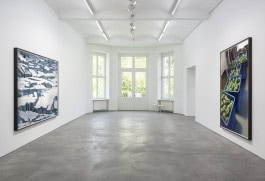
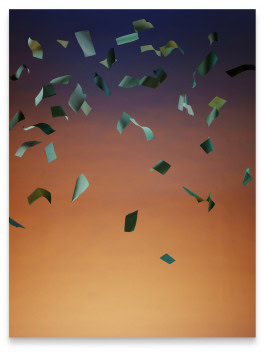
Particularly powerful is Money (2025), which is based on a still from the incredibly disturbing AI-generated video that Donald Trump posted last year, representing his “Gaza Riviera” plan. The banknotes thrown in the air by a character resembling Elon Musk become the subject of this artwork, which powerfully underscores its perversity, bringing the hypothetical back to the physical realm. Demand also investigates our unsettling relationship with nature, and the impact of our actions over it. With Eis he represents an Arctic fragmented by glacial melting, due to the impact of climate change. Through his reconstructed worlds, Demand uses the paradoxes of perception to mirror the complex society we live in, showing us the multiple ways we can be influenced and manipulated by the things we see.
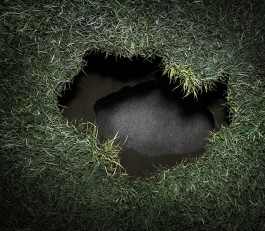
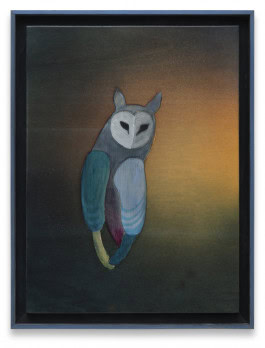
In utopisch Robert Elfgen explores the relationship between humankind and nature. The exhibition powerfully juxtaposes images of industrial landscapes with the animal world, creating a dreamlike liminal space that questions the relationship between human technology and nature. The title itself implies the remote possibility of a utopian society, where these contrasts finally dissolve and progress can act as a sensitive force, rather than a destructive one. We, as humans, are invited to leave our anthropocentric view of the world behind, and learn to coexist peacefully with all other living beings.


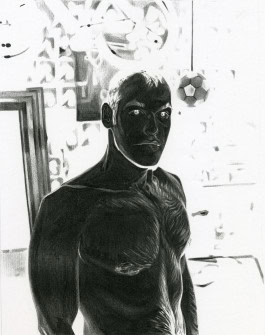
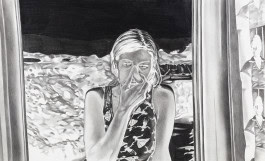
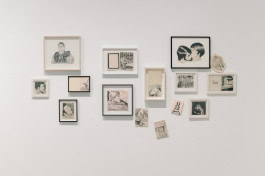
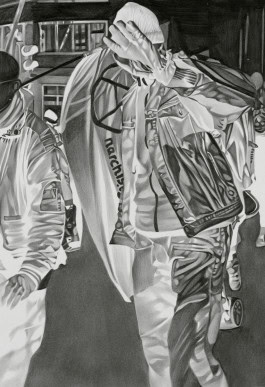
With 20th Century Debris Berlinische Galerie is showcasing the powerful work of German artist Marc Brandenburg. His practice moves between drawing, video, installation, collage and performance, focusing his attention to seemingly trivial things. The artist sees the social issues affecting us as direct effects of late capitalism, and traces them back to a society on the verge of collapse, due to isolation, inequality and excess.
Pencil drawing is his primary medium, which he uses to investigate light and darkness in both a physical and metaphorical way. Using pictures from his personal archive or taken from magazines, Brandenburg makes inversion a powerful key to understanding society and underlining its embedded absurdity.
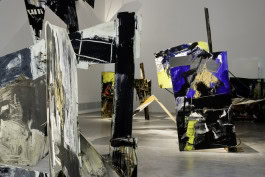
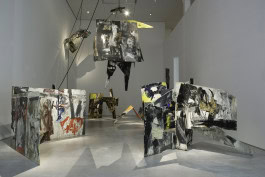
Berlinische Galerie is also investigating the paradoxes that lie in our society with the installation Absurd Berlin Diary ‘64 by Emilio Vedova. The artworks, known as plurimi, are made of asymmetrical painted panels that function as movable structures. Vedova created them in 1964, while staying in West Berlin on an art grant.
The pieces are a direct reaction to the divided city of the time, which Vedova experienced firsthand and described as a "clash of contradictions". The artist donated the artworks to the Berlinische Galerie in 2002, and this exhibition offers a rare opportunity to see them after many years. Above all, it marks an important occasion to reflect on the paradoxes of our societies and their direct effects on us and the places we inhabit.
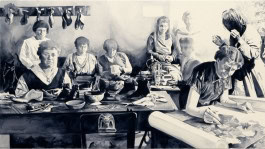
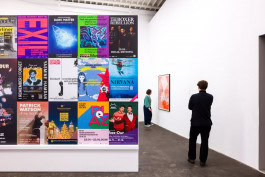
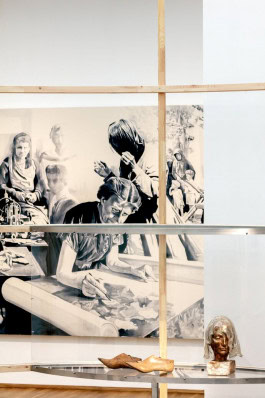
Hamburger Bahnhof is celebrating its 30th anniversary with a powerful and dense program of exhibitions that investigate our society in all its facets. Sabotage by Giulia Andreani exposes the fractures of official narratives, using historical material to shift the focus onto the forgotten and erased chapters of our history. Her beautiful paintings are all created in Payne’s Grey, and the reduction to a single tone manages to connect images from different periods in a shared, indeterminate past. Her work centers on women and other figures who were often excluded from dominant narratives, providing them with a long-due space to be recognized and celebrated. Sabotage powerfully works within the fractures of our society, the liminal spaces and the suspended thresholds that from the past have leaked into our present, teaching us how to read them and how to map a path towards a better future.
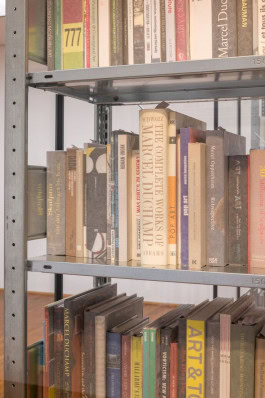
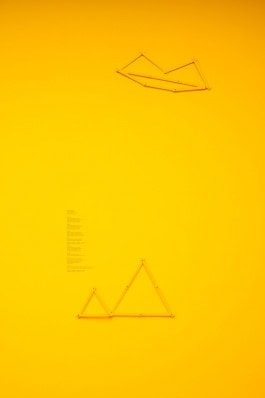
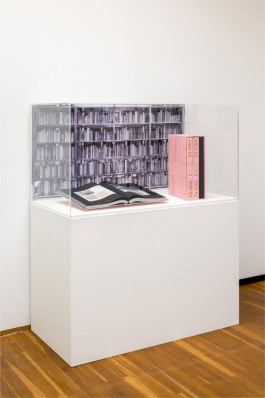
Five Preludes by Saâdane Afif uses the history of art to investigate our contradictory societies. The main reference is Fountain by Marcel Duchamp, an artwork that certainly marked the beginning of conceptual art forms. A huge archive dedicated to it becomes a way to question how history is preserved and communicated, and how it can be kept alive. The beauty of the exhibition also lies in how it flows from room to room, from one artist to the other, bringing the city’s daily life inside the museum and allowing its viewers to endlessly expand it.
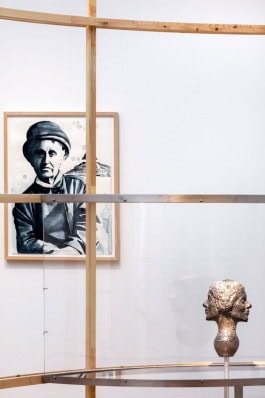
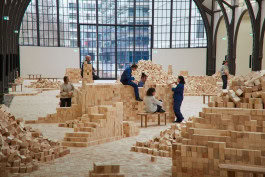
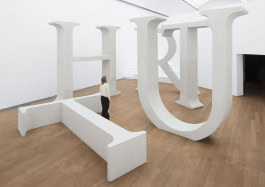
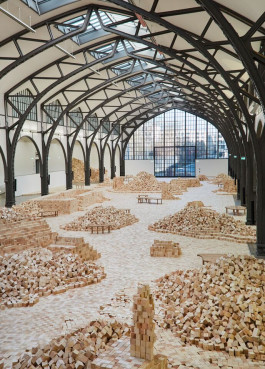
The participation of the public is also fundamental in the exhibition by Lina Lapelytė, We Make Years Out of Hours. Marking the second chapter of the CHANEL Commission, the exhibition transcends the boundaries between sculpture and performance and between the individual and the collective. 400,000 wooden cubes are spread across the floor, creating an interactive, democratic and living monument to time, care and coexistence. The title itself describes the importance for our society of shifting from the singular to the plural, and for individuals to become a truly united community.
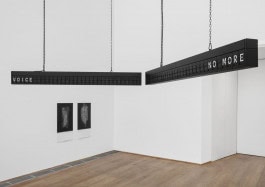
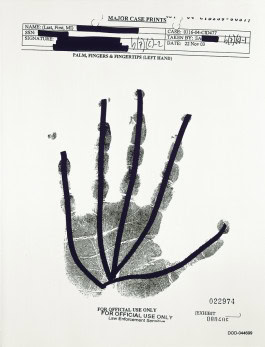
The exhibition What Still Holds by Shilpa Gupta also investigates our collectivity, undermining the systems of control and coercion through which our information is shaped. Language and power are directly intertwined and explored in various artworks throughout the exhibition space, highlighting the lives of many forgotten and underrepresented people. Another stunning artwork, 100 Hand-Drawn Maps of My Country, shows the absurdity that lies behind the concept of borders, and how subjectively and deliberately they are used to divide us.
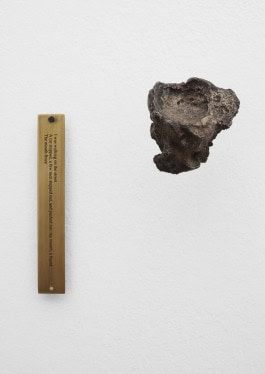
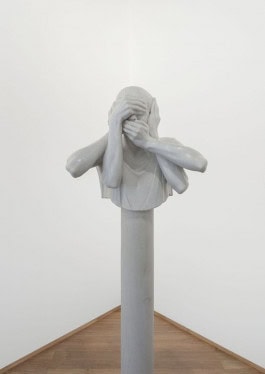
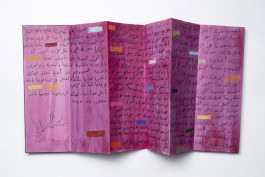
PalaisPopulaire dedicated their latest exhibition to one of the main means that our societies use to express themselves: language. Seeing Worlds, Reading Images brings together a selection of works from the Written Art Collection and the Deutsche Bank Collection to create a multifaceted dialogue through time and space. Spanning from abstract paintings to calligraphy and contemporary media, the exhibition investigates the complex relationship between text and image, and underscores how communication affects our societies.
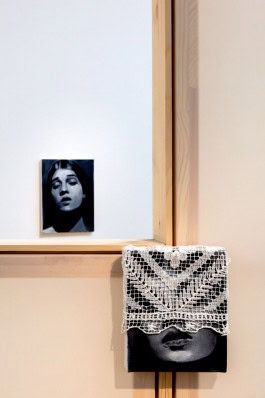
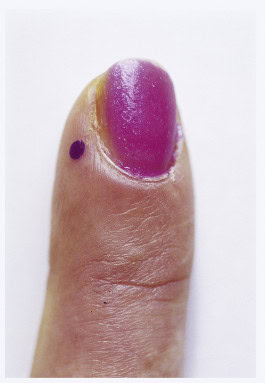
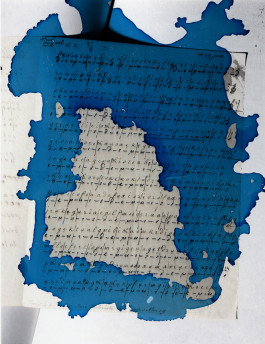
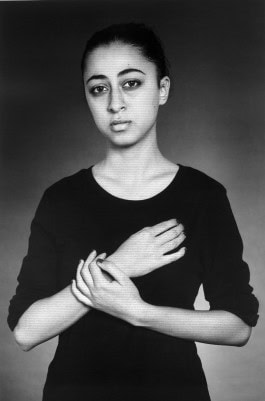
Shirin Neshat addresses the concepts of home and exile through her signature pictures, where portraits of people from different ethnic and religious backgrounds are covered in their thoughts, merging them in a beautiful and delicate way. Jenny Holzer’s Redaction Paintings are based on redacted documents on war crimes, while Osman Bozkurt reflects on the right to vote and the precariousness of human rights and democracies. The exhibition powerfully shows us how the main questions facing us are universal, and how, despite cultural differences, the answers we are looking for are often similar.
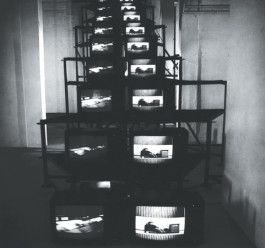
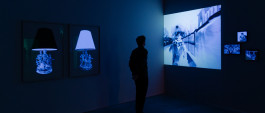
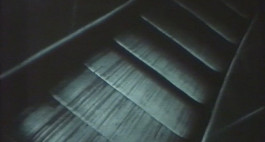
Fluentum is bringing together with Demolition/Escape the practice of three artists who delve into the aesthetic, political and social issues of recent times. Tina Keane’s Escalator, exhibited for the first time in over thirty years, is a powerful exploration of the contrasts that lie in our society.
Across eleven pairs of tiered monitors, the left screens show images of city workers hurrying through the skyscrapers of the financial district, while the right screens show the underground lives of commuters, tourists and homeless people.
In dialogue with Escalator are the works by Hilary Lloyd and James Richards. Investigating nature, architecture and the contradictions embedded in us, the exhibition creates a powerful space for reflection, in which bodies, images and technologies can co-produce and impact one another, showing us how deeply everything is interconnected.
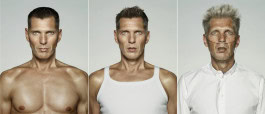
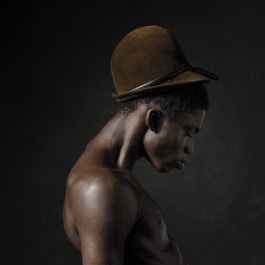
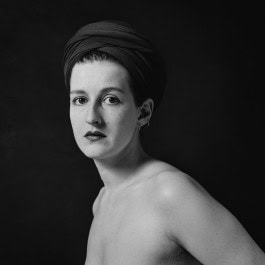
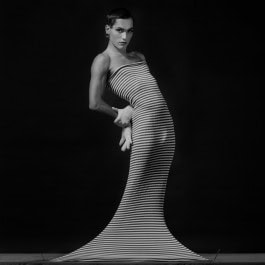
On June 27, f³ – freiraum für fotografie is opening a powerful exhibition of the photographic work of Erwin Olaf. Muses marks the first comprehensive retrospective of the photographer in Berlin and presents humanity through the lens of their desires, identities and forms of expression. His images are not only aesthetically stunning, but they carry an emancipatory potential, by moving us and by raising social awareness.
The photographer was in fact a pioneer of queer visibility, giving resonance to people who had been excluded from and stigmatized by society throughout the years. Their portraits reflect their strength and determination, while his self-portraits are a moving reflection on societal masks, aging, illness and sexuality. With his work Olaf shows us the multifaceted feelings and experiences that we all live, bringing us back together in our shared path across life.


Art has always been able to mirror society and its issues, sometimes even before we could consciously process them. Our world is marked by so many contradictions, injustices and suffering that affect all living beings, from nature and animals to our cities and bodies. By investigating their troubling effects, art is able to show us possible solutions to make the world a better place for all of us, with the hope of finally holding up a mirror that can reflect something beautiful. Don’t miss the chance to visit these thought-provoking exhibitions and see where this journey takes you.
Related Articles:

Historically, art has always had the ability to show society’s true colors and uncover its underlying meanings, even before we could fully grasp them. This selection of exhibitions to see in Berlin this July aims to investigate how art mirrors society, by analyzing and confronting it in all its different layers and providing us with the means to change it for the better.
Sprüth Magers has opened for Gallery Weekend Berlin two powerful exhibitions, investigating the underlying meanings of contemporary society. Acclaimed artist Thomas Demand does that through the unique paper models for which he is renowned, creating pictures that expose the ambiguity behind historical and political episodes, as well as everyday moments.
Particularly powerful is Money (2025), which is based on a still from the incredibly disturbing AI-generated video that Donald Trump posted last year, representing his “Gaza Riviera” plan. The banknotes thrown in the air by a character resembling Elon Musk become the subject of this artwork, which powerfully underscores its perversity, bringing the hypothetical back to the physical realm. Demand also investigates our unsettling relationship with nature, and the impact of our actions over it. With Eis he represents an Arctic fragmented by glacial melting, due to the impact of climate change. Through his reconstructed worlds, Demand uses the paradoxes of perception to mirror the complex society we live in, showing us the multiple ways we can be influenced and manipulated by the things we see.
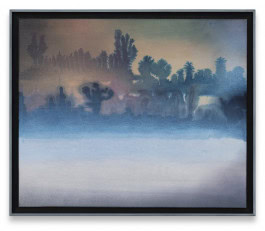
In utopisch Robert Elfgen explores the relationship between humankind and nature. The exhibition powerfully juxtaposes images of industrial landscapes with the animal world, creating a dreamlike liminal space that questions the relationship between human technology and nature. The title itself implies the remote possibility of a utopian society, where these contrasts finally dissolve and progress can act as a sensitive force, rather than a destructive one. We, as humans, are invited to leave our anthropocentric view of the world behind, and learn to coexist peacefully with all other living beings.


With 20th Century Debris Berlinische Galerie is showcasing the powerful work of German artist Marc Brandenburg. His practice moves between drawing, video, installation, collage and performance, focusing his attention to seemingly trivial things. The artist sees the social issues affecting us as direct effects of late capitalism, and traces them back to a society on the verge of collapse, due to isolation, inequality and excess.
Pencil drawing is his primary medium, which he uses to investigate light and darkness in both a physical and metaphorical way. Using pictures from his personal archive or taken from magazines, Brandenburg makes inversion a powerful key to understanding society and underlining its embedded absurdity.
Berlinische Galerie is also investigating the paradoxes that lie in our society with the installation Absurd Berlin Diary ‘64 by Emilio Vedova. The artworks, known as plurimi, are made of asymmetrical painted panels that function as movable structures. Vedova created them in 1964, while staying in West Berlin on an art grant.
The pieces are a direct reaction to the divided city of the time, which Vedova experienced firsthand and described as a "clash of contradictions". The artist donated the artworks to the Berlinische Galerie in 2002, and this exhibition offers a rare opportunity to see them after many years. Above all, it marks an important occasion to reflect on the paradoxes of our societies and their direct effects on us and the places we inhabit.


Hamburger Bahnhof is celebrating its 30th anniversary with a powerful and dense program of exhibitions that investigate our society in all its facets. Sabotage by Giulia Andreani exposes the fractures of official narratives, using historical material to shift the focus onto the forgotten and erased chapters of our history. Her beautiful paintings are all created in Payne’s Grey, and the reduction to a single tone manages to connect images from different periods in a shared, indeterminate past. Her work centers on women and other figures who were often excluded from dominant narratives, providing them with a long-due space to be recognized and celebrated. Sabotage powerfully works within the fractures of our society, the liminal spaces and the suspended thresholds that from the past have leaked into our present, teaching us how to read them and how to map a path towards a better future.
Five Preludes by Saâdane Afif uses the history of art to investigate our contradictory societies. The main reference is Fountain by Marcel Duchamp, an artwork that certainly marked the beginning of conceptual art forms. A huge archive dedicated to it becomes a way to question how history is preserved and communicated, and how it can be kept alive. The beauty of the exhibition also lies in how it flows from room to room, from one artist to the other, bringing the city’s daily life inside the museum and allowing its viewers to endlessly expand it.


The participation of the public is also fundamental in the exhibition by Lina Lapelytė, We Make Years Out of Hours. Marking the second chapter of the CHANEL Commission, the exhibition transcends the boundaries between sculpture and performance and between the individual and the collective. 400,000 wooden cubes are spread across the floor, creating an interactive, democratic and living monument to time, care and coexistence. The title itself describes the importance for our society of shifting from the singular to the plural, and for individuals to become a truly united community.
The exhibition What Still Holds by Shilpa Gupta also investigates our collectivity, undermining the systems of control and coercion through which our information is shaped. Language and power are directly intertwined and explored in various artworks throughout the exhibition space, highlighting the lives of many forgotten and underrepresented people. Another stunning artwork, 100 Hand-Drawn Maps of My Country, shows the absurdity that lies behind the concept of borders, and how subjectively and deliberately they are used to divide us.


PalaisPopulaire dedicated their latest exhibition to one of the main means that our societies use to express themselves: language. Seeing Worlds, Reading Images brings together a selection of works from the Written Art Collection and the Deutsche Bank Collection to create a multifaceted dialogue through time and space. Spanning from abstract paintings to calligraphy and contemporary media, the exhibition investigates the complex relationship between text and image, and underscores how communication affects our societies.
Shirin Neshat addresses the concepts of home and exile through her signature pictures, where portraits of people from different ethnic and religious backgrounds are covered in their thoughts, merging them in a beautiful and delicate way. Jenny Holzer’s Redaction Paintings are based on redacted documents on war crimes, while Osman Bozkurt reflects on the right to vote and the precariousness of human rights and democracies. The exhibition powerfully shows us how the main questions facing us are universal, and how, despite cultural differences, the answers we are looking for are often similar.


Fluentum is bringing together with Demolition/Escape the practice of three artists who delve into the aesthetic, political and social issues of recent times. Tina Keane’s Escalator, exhibited for the first time in over thirty years, is a powerful exploration of the contrasts that lie in our society.
Across eleven pairs of tiered monitors, the left screens show images of city workers hurrying through the skyscrapers of the financial district, while the right screens show the underground lives of commuters, tourists and homeless people.
In dialogue with Escalator are the works by Hilary Lloyd and James Richards. Investigating nature, architecture and the contradictions embedded in us, the exhibition creates a powerful space for reflection, in which bodies, images and technologies can co-produce and impact one another, showing us how deeply everything is interconnected.


On June 27, f³ – freiraum für fotografie is opening a powerful exhibition of the photographic work of Erwin Olaf. Muses marks the first comprehensive retrospective of the photographer in Berlin and presents humanity through the lens of their desires, identities and forms of expression. His images are not only aesthetically stunning, but they carry an emancipatory potential, by moving us and by raising social awareness.
The photographer was in fact a pioneer of queer visibility, giving resonance to people who had been excluded from and stigmatized by society throughout the years. Their portraits reflect their strength and determination, while his self-portraits are a moving reflection on societal masks, aging, illness and sexuality. With his work Olaf shows us the multifaceted feelings and experiences that we all live, bringing us back together in our shared path across life.


Art has always been able to mirror society and its issues, sometimes even before we could consciously process them. Our world is marked by so many contradictions, injustices and suffering that affect all living beings, from nature and animals to our cities and bodies. By investigating their troubling effects, art is able to show us possible solutions to make the world a better place for all of us, with the hope of finally holding up a mirror that can reflect something beautiful. Don’t miss the chance to visit these thought-provoking exhibitions and see where this journey takes you.
Related Articles:
You need to load content from reCAPTCHA to submit the form. Please note that doing so will share data with third-party providers.
More InformationYou need to load content from Turnstile to submit the form. Please note that doing so will share data with third-party providers.
More InformationYou are currently viewing a placeholder content from Facebook. To access the actual content, click the button below. Please note that doing so will share data with third-party providers.
More InformationYou are currently viewing a placeholder content from Instagram. To access the actual content, click the button below. Please note that doing so will share data with third-party providers.
More InformationYou need to load content from hCaptcha to submit the form. Please note that doing so will share data with third-party providers.
More InformationYou need to load content from reCAPTCHA to submit the form. Please note that doing so will share data with third-party providers.
More InformationYou are currently viewing a placeholder content from Turnstile. To access the actual content, click the button below. Please note that doing so will share data with third-party providers.
More InformationYou are currently viewing a placeholder content from X. To access the actual content, click the button below. Please note that doing so will share data with third-party providers.
More Information