

The past is always present, and the issues of our time demonstrate it with the utmost clarity. This selection of exhibitions to see in Berlin this June aims to reconnect what it was to what it is, providing us with various means to affect the future in a positive and collective way.
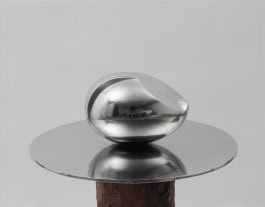
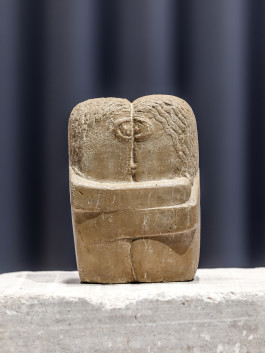
Neue Nationalgalerie is presenting, in cooperation with the Centre Pompidou, a major retrospective of the acclaimed Romanian-French sculptor Constantin Brancusi. The first presentation of this caliber in Germany in over 50 years, the exhibition comprehends more than 150 artworks and many rarely seen archive materials. Constantin Brancusi is considered as the father of modern sculpture: his quest for simplification and reduction made him reach for the deepest essence of the sculptural practice. From head studies to the animal world, Brancusi always aimed for the purest abstraction, and for the symbolic meanings behind it all.
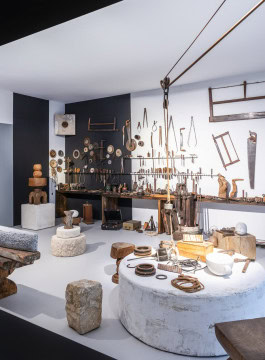
The exhibition also features the beating heart of Brancusi’s research: his studio. His atelier was not a mere working space, but a piece of art itself. It was a place of encounter with many other artists of the time, a living space and a proper exhibition space in itself. Man Ray powerfully summed up the feeling that this unique environment created: “The first time I went to see the sculptor Brancusi in his studio, I was more impressed than in any cathedral. I was overwhelmed with its whiteness and lightness. [...] Coming into Brancusi's studio was like entering another world”.
Often misunderstood and criticized during his lifetime, Brancusi persevered and established himself as one of the main innovators of modern sculpture. His commitment, the poetry of his practice and his ability to look back while always moving forward rightfully earned him a place among the biggest artists of his time. Up to this day, his work teaches us the essential beauty of the world, and the importance of always looking ahead.


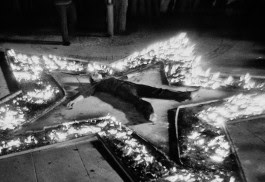
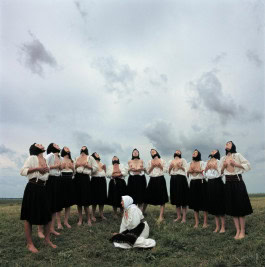
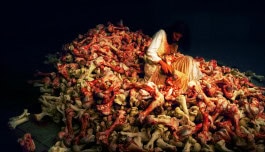
Gropius Bau is presenting with the exhibition Balkan Erotic Epic another trailblazer of the art world: Marina Abramović. One of the leading figures in contemporary art, the renowned performer is showcasing her first major exhibition in Berlin since the 1990s. Abramović’s practice has always been based on the body as a central place, where politics, history and life collide. Balkan Erotic Epic takes this to another level by connecting the dots between rituals, Balkan cultures and the everlasting tension between love and death.
The show powerfully juxtaposes historic works with new video installations. Spanning from famous actions of the past – like the haunting Balkan Baroque that she performed at the Venice Biennale in 1997 in the act of compulsively cleaning animal bones – to contemporary video installations, like Tito’s Funeral, the exhibition proves to be a disturbing journey into the inconsistencies of humanity, felt at its deepest levels.



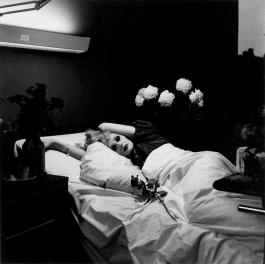
Gropius Bau is also displaying another powerful exhibition, Peter Hujar / Liz Deschenes: Persistence of Vision. The show beautifully pays homage to the moving and intimate practice of photographer Peter Hujar, pairing it with contemporary artworks by Liz Deschenes. While Deschenes mainly focuses on the fundamental properties of the photographic medium and its physical aspects, Hujar gained a late recognition as a photographer of intimacy. Working in New York City from the 1960s to the 1980s, the artist was able to depict the transformative cultural era he lived, from the Stonewall uprising to the AIDS crisis.
As the artist himself said: “I make uncomplicated, direct photographs of complicated and difficult subjects. I photograph those who push themselves to any extreme and people who cling to the freedom to be themselves.” His pictures, installed in some rooms in his signature grid format, powerfully explore the essence of human life, from community and sexuality to decay and death.
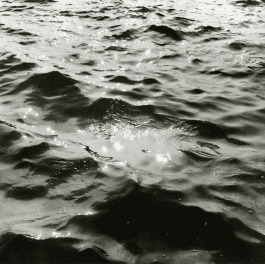
Deschenes’ artworks are exhibited in direct dialogue with Hujar’s pictures, relating to them in a more conceptual way. One of the most beautiful pairing is the room where Hujar’s pictures of the Hudson river, with light refracting over the black and white waves, dialogue with Deschenes’ Untitled (Claude Glasses), black shiny surfaces that reflect the viewer as the subject of the artwork, while tracing a direct connection to the history of painting. Through their powerful and unexpected juxtaposition, we are once again invited to reflect on who we are as a species, and on love and loss. Life and death are inextricably intertwined, just as our complicated present is to what came before it.


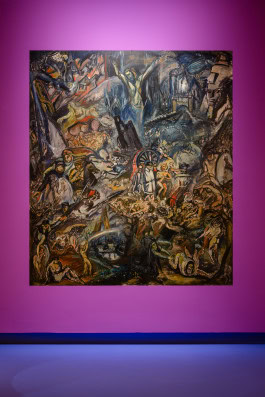
Haus der Kulturen der Welt (HKW) is investigating a troubling and seemingly forgotten chapter of our past, and its impact on our present. Tirailleurs: Trials and Tribulations. From Cannon Fodder to Avant-Garde—The Forgotten Soldiers Who Freed Europe tells us of the numerous groups of people coming from West and North Africa, South East Asia, the Caribbean and the Pacific, who fought for Europe. From the first infantry group recruited in 1857 to the liberation of France from the Nazi Regime, these avant-garde soldiers were vital in shaping the contemporary world order, yet they were swiftly erased from the mainstream narrative. The exhibition brings their fundamental contribution back to light, and celebrates the role of many women, who actively participated in the war effort, uncovering the systemic racism and sexism embedded in our societies.
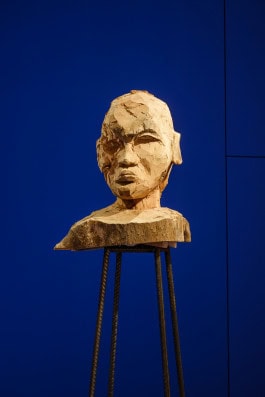
Many contemporary artists powerfully decided to address this historical gap in representation, providing them with a long-due recognition. Touching as always are the sculptures by Kader Attia. With Untitled (Janus), he confronts us with the physical effects of war on bodies, and with the troubling dialectics between colonizer and colonized. The installation in fact presents archival material on the Tirailleurs, underlying the racism with which they were portrayed.
Tuấn Andrew Nguyễn addresses with two video works the legacy of colonial violence between Morocco and Vietnam, and the struggle of finding a sense of belonging across generations. Exposing how the same issues are still happening in contemporary times is the video by Mario Pfeifer, who tells the stories of many people from Cameroon, recruited to fight for the Russian Army in the invasion of Ukraine. Proof of the Unthinkable connects the historical experiences of the Tirailleurs to the present, revealing the coercion, racialization and expendability generated by wars across so many generations, ours included.
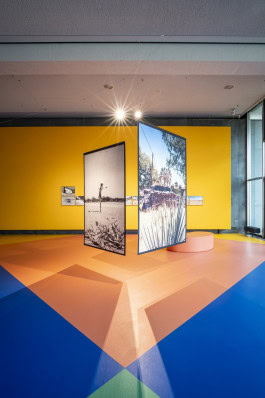

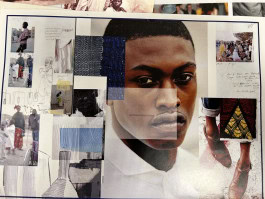
With Diaspora Wonderland. Fashioning Worlds, ifa Gallery Berlin is giving resonance to artists and designers coming from diasporic communities. Curated by Lotfi Aoulad, the exhibition explores memory, heritage and collective imagination, investigating how stories travel across bodies, territories and generations, with a specific focus on the role of fashion.
In the words of the curator: “Fashion illuminates our intimate relationship with our body, with the place we are in, and with the time in which we live. It builds on cultural practices and transmitted knowledge and is continuously transformed through innovation. It makes cultures, memories, tensions, and longings visible and shapes the ways in which bodies stage themselves in social space. Fashion speaks about the world while simultaneously telling it who we are. (…) Fashion is a creative act through which we show the world who we are – what we wear on our skin reveals our intimate relationship to our body and to the time in which we live.”
Through textiles, installations and pictures we follow the various paths that the artists and their families went through, reconnecting the past to the present and providing us with new cultural possibilities to design our future in a more conscious, communal and sustainable way.
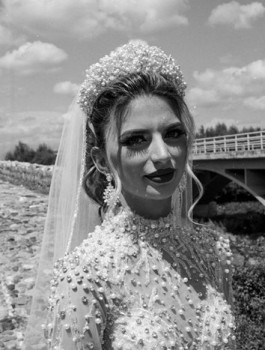

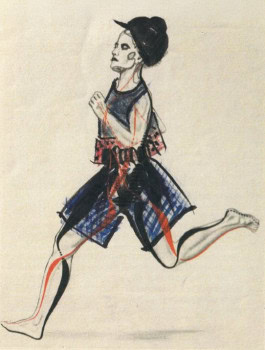
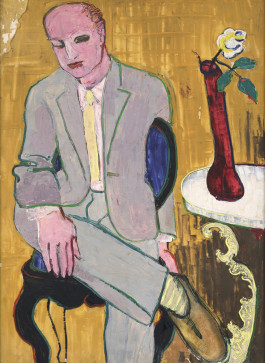
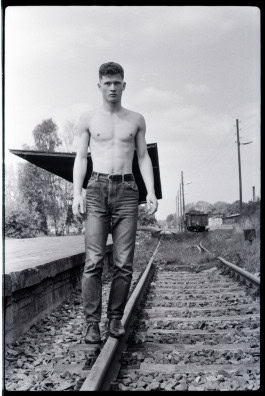
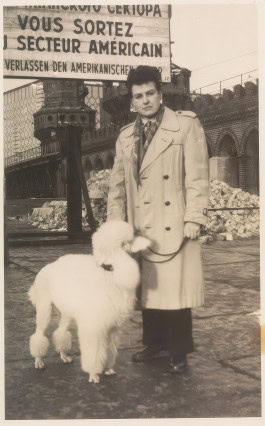
Delving into another fundamental yet overlooked chapter of our past is the exhibition Queer Art in the GDR?. Organized by KVOST, the exhibition spans four different locations: KVOST, nGbK, the Mitte Museum and the Werkbund Archiv – Museum der Dinge.
Its focus lies in the investigation of different artistic positions of nine queer artists – Toni Ebel, Andreas Fux, Harry Hachmeister, Jochen Hass, Dorothea von Philipsborn, Erika Stürmer-Alex, Rita „Tommy“ Thomas, Jürgen Wittdorf and Egon Wrobel – which developed in the socio-political framework of the socialist state.
The term “queer” didn’t exist at the time with the same connotation as today, but it is used deliberately in the exhibition context as an umbrella term for people who, as lesbians, gay men and bisexuals, desired and loved people of the same sex, and also for those who, as trans and non-binary individuals, lived beyond conventional understandings of gender.
Their powerful artworks address in different ways how art was made within the GDR context, providing us with a multifaceted landscape of personal experiences shaped by a time of social stigma, discrimination and control. Through them, we are invited to reflect on how closely identity, power and freedom are always intertwined, highlighting the relevance of these topics to this day.
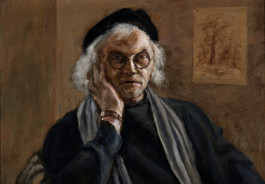
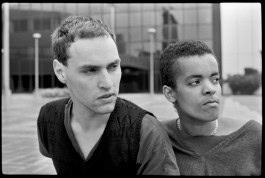

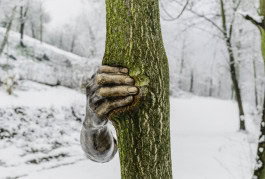
KINDL has recently opened three exhibitions, examining the entanglement between human and non-human life. With the group exhibition An Intimacy With Strangers, the interdependence that lies in our world is addressed through various encounters between what biologist Lynn Margulis defined as “planetmates”. Acclaimed Italian artist Giuseppe Penone consistently reasons on humanity’s bond with nature through time and space. With Toccare il Tempo he cast his hand in bronze around the trunk of a young tree, and then documented the development of this unexpected bond over the years.
Incredibly powerful is also the video work by Jessica Segall, which filmed her underwater encounters with both a tiger and an alligator. The unexpected delicate interaction between the two bodies underscores our twisted conception of animals, and our historical mistreatment of them.

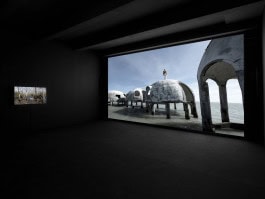
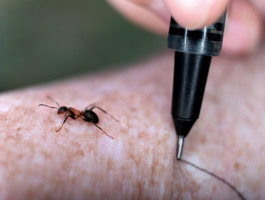
Their second exhibition, Earth-ling by Simon Faithfull also addresses our relationship with the planet, approaching it almost as a sculptural object, while testing its limits. Incredibly simple yet touching is the photographic series Collaboration with an Ant, where an underestimated meeting between the artist and the insect creates a permanent connection. With the video work Re-enactment for a Future Scenario no.2: Cape Romano, we witness the ruins of a former luxury residence off the coast of Florida being reclaimed by the sea and its inhabitants, revealing the haunting beauty behind this re-appropriation.
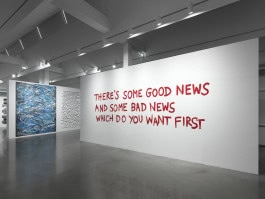
With their third exhibition, Iliggocene – The Age of Dizziness, KINDL focuses on the instability that our times of polycrises are made of. Political uncertainty, ecological threats, military conflicts and technological acceleration keep us in a constant state of disorientation, stress and confusion. The dizziness that arises is explored metaphorically through the exhibited artworks in an attempt to bring order to our present while linking it to its causes.
The present is actually past and the past is always present. Now more than ever, we are recognizing the impact of our actions on the world we live in. It is time to properly address Europe’s colonial past and its ongoing effects, the fundamental rights that should be granted to LGBTQIA+ communities worldwide, and our twisted relationship with all other living creatures. This selection of exhibitions to see in Berlin this June is here to provide us with various perspectives and potential solutions to finally design a world without all these disparities. Don’t miss the chance to see these compelling exhibitions, and see where this journey takes you.
Related Articles:

The past is always present, and the issues of our time demonstrate it with the utmost clarity. This selection of exhibitions to see in Berlin this June aims to reconnect what it was to what it is, providing us with various means to affect the future in a positive and collective way.
Neue Nationalgalerie is presenting, in cooperation with the Centre Pompidou, a major retrospective of the acclaimed Romanian-French sculptor Constantin Brancusi. The first presentation of this caliber in Germany in over 50 years, the exhibition comprehends more than 150 artworks and many rarely seen archive materials. Constantin Brancusi is considered as the father of modern sculpture: his quest for simplification and reduction made him reach for the deepest essence of the sculptural practice. From head studies to the animal world, Brancusi always aimed for the purest abstraction, and for the symbolic meanings behind it all.
The exhibition also features the beating heart of Brancusi’s research: his studio. His atelier was not a mere working space, but a piece of art itself. It was a place of encounter with many other artists of the time, a living space and a proper exhibition space in itself. Man Ray powerfully summed up the feeling that this unique environment created: “The first time I went to see the sculptor Brancusi in his studio, I was more impressed than in any cathedral. I was overwhelmed with its whiteness and lightness. [...] Coming into Brancusi's studio was like entering another world”.
Often misunderstood and criticized during his lifetime, Brancusi persevered and established himself as one of the main innovators of modern sculpture. His commitment, the poetry of his practice and his ability to look back while always moving forward rightfully earned him a place among the biggest artists of his time. Up to this day, his work teaches us the essential beauty of the world, and the importance of always looking ahead.


Gropius Bau is presenting with the exhibition Balkan Erotic Epic another trailblazer of the art world: Marina Abramović. One of the leading figures in contemporary art, the renowned performer is showcasing her first major exhibition in Berlin since the 1990s. Abramović’s practice has always been based on the body as a central place, where politics, history and life collide. Balkan Erotic Epic takes this to another level by connecting the dots between rituals, Balkan cultures and the everlasting tension between love and death.
The show powerfully juxtaposes historic works with new video installations. Spanning from famous actions of the past – like the haunting Balkan Baroque that she performed at the Venice Biennale in 1997 in the act of compulsively cleaning animal bones – to contemporary video installations, like Tito’s Funeral, the exhibition proves to be a disturbing journey into the inconsistencies of humanity, felt at its deepest levels.


Gropius Bau is also displaying another powerful exhibition, Peter Hujar / Liz Deschenes: Persistence of Vision. The show beautifully pays homage to the moving and intimate practice of photographer Peter Hujar, pairing it with contemporary artworks by Liz Deschenes. While Deschenes mainly focuses on the fundamental properties of the photographic medium and its physical aspects, Hujar gained a late recognition as a photographer of intimacy. Working in New York City from the 1960s to the 1980s, the artist was able to depict the transformative cultural era he lived, from the Stonewall uprising to the AIDS crisis.
As the artist himself said: “I make uncomplicated, direct photographs of complicated and difficult subjects. I photograph those who push themselves to any extreme and people who cling to the freedom to be themselves.” His pictures, installed in some rooms in his signature grid format, powerfully explore the essence of human life, from community and sexuality to decay and death.
Deschenes’ artworks are exhibited in direct dialogue with Hujar’s pictures, relating to them in a more conceptual way. One of the most beautiful pairing is the room where Hujar’s pictures of the Hudson river, with light refracting over the black and white waves, dialogue with Deschenes’ Untitled (Claude Glasses), black shiny surfaces that reflect the viewer as the subject of the artwork, while tracing a direct connection to the history of painting. Through their powerful and unexpected juxtaposition, we are once again invited to reflect on who we are as a species, and on love and loss. Life and death are inextricably intertwined, just as our complicated present is to what came before it.


Haus der Kulturen der Welt (HKW) is investigating a troubling and seemingly forgotten chapter of our past, and its impact on our present. Tirailleurs: Trials and Tribulations. From Cannon Fodder to Avant-Garde—The Forgotten Soldiers Who Freed Europe tells us of the numerous groups of people coming from West and North Africa, South East Asia, the Caribbean and the Pacific, who fought for Europe. From the first infantry group recruited in 1857 to the liberation of France from the Nazi Regime, these avant-garde soldiers were vital in shaping the contemporary world order, yet they were swiftly erased from the mainstream narrative. The exhibition brings their fundamental contribution back to light, and celebrates the role of many women, who actively participated in the war effort, uncovering the systemic racism and sexism embedded in our societies.
Many contemporary artists powerfully decided to address this historical gap in representation, providing them with a long-due recognition. Touching as always are the sculptures by Kader Attia. With Untitled (Janus), he confronts us with the physical effects of war on bodies, and with the troubling dialectics between colonizer and colonized. The installation in fact presents archival material on the Tirailleurs, underlying the racism with which they were portrayed.
Tuấn Andrew Nguyễn addresses with two video works the legacy of colonial violence between Morocco and Vietnam, and the struggle of finding a sense of belonging across generations. Exposing how the same issues are still happening in contemporary times is the video by Mario Pfeifer, who tells the stories of many people from Cameroon, recruited to fight for the Russian Army in the invasion of Ukraine. Proof of the Unthinkable connects the historical experiences of the Tirailleurs to the present, revealing the coercion, racialization and expendability generated by wars across so many generations, ours included.


With Diaspora Wonderland. Fashioning Worlds, ifa Gallery Berlin is giving resonance to artists and designers coming from diasporic communities. Curated by Lotfi Aoulad, the exhibition explores memory, heritage and collective imagination, investigating how stories travel across bodies, territories and generations, with a specific focus on the role of fashion.
In the words of the curator: “Fashion illuminates our intimate relationship with our body, with the place we are in, and with the time in which we live. It builds on cultural practices and transmitted knowledge and is continuously transformed through innovation. It makes cultures, memories, tensions, and longings visible and shapes the ways in which bodies stage themselves in social space. Fashion speaks about the world while simultaneously telling it who we are. (…) Fashion is a creative act through which we show the world who we are – what we wear on our skin reveals our intimate relationship to our body and to the time in which we live.”
Through textiles, installations and pictures we follow the various paths that the artists and their families went through, reconnecting the past to the present and providing us with new cultural possibilities to design our future in a more conscious, communal and sustainable way.


Delving into another fundamental yet overlooked chapter of our past is the exhibition Queer Art in the GDR?. Organized by KVOST, the exhibition spans four different locations: KVOST, nGbK, the Mitte Museum and the Werkbund Archiv – Museum der Dinge.
Its focus lies in the investigation of different artistic positions of nine queer artists – Toni Ebel, Andreas Fux, Harry Hachmeister, Jochen Hass, Dorothea von Philipsborn, Erika Stürmer-Alex, Rita „Tommy“ Thomas, Jürgen Wittdorf and Egon Wrobel – which developed in the socio-political framework of the socialist state.
The term “queer” didn’t exist at the time with the same connotation as today, but it is used deliberately in the exhibition context as an umbrella term for people who, as lesbians, gay men and bisexuals, desired and loved people of the same sex, and also for those who, as trans and non-binary individuals, lived beyond conventional understandings of gender.
Their powerful artworks address in different ways how art was made within the GDR context, providing us with a multifaceted landscape of personal experiences shaped by a time of social stigma, discrimination and control. Through them, we are invited to reflect on how closely identity, power and freedom are always intertwined, highlighting the relevance of these topics to this day.


KINDL has recently opened three exhibitions, examining the entanglement between human and non-human life. With the group exhibition An Intimacy With Strangers, the interdependence that lies in our world is addressed through various encounters between what biologist Lynn Margulis defined as “planetmates”. Acclaimed Italian artist Giuseppe Penone consistently reasons on humanity’s bond with nature through time and space. With Toccare il Tempo he cast his hand in bronze around the trunk of a young tree, and then documented the development of this unexpected bond over the years.
Incredibly powerful is also the video work by Jessica Segall, which filmed her underwater encounters with both a tiger and an alligator. The unexpected delicate interaction between the two bodies underscores our twisted conception of animals, and our historical mistreatment of them.


Their second exhibition, Earth-ling by Simon Faithfull also addresses our relationship with the planet, approaching it almost as a sculptural object, while testing its limits. Incredibly simple yet touching is the photographic series Collaboration with an Ant, where an underestimated meeting between the artist and the insect creates a permanent connection. With the video work Re-enactment for a Future Scenario no.2: Cape Romano, we witness the ruins of a former luxury residence off the coast of Florida being reclaimed by the sea and its inhabitants, revealing the haunting beauty behind this re-appropriation.
With their third exhibition, Iliggocene – The Age of Dizziness, KINDL focuses on the instability that our times of polycrises are made of. Political uncertainty, ecological threats, military conflicts and technological acceleration keep us in a constant state of disorientation, stress and confusion. The dizziness that arises is explored metaphorically through the exhibited artworks in an attempt to bring order to our present while linking it to its causes.
The present is actually past and the past is always present. Now more than ever, we are recognizing the impact of our actions on the world we live in. It is time to properly address Europe’s colonial past and its ongoing effects, the fundamental rights that should be granted to LGBTQIA+ communities worldwide, and our twisted relationship with all other living creatures. This selection of exhibitions to see in Berlin this June is here to provide us with various perspectives and potential solutions to finally design a world without all these disparities. Don’t miss the chance to see these compelling exhibitions, and see where this journey takes you.
Related Articles:
You need to load content from reCAPTCHA to submit the form. Please note that doing so will share data with third-party providers.
More InformationYou need to load content from Turnstile to submit the form. Please note that doing so will share data with third-party providers.
More InformationYou are currently viewing a placeholder content from Facebook. To access the actual content, click the button below. Please note that doing so will share data with third-party providers.
More InformationYou are currently viewing a placeholder content from Instagram. To access the actual content, click the button below. Please note that doing so will share data with third-party providers.
More InformationYou need to load content from hCaptcha to submit the form. Please note that doing so will share data with third-party providers.
More InformationYou need to load content from reCAPTCHA to submit the form. Please note that doing so will share data with third-party providers.
More InformationYou are currently viewing a placeholder content from Turnstile. To access the actual content, click the button below. Please note that doing so will share data with third-party providers.
More InformationYou are currently viewing a placeholder content from X. To access the actual content, click the button below. Please note that doing so will share data with third-party providers.
More Information